The Phaistos Disc, a fired clay artifact discovered in Crete in 1908, represents one of the most persistent mysteries in archaeology. Dating from the Bronze Age, around the second millennium BC, it features 241 symbols arranged in a spiral. Despite over a century of study, its message has not been conclusively deciphered. This unique object, inscribed with seals, is a perfect candidate for the application of the most modern digital analysis techniques. 🔍
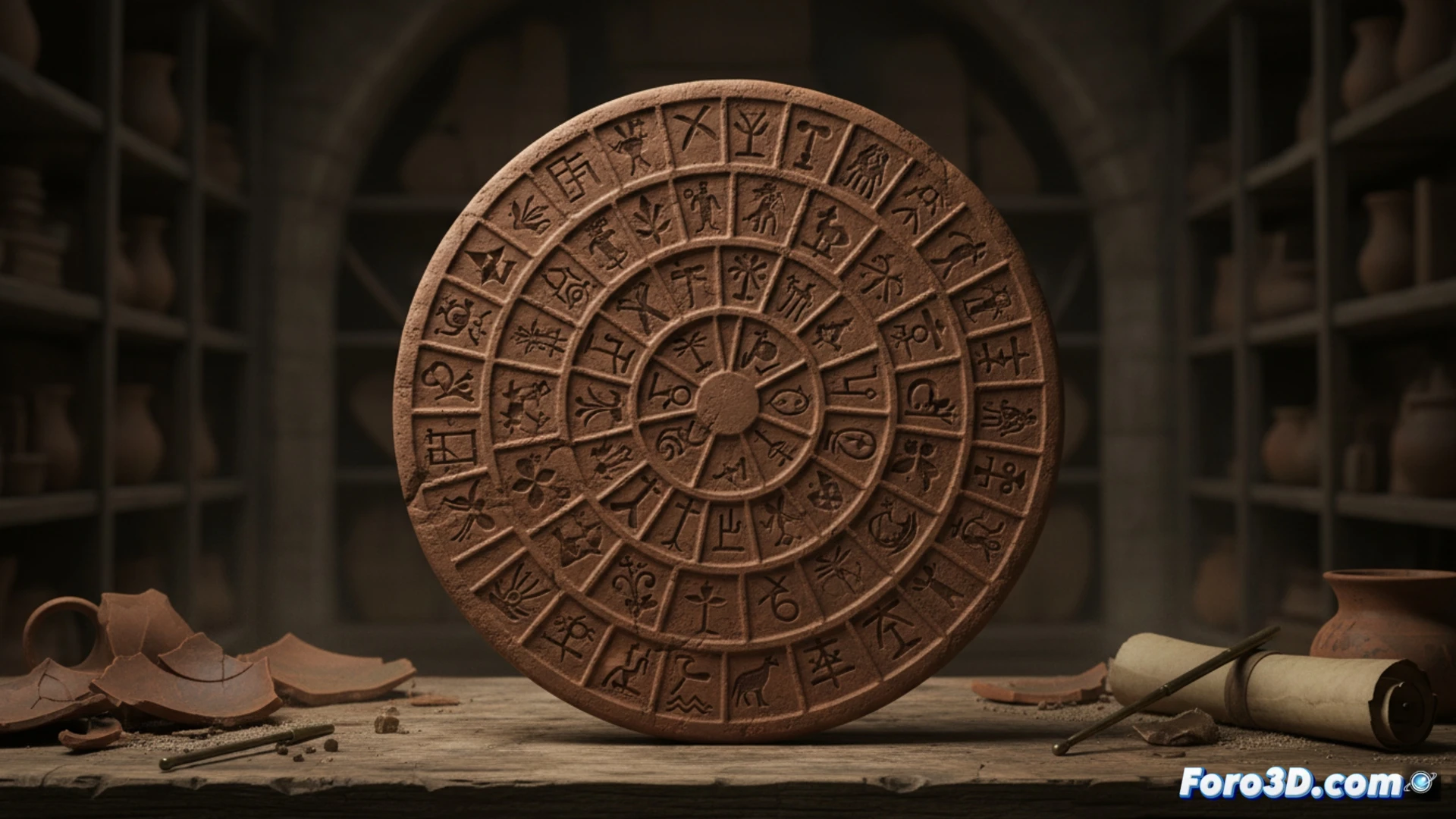
Three-dimensional documentation as a tool for preservation and analysis 📐
Digital archaeology offers key methodologies for its study. A 3D laser scan or a high-resolution photogrammetric model would capture the disc's geometry and reliefs with sub-millimeter precision. This digital model would allow researchers worldwide to access an exact replica, eliminating the risk of handling the original. Exact measurements of each symbol could be taken, virtual lights could be applied from raking angles to enhance details imperceptible to the naked eye, and normal or curvature maps could be generated for objective examination. This technical documentation is the first step for any systematic decipherment attempt.
Beyond the physical object: collaboration and future 🤝
3D digitization transcends mere preservation; it democratizes access and fosters multidisciplinary collaboration. Linguists, historians, and data scientists could work simultaneously on the same model, testing hypotheses in a non-invasive way. The Phaistos Disc thus symbolizes how technology not only protects our heritage but also multiplies the opportunities to unravel its secrets, keeping alive the connection with a remote and enigmatic past.
Can high-resolution 3D scanning and modeling finally unlock the meaning of the code inscribed on the Phaistos Disc?
(PS: and remember: if you can't find a bone, you can always model it yourself)