A recent study has revealed a fascinating behavior in male octopuses: they actively protect their right third arm, known as the hectocotylus. This limb is specialized for reproduction, acting as a sexual organ that transfers spermatophores to the female. Researchers observed that males avoid using it for exploration or feeding tasks, minimizing the risk of damage. This finding opens an exceptional door for the scientific visualization of evolutionary adaptations.
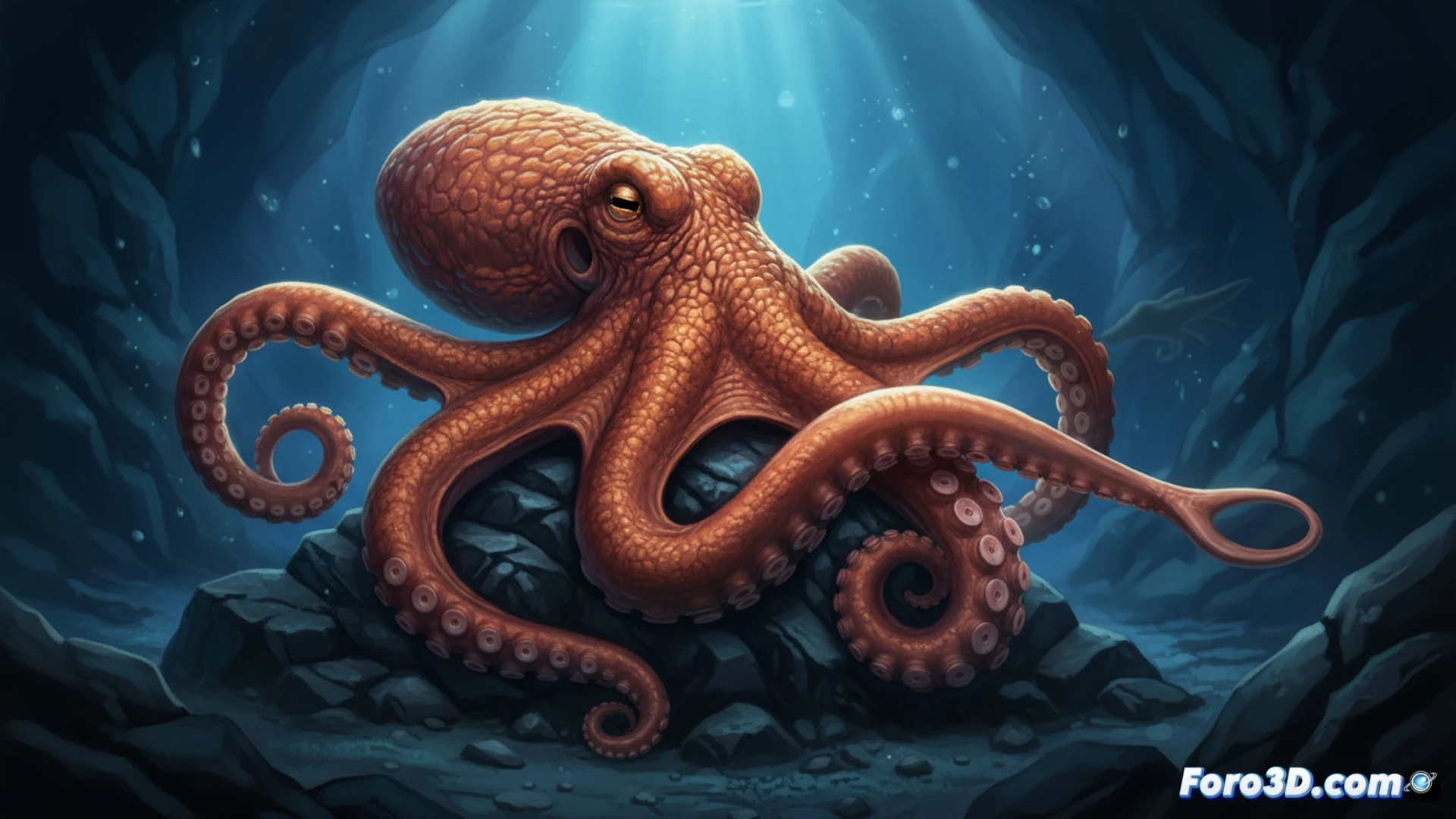
3D Modeling of the Hectocotylus: Anatomy and Function 🦑
The specialization of the hectocotylus is a perfect case for 3D anatomical modeling. A detailed model would allow visualization of its internal and external differences compared to a normal arm, such as the absence of suckers at its tip and the sperm channel. An animated simulation could illustrate the complete process of spermatophore transfer, an aspect difficult to observe in the wild. Furthermore, a comparative representation between male and female, showing the asymmetry of use, would help understand the efficiency of this evolutionary strategy versus developing a larger penis.
Visualizing to Understand Evolution 🔬
This news item underscores the power of 3D visualization for scientific outreach. Creating an interactive model of the hectocotylus would not only serve as an educational resource but would also highlight an elegant evolutionary solution: the modification of an existing structure for a new function, preserving it through a behavioral change. Visualizing this process in 3D brings us closer to understanding natural engineering at its finest.
How can scientific 3D visualization help us model and understand the biomechanics and evolutionary advantage of the octopus's sexual arm?
(PS: modeling manta rays is easy, the hard part is making them not look like floating plastic bags)