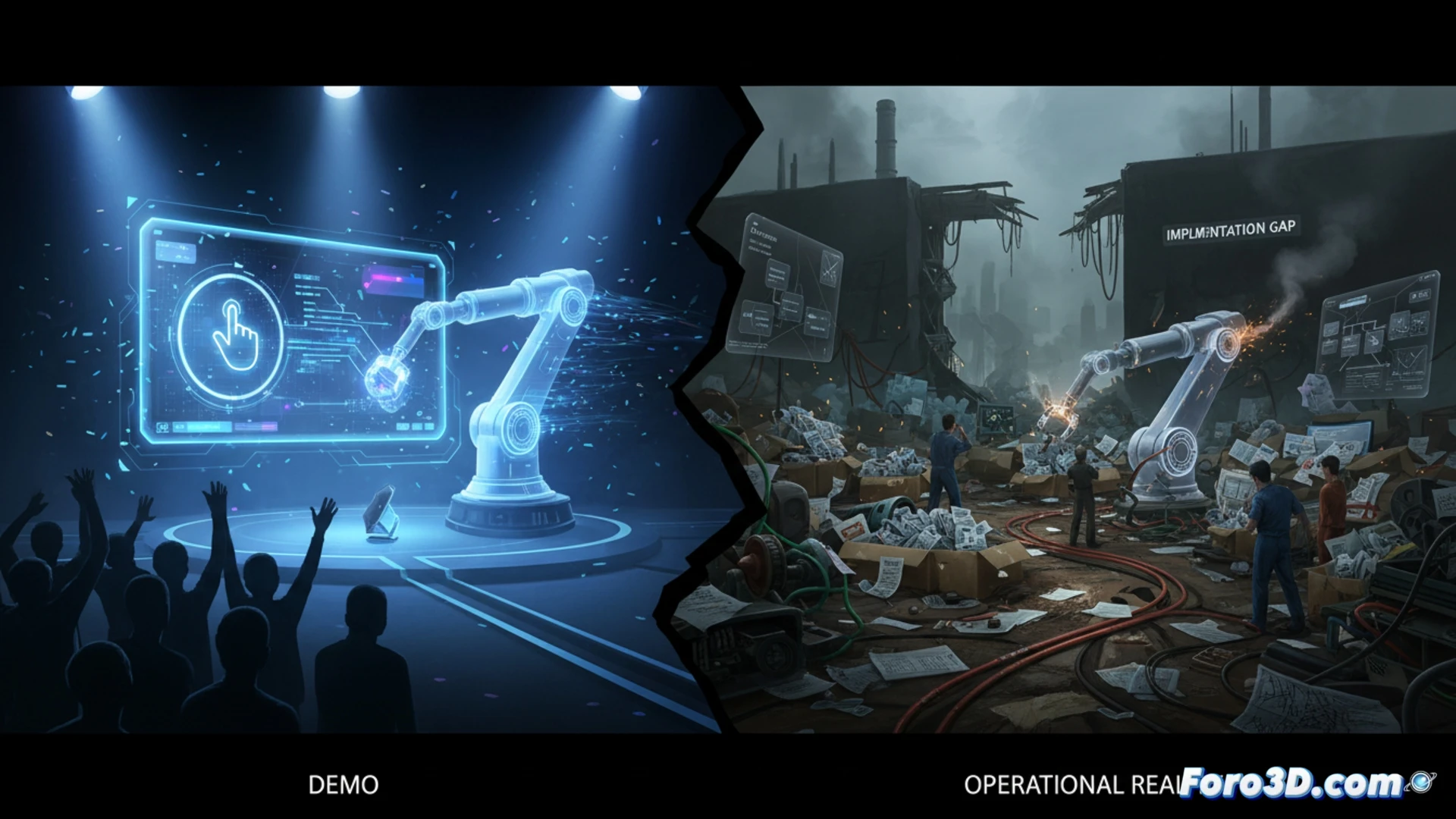
Many artificial intelligence projects showcase a functional prototype that generates excitement, but then fail to integrate into daily processes. The reason is usually not a technical failure, but the vast difference between the controlled environment of the demonstration and the chaos of real-world operations. Without planning that anticipates this transition, the tools end up at a standstill.
From Toy Data to Real Data: The Bottleneck 🤖
The model is trained and tested with clean, labeled datasets, where the requests are ideal. When moving to production, it encounters incomplete data, inconsistent formats, and ambiguous user questions. The architecture must anticipate layers of robust preprocessing, continuous validation, and human feedback mechanisms. Scalability depends on managing this complexity from the design stage.
Welcome to the Real World, Where Nothing is Perfect 🌀
It's the moment when your AI, accustomed to textbook answers, faces a user who writes do that thing from yesterday but for the other project, you know. The tool panics while the team remembers that that thing from yesterday was never defined. The initial enthusiasm turns into an endless meeting to define edge cases that nobody had considered. The demo was a sprint, reality is a marathon with unforeseen obstacles.