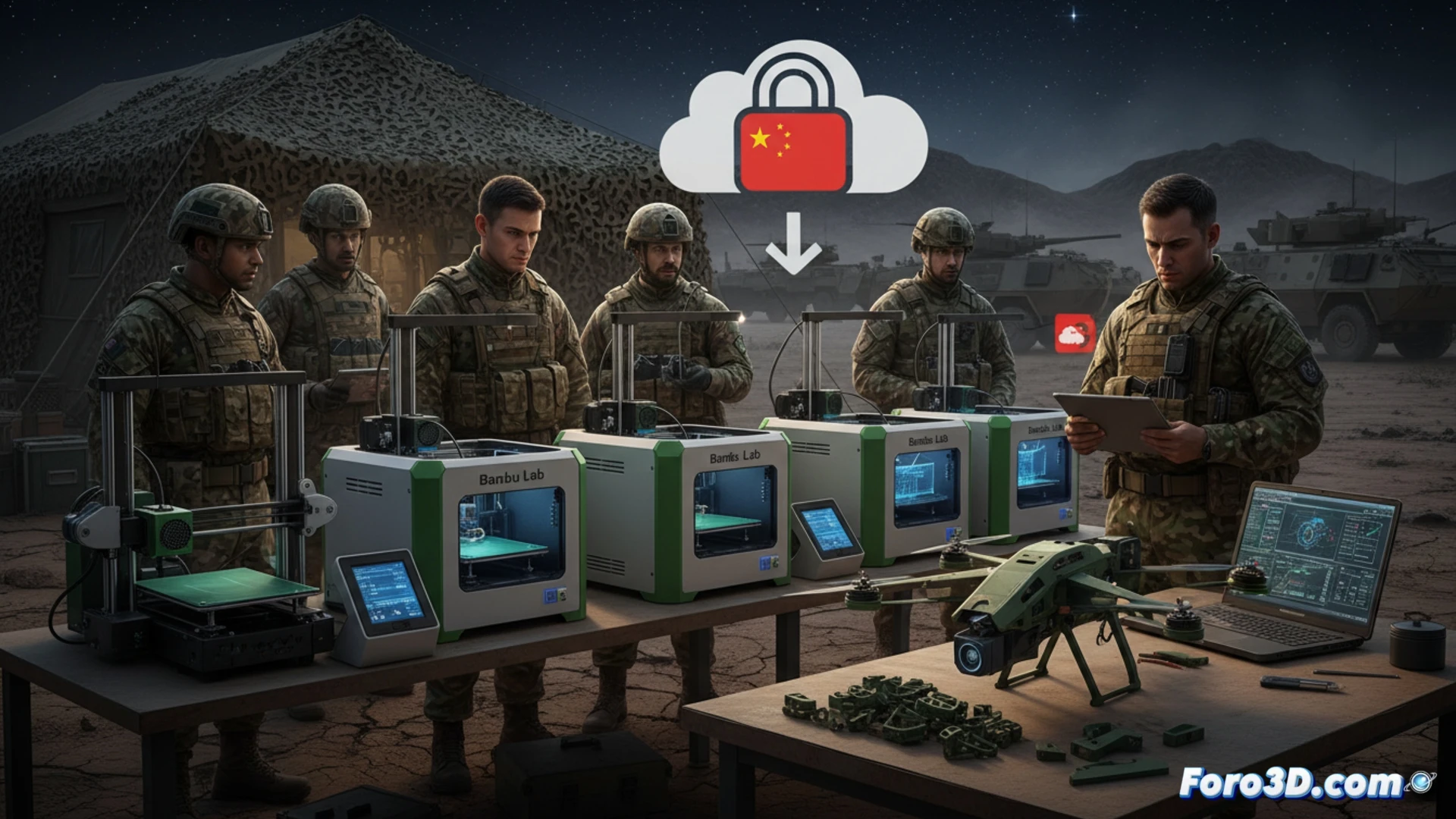
The UK Ministry of Defence is investigating the security risks of using Bambu Lab 3D printers in military exercises. During Operation Bull Storm in Kenya, the Army used these cloud-connected devices to manufacture attack FPV drones, with a unit cost of £400 compared to £2,000 for commercial models. The Defence Secretary ordered a cyber assessment after the discovery.
The Chinese cloud and the vulnerability of military data 🛡️
The central concern is that, under Chinese law, Bambu Lab may be required to share data with the state. Each printer sends design and usage information to external servers, exposing drone blueprints and flight parameters. Although the company denies any leaks, the British government fears this data could be intercepted or legally requested by Beijing, compromising the operational security of its forces abroad.
The printer that printed its own security complaint 🤖
The saving of £1,600 per drone seems tempting, until you remember your war plans are on a server that might also be used by a hobbyist to make pen holders. The British Army discovered that, while manufacturing cheap weapons, the Chinese printers could be reporting home. Now, the dilemma is whether the next drones will be designed with paper and pencil, or if they will ask the cloud for permission to take off.