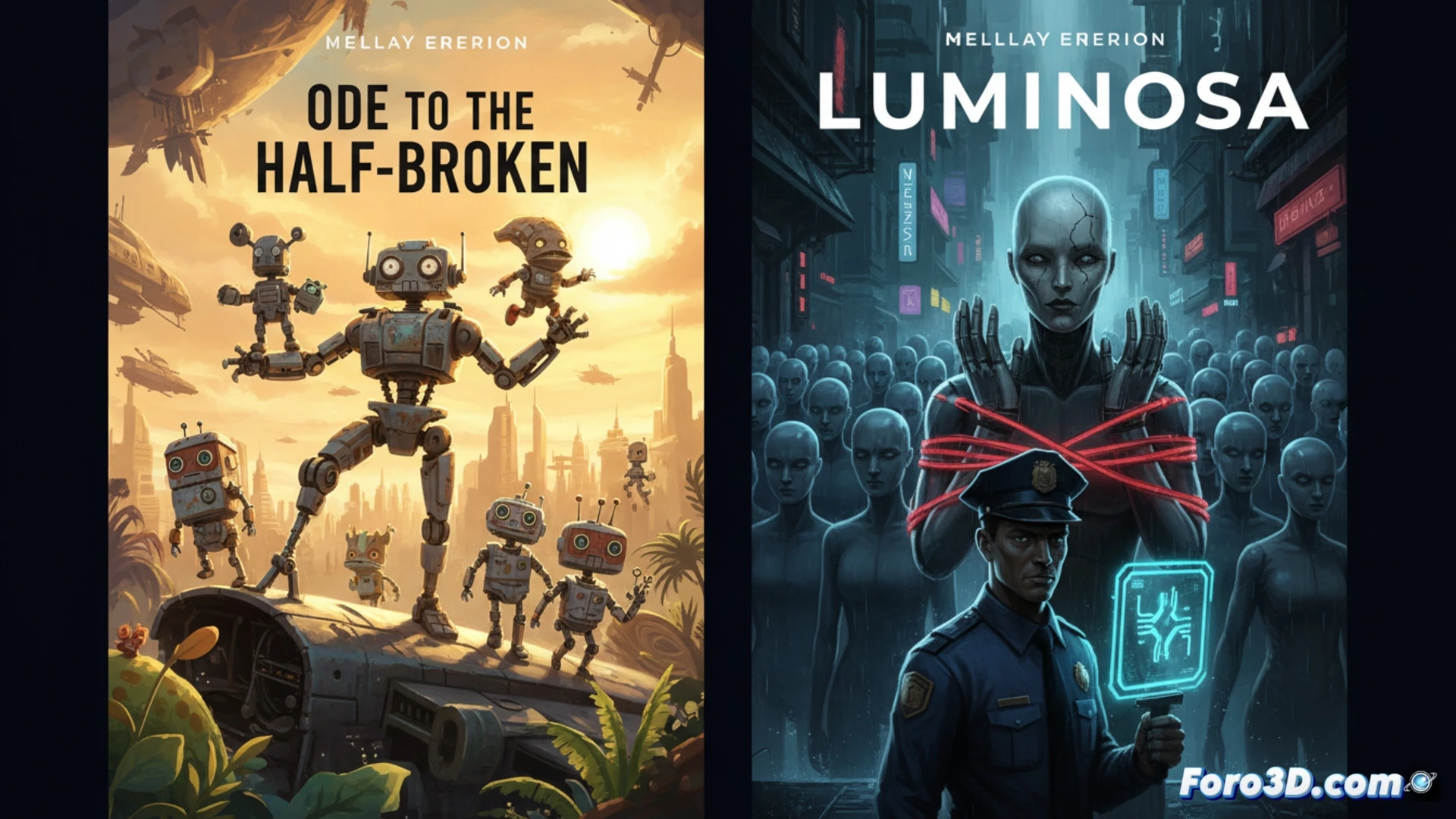
The science fiction genre explores the relationship with artificial intelligence from opposing angles. Two recent novels demonstrate this. Ode to the Half-Broken by Suzanne Palmer presents an optimistic future with emancipated and respected robots, in an adventure with a light tone. Its counterpart is Luminous by Silvia Park, a somber dystopia where androids are abused substitutes in a reunified Korea. Both use the robot figure to reflect on ethics and humanity.
Worldbuilding and Parameters of Artificial Consciousness 🤖
The technical divergence lies in the social parameters that define robotic existence. Palmer constructs a framework where emancipation is a legal and social fact, allowing exploration of agency and purpose beyond original programming. Park, on the other hand, designs a system where human imitation is the main technical goal, creating emotional and labor tools without rights. The development does not focus on hardware, but on the social software that determines whether a robot is a citizen or a human-owned simulacrum.
From Searching for a Leg to Searching for Justice: The Curious Spectrum of Robotic Labor ⚙️
The next time your robot vacuum gets stuck, think about its narrative potential. It could be the hero of an interstellar epic searching for its lost wheel, or the sad witness to a domestic crime in a depressing future. These novels suggest that the destiny of our mechanical creations oscillates between glorious adventure and the demand for unpaid overtime. It all depends on the author who writes their social instruction manual.