The next wave of science communication books, scheduled for 2026, addresses crucial topics such as climate change, social epidemiology, and lunar exploration. These volumes not only tell stories but also explain complex phenomena. This is where 3D scientific visualization reveals itself as an indispensable ally, transforming abstract concepts and data into understandable and immersive experiences that complement and amplify the message of these works.
3D Modeling to Understand Complex Phenomena 📊
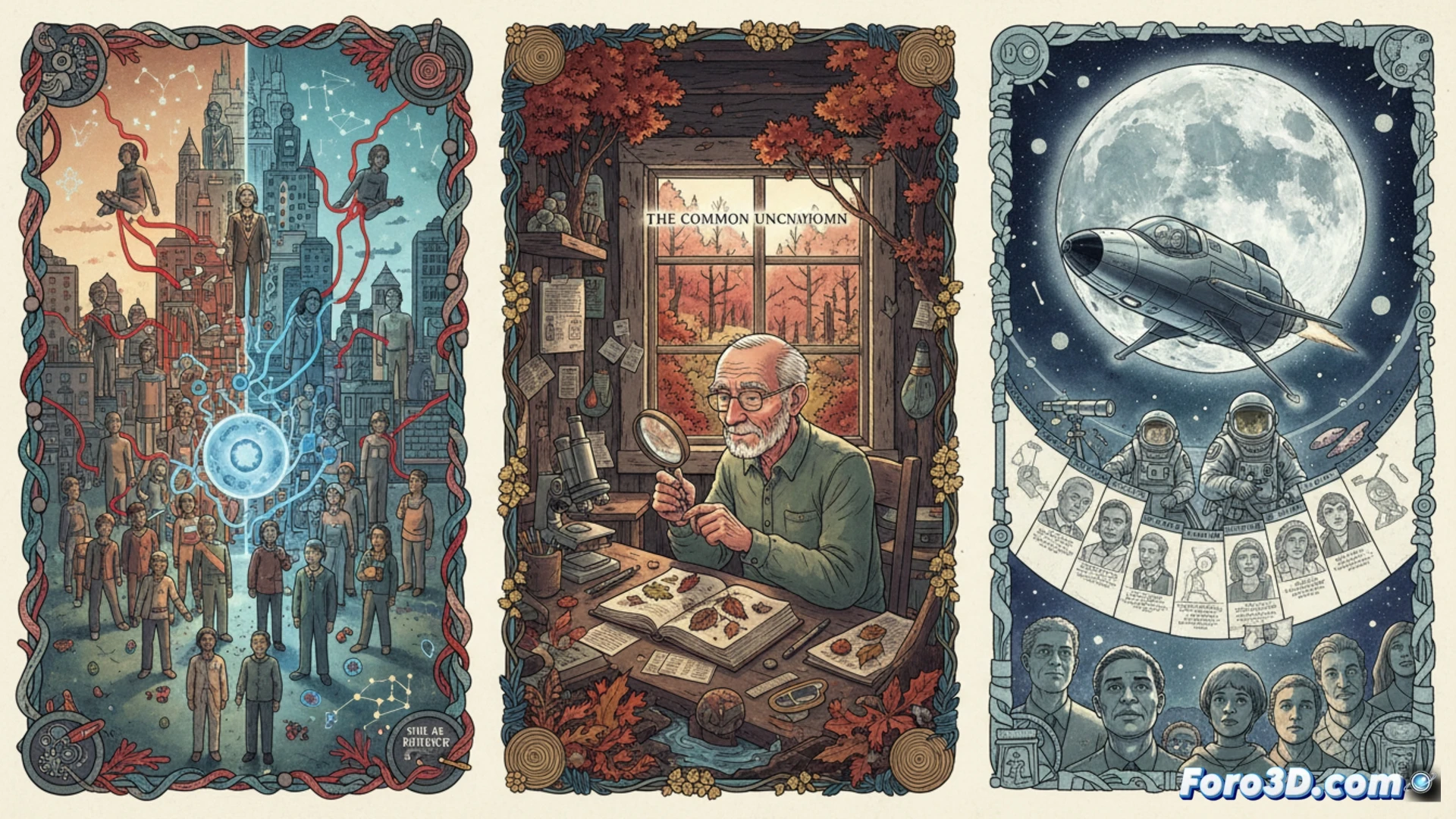
For The Common Uncommon, an interactive 3D model of the Maine forest would allow visualization of ecosystem degradation over time, showing layers of data on temperature, pests, and biodiversity loss. Regarding The End of Violence, a 3D network dynamics simulation could map violence as a contagion pattern, identifying critical nodes and the effect of interventions. For Still As Bright, an accurate reconstruction of the lunar surface and crewed missions would offer unique spatial context, enriching the historical narrative.
Beyond the Book: The Immersive Narrative 🚀
These visualization projects would not be a mere add-on, but a natural extension of the communicative purpose. By allowing the exploration of data and scenarios interactively, they foster a deeper and more intuitive understanding. 3D technology bridges the gap between scientific theory and perceptual experience, creating powerful bridges for education and awareness about the great challenges of our time.
Would you use photogrammetry of real specimens or modeling based on studies?