Paleontologist Dave Hone argues that dinosaurs were social animals, not slow, solitary reptiles. Fossil evidence from footprints and nests shows that many species lived in herds, cared for their young, and likely communicated with each other. This view transforms our understanding of their behavior and ecology.
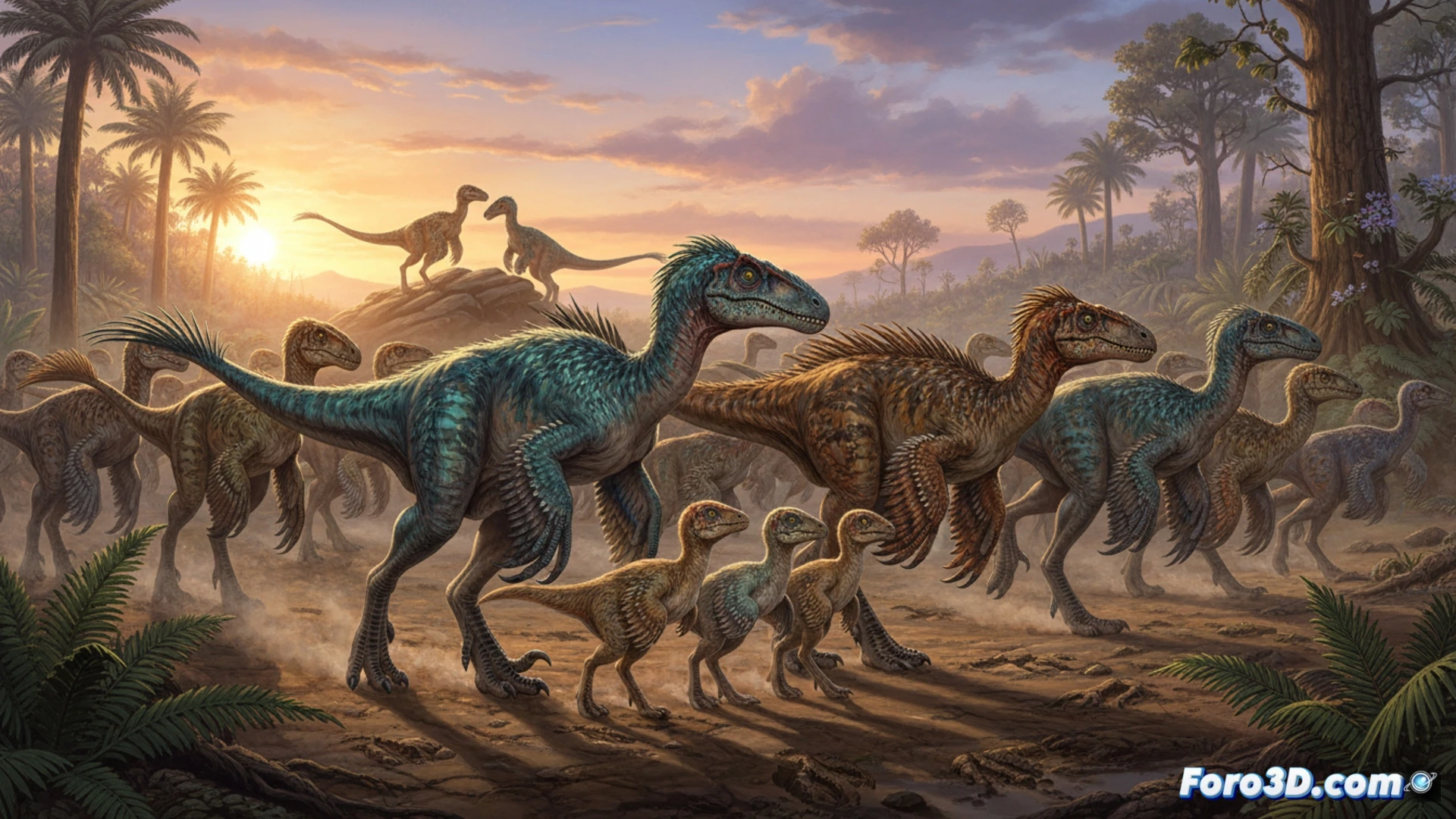
Fossil technology: scanners and 3D models reveal their social life 🦴
The development of high-resolution 3D scanners and computed tomography allows fossils to be analyzed in unprecedented detail. These methods reveal internal bone structures, growth marks, and dental wear patterns that indicate social interactions. Additionally, digital modeling of fossilized footprints shows herd trajectories and breeding behaviors, providing concrete data on their group organization and communication.
What if dinosaurs used Jurassic WhatsApp? 📱
If dinosaurs communicated, perhaps they had a more effective system than ours. Imagine a T-Rex trying to send a voice message with its tiny arms: it would be a chaos of growls and prehistoric memes. At least, their herd meetings didn't require video calls or forgotten passwords.