The Book of Agriculture by Ibn al-Awwam, written in the 12th century in Al-Andalus, is a fundamental encyclopedia on crops, soils, and techniques. Its preservation and study are enhanced by digital archaeology. Through 3D technologies, we can transcend the mere digitization of pages to create interactive experiences that revive historical agronomic knowledge and make it accessible in innovative ways.
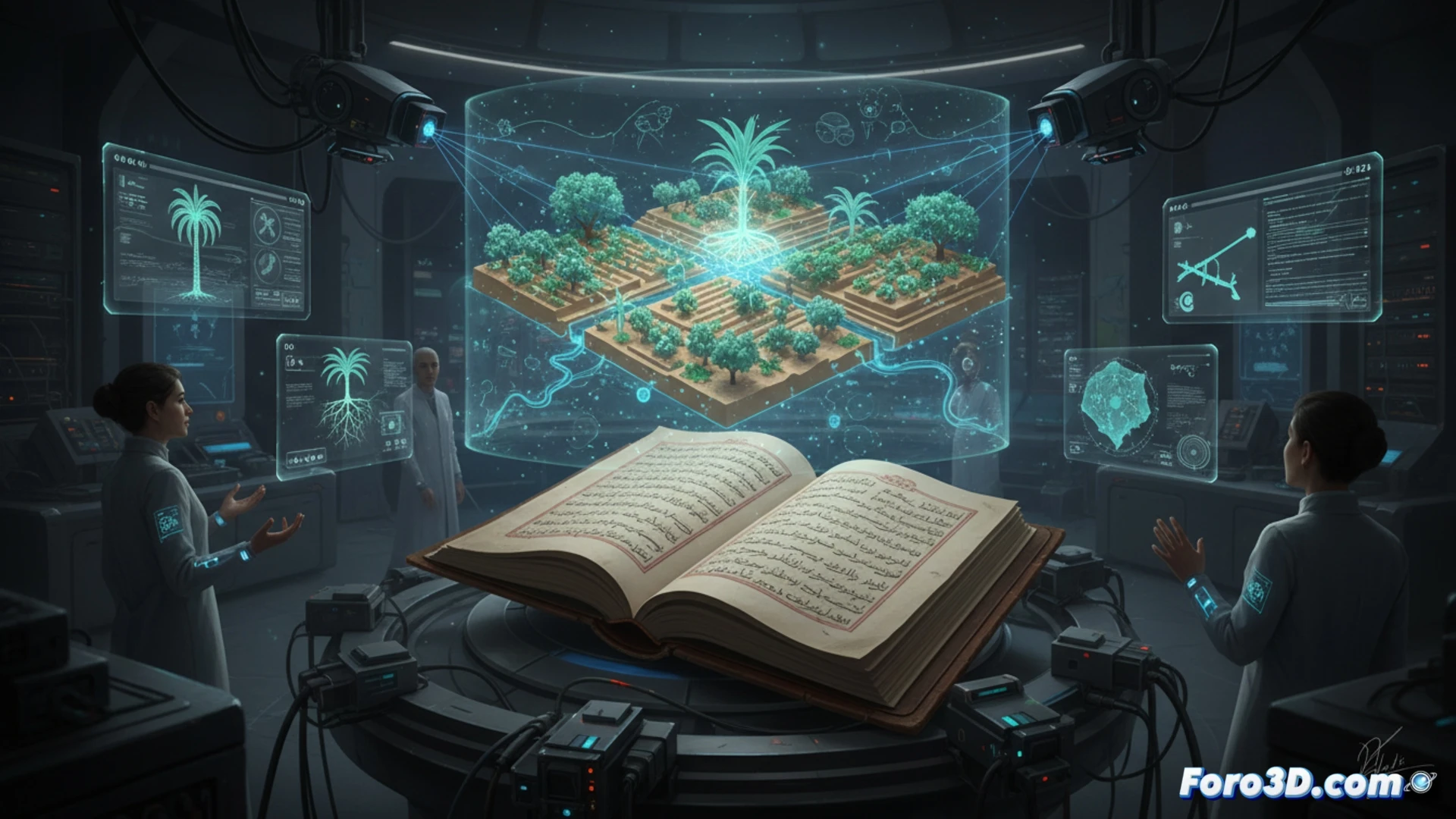
3D Techniques for Enhancing the Manuscript's Value 📖
The process would begin with high-resolution 3D scanning of the physical codex, capturing its volume, textures, and degradation. This model can be integrated into a virtual environment where, upon interaction, transcriptions, translations, and technical commentaries are deployed. Beyond the book-object, the content can materialize in interactive 3D reconstructions of the described irrigation systems, tools, or grafts, allowing for a spatial and practical understanding impossible with text alone. Virtual reality could place the user in an Andalusian farm operating these techniques.
Beyond Preservation, a Gateway to Knowledge 🔍
This approach not only safeguards fragile documentary heritage but transforms it into an active educational and research tool. It facilitates new interdisciplinary readings, connecting historians, agronomists, and archaeologists. 3D digitization, therefore, reveals itself as an essential bridge between the written legacy and our contemporary understanding, ensuring that the practical wisdom of Ibn al-Awwam continues to germinate in the digital age.
How can 3D digitization and virtual reality reconstruct and make interactive the agricultural techniques described in the Book of Agriculture by Ibn al-Awwam for archaeological study?
(PS: If you're excavating a site and find a USB, don't plug it in: it could be malware from the Romans.)