Singapore faces an extreme shortage of land and water with visionary engineering solutions. It has expanded its territory by 25% through land reclamation from the sea and has created an advanced water system that recycles wastewater into drinking water. These infrastructures, designed to last a century, are ideal candidates for the implementation of digital twins. These virtual replicas would allow simulating, monitoring, and optimizing these megaprojects, ensuring their stability and efficiency against climate change and securing the future resilience of the city-state. 🏙️
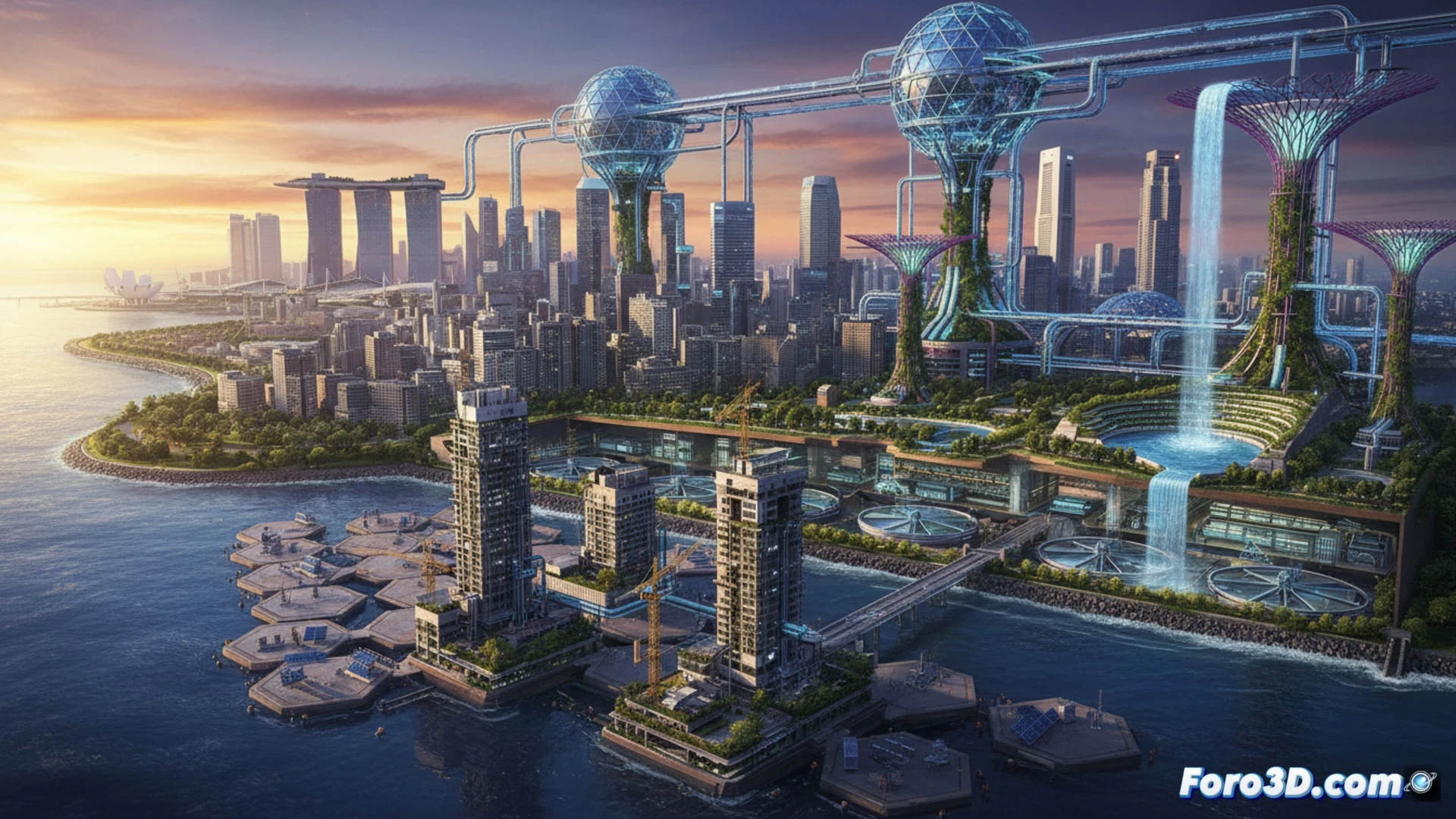
Simulation and monitoring of critical infrastructures with digital twins 🔄
A digital twin of the reclaimed land would allow modeling its long-term geotechnical behavior. The effects of sea level rise, soil consolidation, and pressure from new constructions could be simulated, anticipating subsidence risks. In parallel, a digital twin of the water system would integrate real-time data from recycling plants, reservoirs, and pipelines. This virtual model would facilitate predictive maintenance management, optimize water flows, and test the network's resilience against extreme weather events or contamination incidents, ensuring a robust supply.
Urban planning for the next century 📅
The integration of digital twins into Singapore's planning represents the future of urban management. These systems are not only engineering tools but the core of a proactive climate adaptation strategy. By fusing real-time data with predictive models, planners can make informed decisions, test hypothetical scenarios, and ensure that every square meter reclaimed from the sea and every drop of recycled water contribute to a sustainable and resilient urban ecosystem for future generations.
How are Singapore's authorities using digital twins to simulate and optimize the integrated management of their water and land resources in an environment of extreme scarcity?
(P.S.: My digital twin is currently in a meeting, while I'm here modeling. So technically, I'm in two places at once.)