Spanish botany has taken a crucial technological leap with the creation of exact digital copies of trees. This technique, based on three-dimensional scanning, generates precise virtual models that allow studying the structure and development of specimens without touching them. It stands as a fundamental non-invasive research tool for analyzing growth, plant architecture, and responses to climate change, marking a before and after in the conservation of natural heritage. 🌳
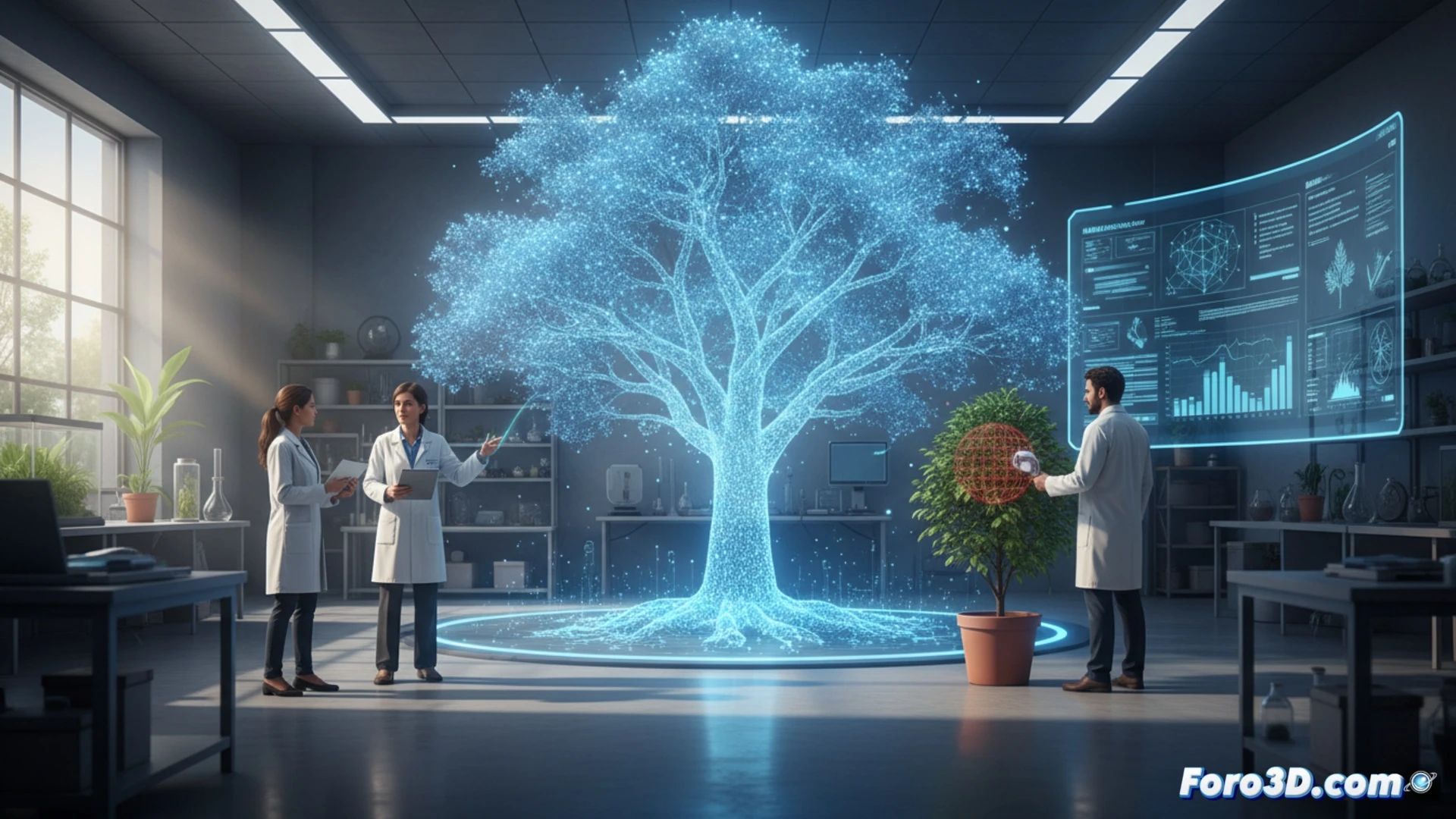
Workflow: from reality to virtual model 🔄
The process begins with data capture using terrestrial 3D laser scanning or aerial photogrammetry, which collects millions of points from the tree's surface. This point cloud data is processed to generate a textured polygonal mesh, a digital twin that accurately replicates the shape, volume, and complex architecture of branches and foliage. This model enables volumetric measurements, light and wind simulations, and structural analyses that are impossible or damaging on the real specimen, providing an objective basis for scientific research.
Beyond the model: conservation and legacy 📡
The true value of these digital twins goes beyond model creation. They allow monitoring millimeter changes over time, evaluating health or growth with unprecedented precision. This is vital for planning effective protection strategies and for digitally preserving unique or threatened specimens. It represents the convergence between digital technology and ecology, offering a new dimension to understand and safeguard forest ecosystems for future generations.
How are 3D scanning and digital twins revolutionizing scientific visualization in botany for the conservation and study of tree species?
(PS: modeling manta rays is easy, the hard part is making them not look like floating plastic bags)