The National Museum of Natural History of France, a renowned scientific institution, is facing a silent crisis. Its director has warned of catastrophic conditions in its facilities that threaten priceless collections. Humidity problems, structural cracks, and leaks are causing active deterioration in unique specimens, putting a scientific legacy for future generations at risk.
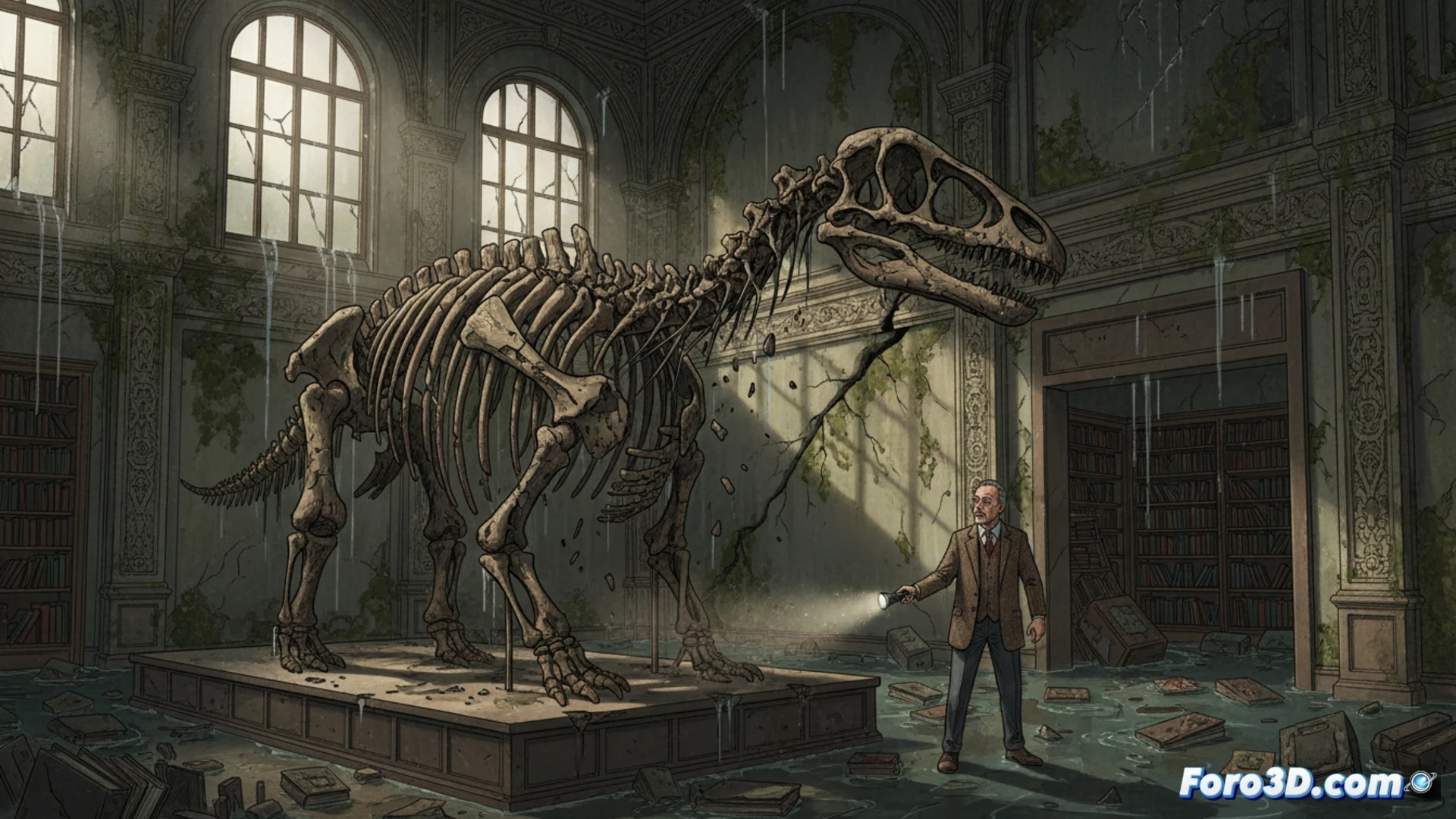
Environmental Monitoring and Digitization as a Technical Lifesaver 🛠️
The solution lies in a comprehensive technical intervention. A real-time environmental monitoring system with humidity and temperature sensors is required, coupled with precision dehumidification and climate control units. Simultaneously, high-resolution 3D digitization of the most fragile specimens becomes urgent. This creation of digital backups would allow the preservation of morphological information even if the original physical specimen suffers irreparable damage.
Fossils Are Crumbling Faster Than a PC with Windows 95 💀
It's a paradoxical situation. While technology allows scanning a dinosaur bone with micron precision, the original turns to dust due to a 19th-century plumbing problem. It seems the museum has a more aggressive planned obsolescence program than any hardware manufacturer. One expects fossils to last millions of years, but they don't survive a Parisian winter with a damaged roof. Ironies of conservation.