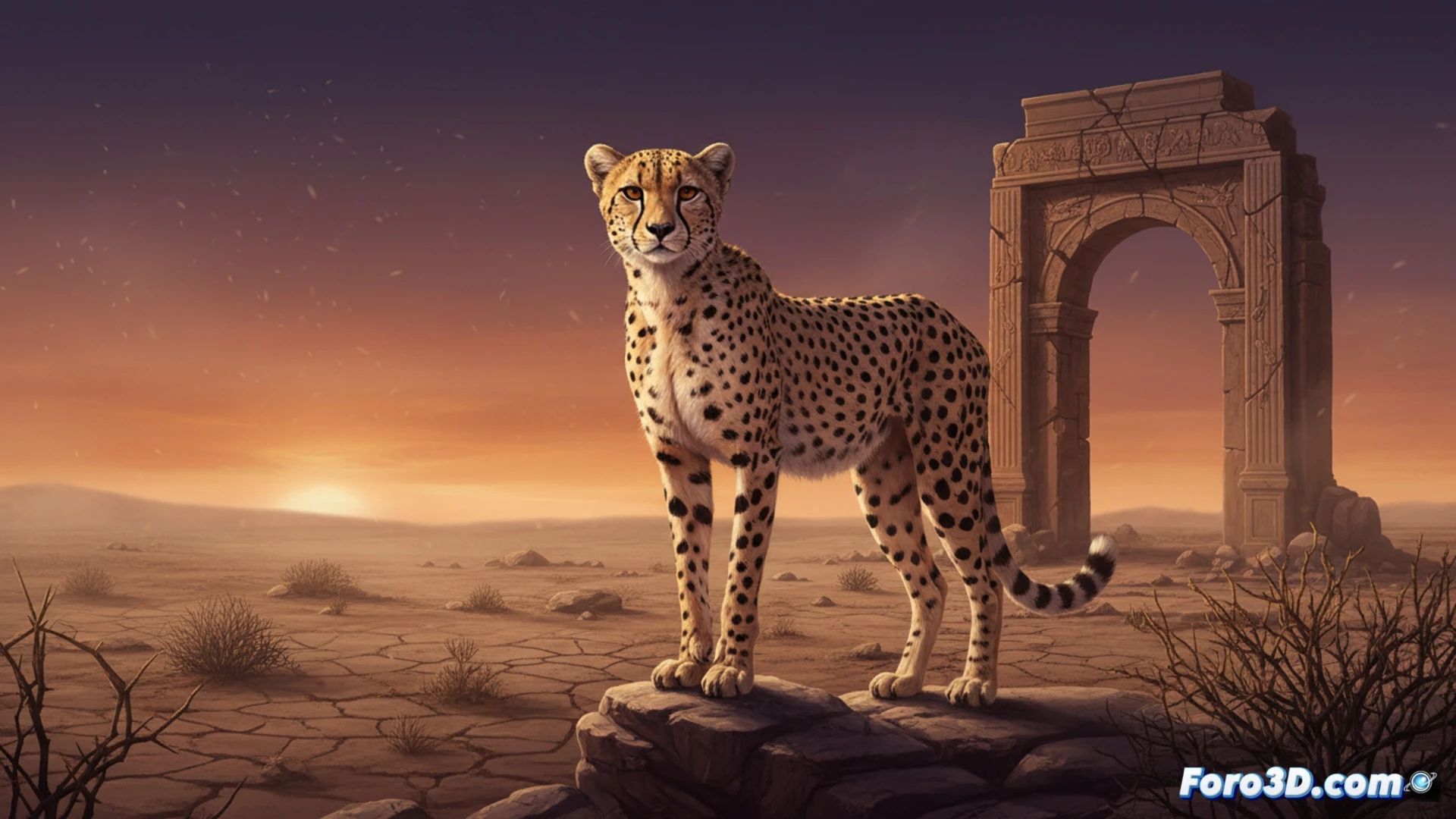
The Asiatic cheetah, a Critically Endangered subspecies, faces a decisive moment. With an estimated population of 27 individuals in the wild, its survival depends on active conservation actions. The current conflict in Iran, the species' last refuge, has completely halted its monitoring and protection. This situation shows how human crises directly impact biodiversity, threatening irreversible ecological loss.
Tracking technology loses signal 🛰️
Conservation projects relied on GPS collars and camera traps to monitor individuals. These devices transmitted data on movements, health, and hunting habits, essential for planning safe corridors. The communications blockade and the inability to access the terrain mean this information is no longer being received. Ground teams cannot maintain the devices or collect data, leaving the population in a vacuum of information critical for its management.
Rescue plan: wait for tempers (and humans) to calm down ⏳
The current conservation strategy seems to be based on hope. Waiting for the conflict to end, waiting for the collars to keep working, waiting for 27 cheetahs to avoid traps and hunters without help. It is a passive plan where the fastest species on the planet depends on the most conflict-prone species deciding to make peace. An evolutionary irony where its greatest threat is not a natural predator, but our inability to be at peace.