Your phone knows where you are thanks to a combination of satellites, WiFi networks, and internal sensors. Outdoors, accuracy ranges between 1 and 5 meters, using constellations like GPS, GLONASS, Galileo, and BeiDou. But when you enter a building or get lost among skyscrapers, things get complicated and the margin of error skyrockets.
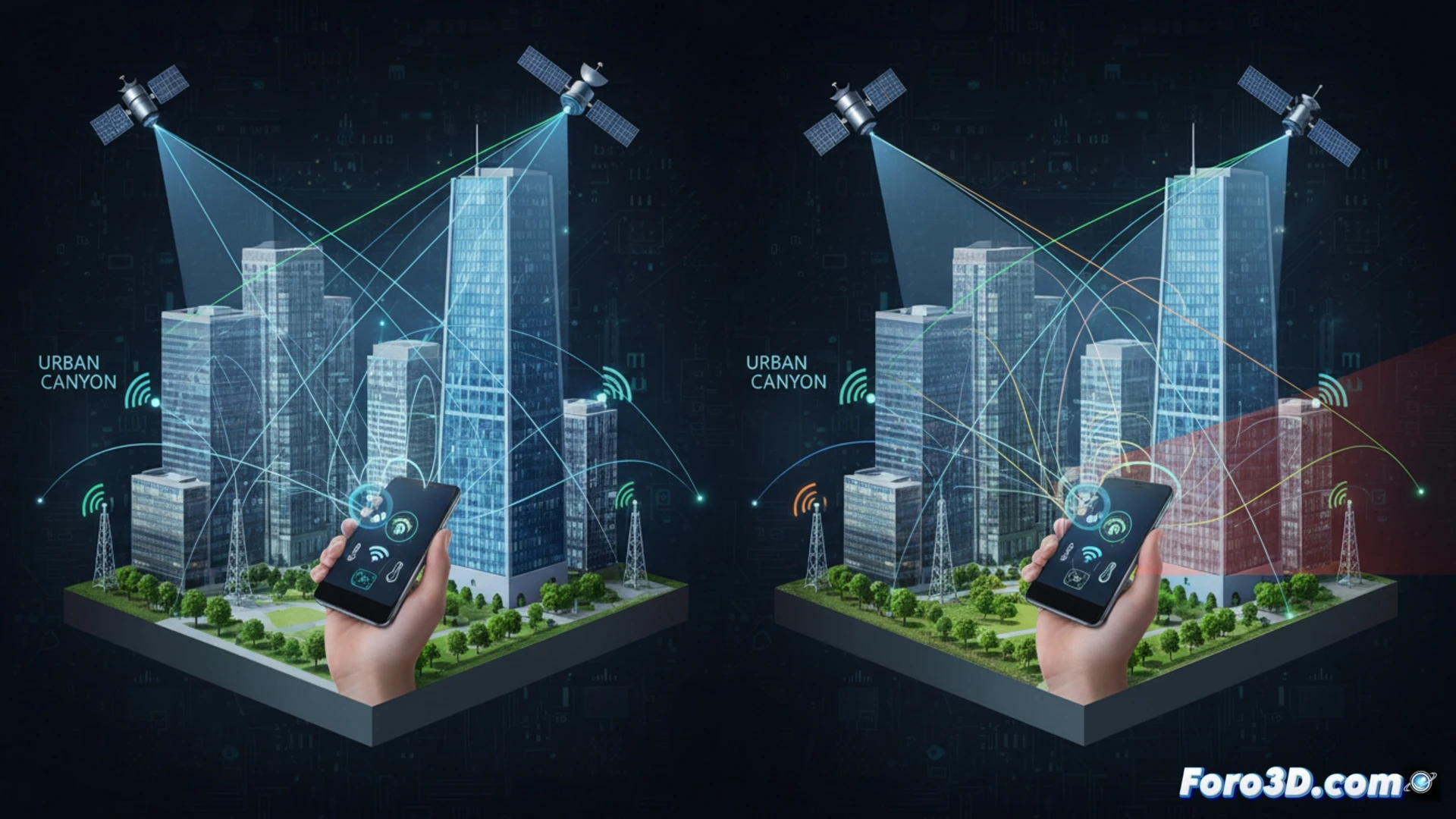
A-GPS, WiFi, and sensors: the backstage of positioning 📍
A-GPS speeds up the first fix by downloading orbital data over the internet, avoiding minutes-long waits. Indoors, WiFi positioning provides an approximate location based on nearby networks. The key lies in sensor fusion: it combines GPS, WiFi, Bluetooth, barometer, and accelerometers to correct sudden jumps in urban areas. Thus, even if you lose satellite signal, the phone estimates your movement until it regains it.
When GPS becomes a lousy fortune teller 🤷
In urban canyons, your phone thinks you're on the other side of the street or inside a bank. Buildings reflect signals like mirrors, and the barometer goes haywire. The system then relies on WiFi and sensors, but sometimes the result is as reliable as asking a clueless pedestrian. In the end, you have to walk a couple of blocks for the phone to figure out where you really are.