A study by the European University, led by Dr. Alejandro Lucía, reveals that living longer does not depend on a single factor, but on a coordinated adaptation of the body. Researchers point out that the key lies in preserving essential immune functions, such as better surveillance, lower chronic inflammation, and efficient cellular autophagy, that cleaning process that eliminates toxins and damaged cells.
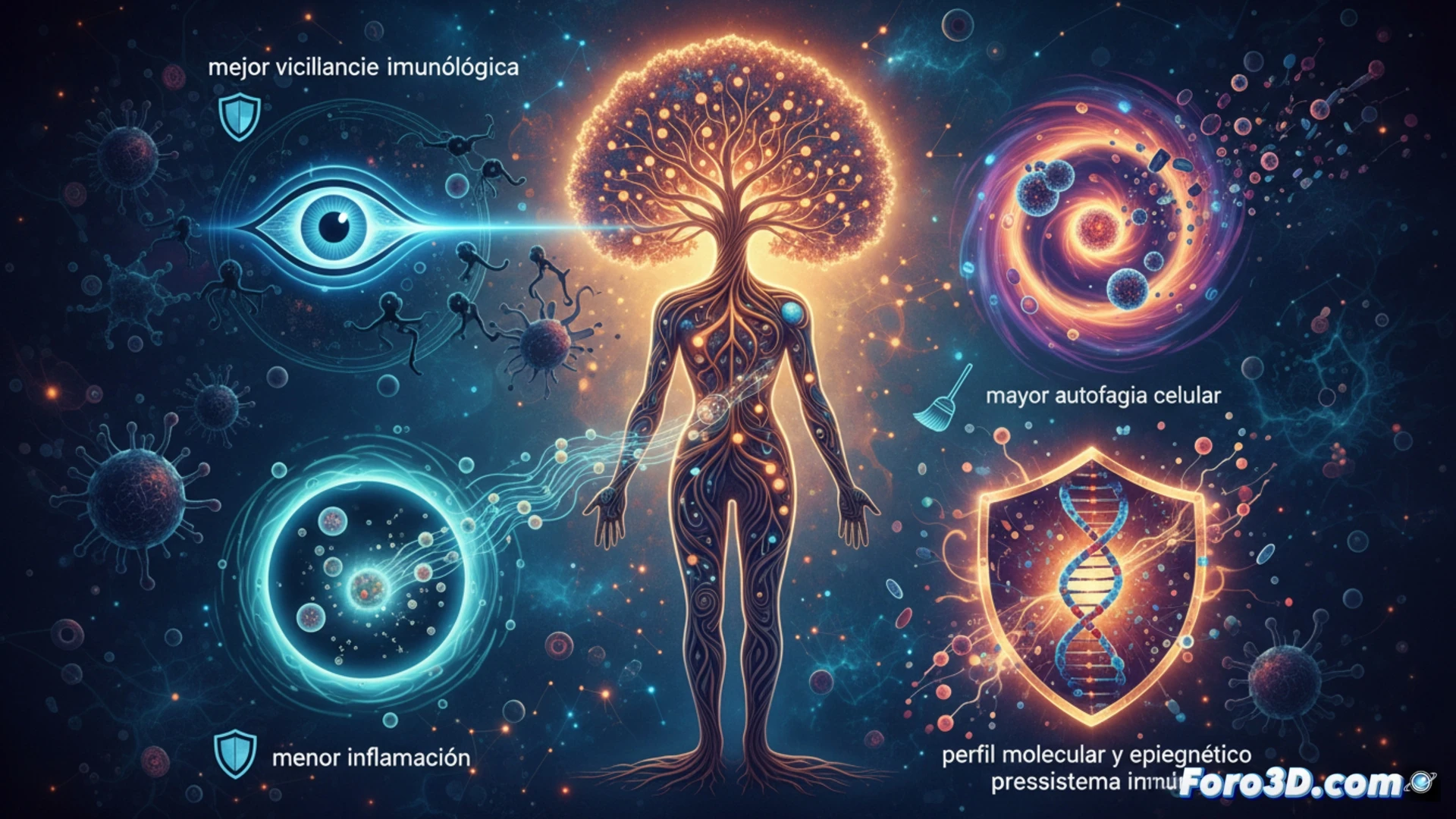
Autophagy and Epigenetics: The Biological Hardware of Resistance 🧬
The study delves into the molecular mechanisms that sustain longevity. Autophagy acts as a cellular recycling system that eliminates waste and prevents accumulated damage. At the epigenetic level, profiles are identified that favor the preservation of the immune system, reducing systemic inflammation. This coordination between internal cleaning and genetic regulation allows the body to maintain active immune surveillance against pathogens and damaged cells.
The Secret Wasn't the Diet, but Not Having Inflammation 😅
So, according to science, the key isn't just eating kale or doing extreme fasts. It turns out the body needs a good cellular cleaning service and less inflammatory drama. While some seek the fountain of youth in a jar of collagen, researchers suggest that perhaps we should be more concerned about our cells not accumulating garbage. Longevity, in the end, is having an immune system that doesn't go on strike.