From the very first frames, science fiction took us to impossible worlds. It didn't just entertain; it built a visual language we now take for granted. Films like Metropolis or 2001 set narrative and technical standards that influenced directors, engineers, and even the way we imagine the future. Their impact goes far beyond the screen.
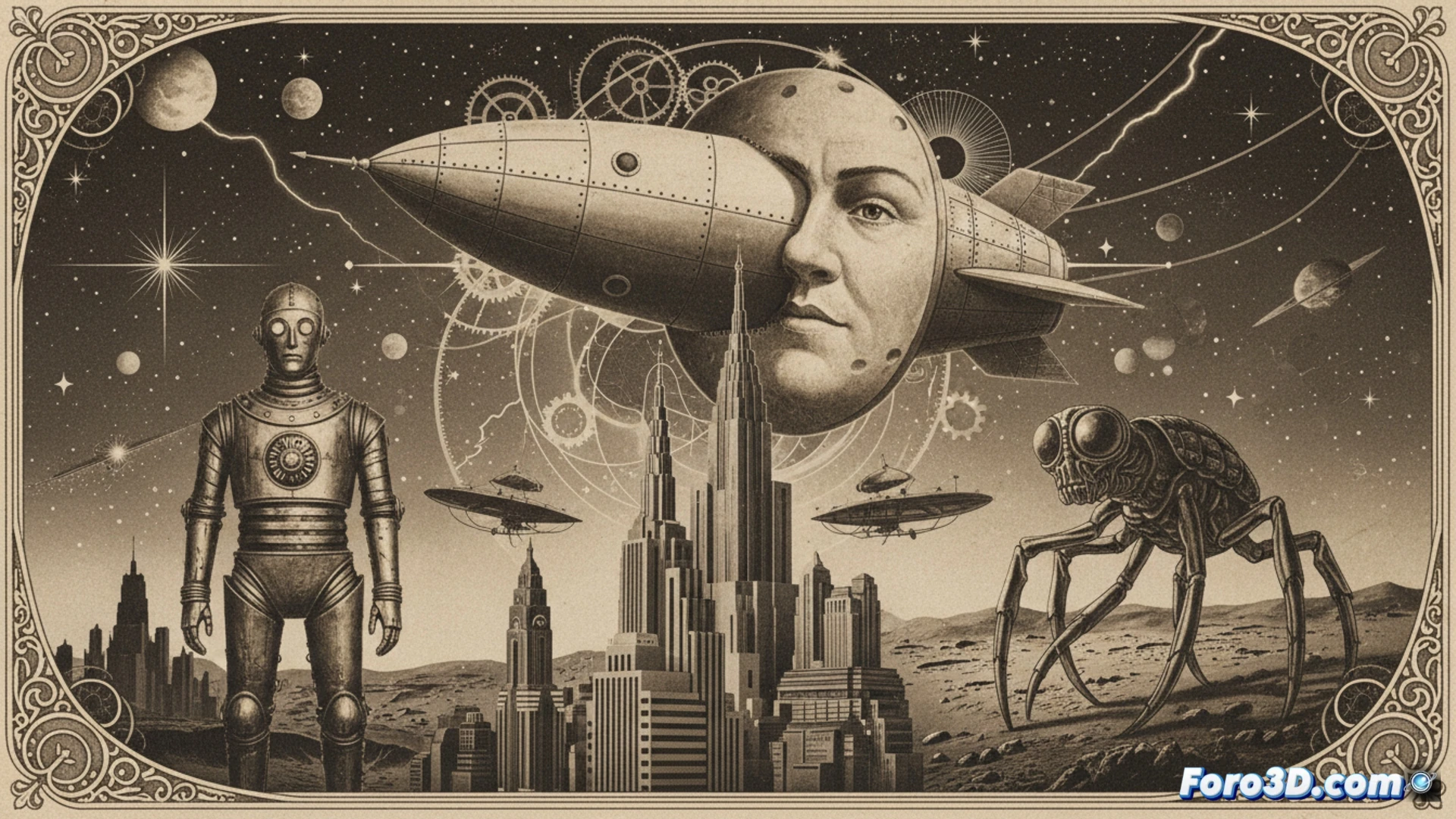
Practical effects and speculative narrative 🚀
The technical development of the genre relied on models, miniatures, and handcrafted optical effects. Stanley Kubrick used wide-angle lenses and rotating sets to simulate zero gravity in 2001. Ridley Scott combined film noir lighting with detailed models in Blade Runner. These methods, without massive CGI, created dense and realistic atmospheres. Speculative narrative addressed themes such as artificial intelligence, corporate dystopias, and interstellar travel, anticipating current ethical and technological debates.
Where's my flying car, George? 🤖
Science fiction promised us robot maids and colonies on Mars by 2020. Instead, we have vacuum cleaners that bump into walls and an Elon Musk launching cars into space. Movies sold us a future with touchscreens, and now we complain if our phone takes half a second to load. At least, thanks to Blade Runner, we know that in the future it will always rain in depressing cities. That one did come true.