The Chinese government, through its Ministry of Education, has officially launched the AI + Education initiative. This strategic plan aims to incorporate artificial intelligence at all levels of the educational system, starting in primary school. The measure follows in the footsteps of similar programs in the United States and the European Union, with the stated goal of improving AI digital literacy and preparing the future workforce. It is a redefinition of core competencies for the modern era. 🤖
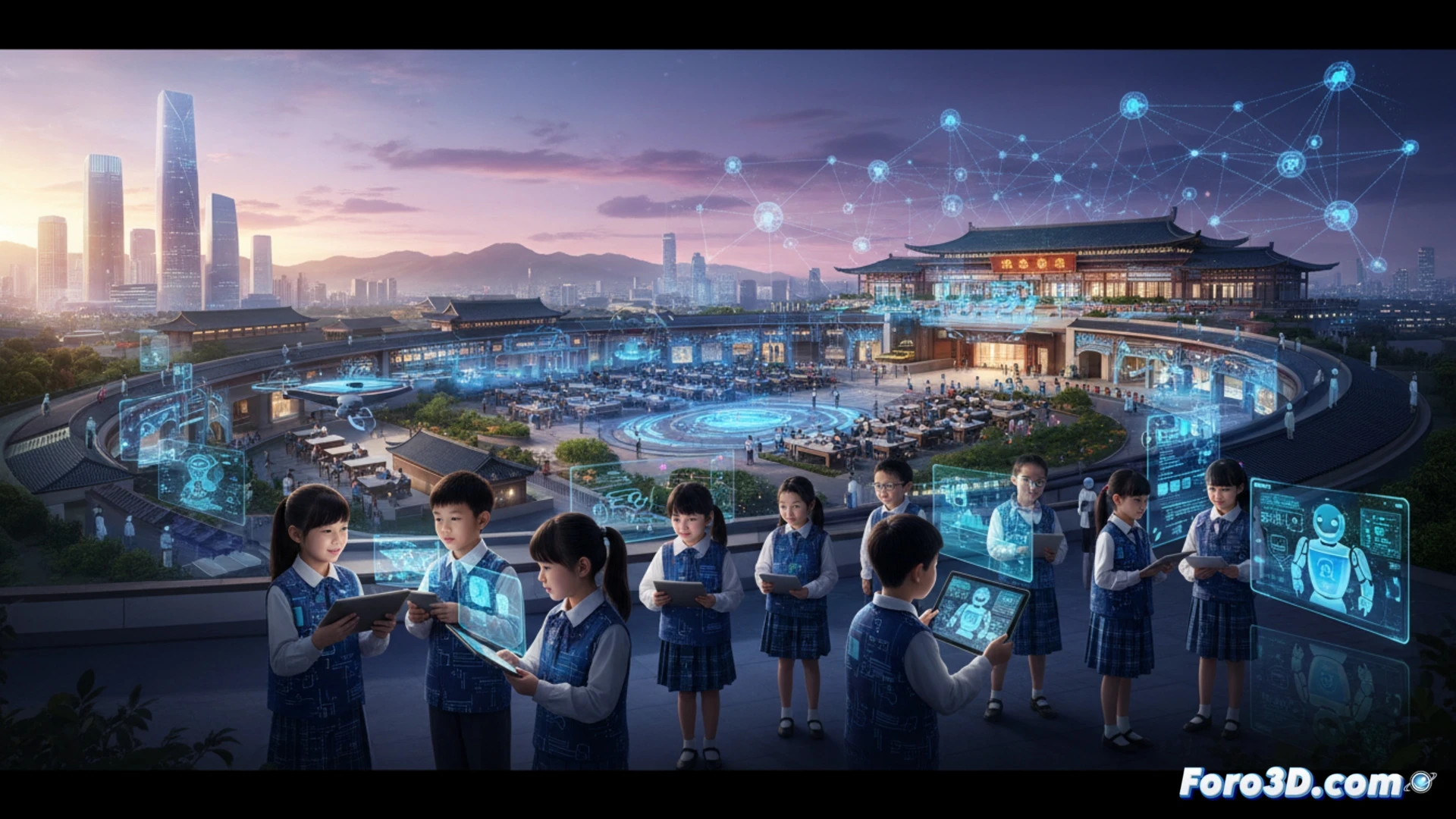
Infrastructure and Curricular Focus of the Plan 🏗️
The technical implementation is not limited to an isolated subject. The plan envisions the creation of AI-based adaptive learning platforms, performance analysis tools, and interactive digital resources. At the curricular level, concepts of computational thinking, algorithm ethics, and fundamentals of machine learning adapted to each age group will be introduced. The infrastructure will require a technological upgrade in educational centers and a massive training program for teachers, who will need to transition from being knowledge transmitters to guides in AI-assisted learning environments.
Goodbye to the Rule of Three, Hello to Gradient Descent 📉
Imagine the scene: a third-grade primary school child comes home and, instead of complaining about problems of trains leaving from two cities, explains that they are optimizing the loss function of their animal classification model. The parents, who still remember how to program the VCR, look perplexed at the notebook full of pseudocode. The classic excuse of the dog ate my homework will evolve into the training cluster had unexpected overfitting. The future is promising, although perhaps we will need an AI model just to understand what our children are doing in school.