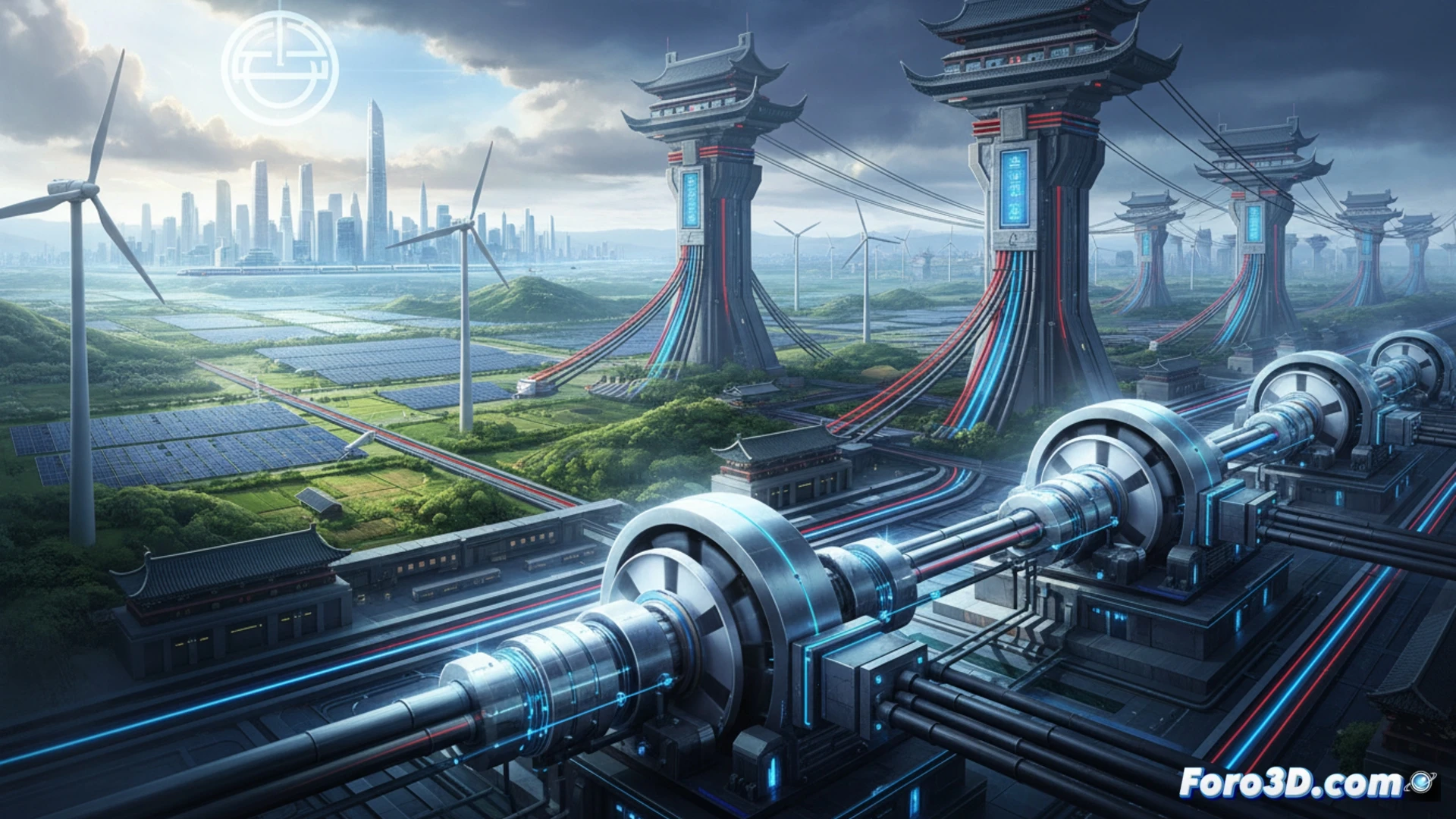
The massive integration of renewable energies, such as solar and wind, presents a challenge for the stability of electrical grids due to their intermittent nature. To address this problem, China is deploying a century-old solution on a large scale: synchronous condensers. This technology, developed a century ago, acts as a rotating inertia buffer, effectively and robustly smoothing voltage and frequency fluctuations on the grid.
Key Modernization: Direct Connection to 35 kV Without a Transformer ⚡
Engineers from Dongfang Electric Machinery have taken a significant step by modernizing the traditional synchronous condenser design. Their main innovation allows these rotating machines to connect directly to the 35-kilovolt distribution grid, eliminating the need for an intermediate transformer. This reduces energy losses, increases the overall system efficiency, and significantly simplifies installation and integration into existing substations, lowering costs.
The New is the Well-Forgotten, but with Updated Wiring 🔌
In a twist that would make valve radio-era engineers smile, the solution to one of the most modern problems comes from their manuals. While the sector seeks answers in giant batteries and power electronics, it turns out that a huge mass of steel spinning at 3,000 rpm does the job elegantly and predictably. Sometimes, innovation is not about inventing something, but about remembering that what already worked just needed a more modern plug.