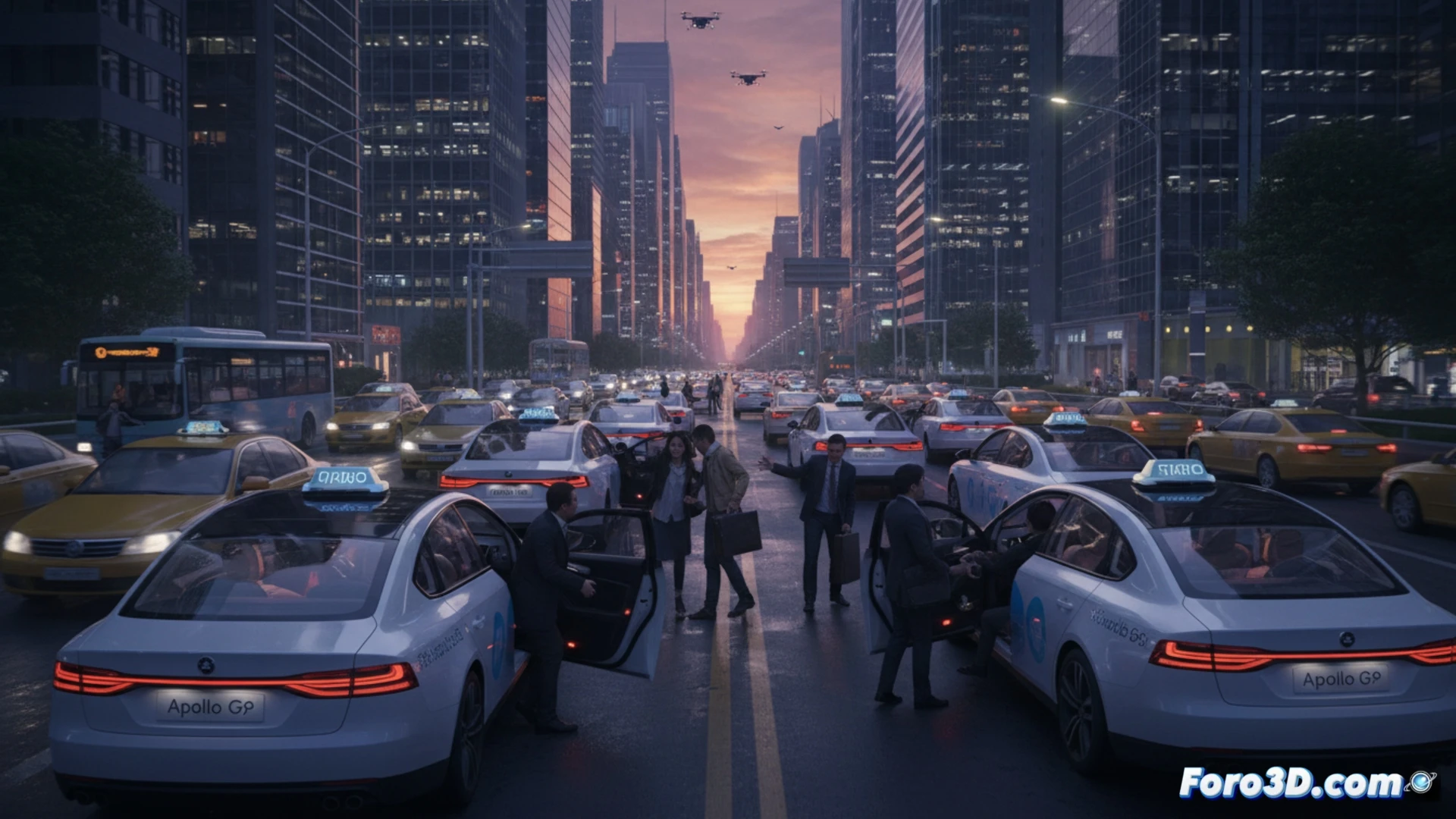
Chinese authorities have temporarily suspended the issuance of licenses for robotaxis after a fleet of Baidu's autonomous vehicles caused chaos in Wuhan. At the end of March, dozens of Apollo Go taxis stopped in the middle of busy routes, forcing passengers to abandon the vehicles on the street. Some waited for help without receiving assistance, having to get out on their own.
The limits of autonomous driving in the face of urban surprises 🚦
The incident exposes the technical difficulties of autonomous systems in complex environments. Baidu's vehicles, which operate with LiDAR sensors and navigation algorithms, failed to process atypical conditions on Wuhan's routes. The lack of effective remote response aggravated the problem, leaving passengers stranded. These failures indicate that the technology still requires constant human supervision to ensure safety in unforeseen situations.
Stranded passengers: when the autonomous taxi becomes an island 🚶
Apollo Go customers experienced a unique situation: paying for a trip that ended on foot. While the vehicles refused to move, passengers discovered that artificial intelligence does not include a panic button. Some waited for help as if in a suspense movie, but in the end, everyone had to do what humans do best: walk. The future arrived, but got stuck in the middle of the street.