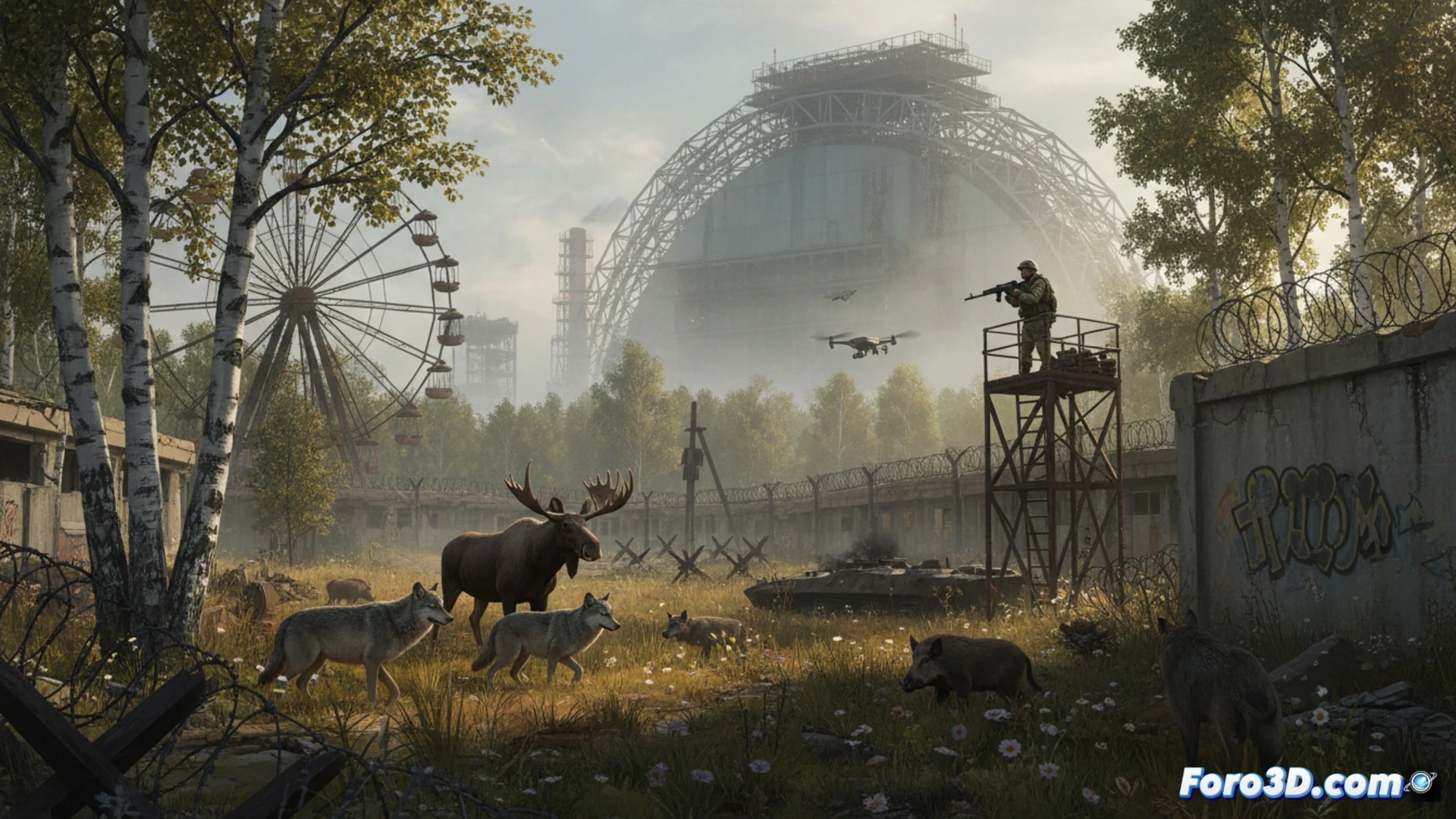
Four decades have passed since the Chernobyl accident. The narrative of an eternal radioactive wasteland has given way to a reality of natural recovery, with wildlife recolonizing the area. But this fragile process has been cut short by an unforeseen factor: war. The 2022 Russian invasion and the subsequent militarization of the zone have completely altered the landscape, swapping known environmental risks for immediate and chaotic wartime dangers.
Monitoring in Crisis: Technology Against Wartime Interference ☢️
Post-disaster management relies on constant scientific monitoring of radiation, the sarcophagus's integrity, and the state of the waste. This system, dependent on sensors, stable communication, and safe access, has been severely compromised. Combat, power outages, and the presence of landmines prevent maintenance and data collection. Drones, once surveillance tools, are now weapons flying over critical facilities, adding a layer of operational risk that the original protocols did not anticipate.
The New Extreme Tour: Rubble with Background Radiation 💀
Tour operators who offered controlled visits to the exclusion zone would now have to update their packages. The macabre appeal of seeing a covered reactor and abandoned towns has acquired an extra, more intense layer. Imagine the brochure: in addition to the mandatory dosimeter, it would include a bulletproof vest and a crash course in identifying unexploded ordnance. The guarantee of an authentically post-apocalyptic experience would, at last, be fully assured. A true journey into the heart of the nightmare, with two layers of catastrophic history.