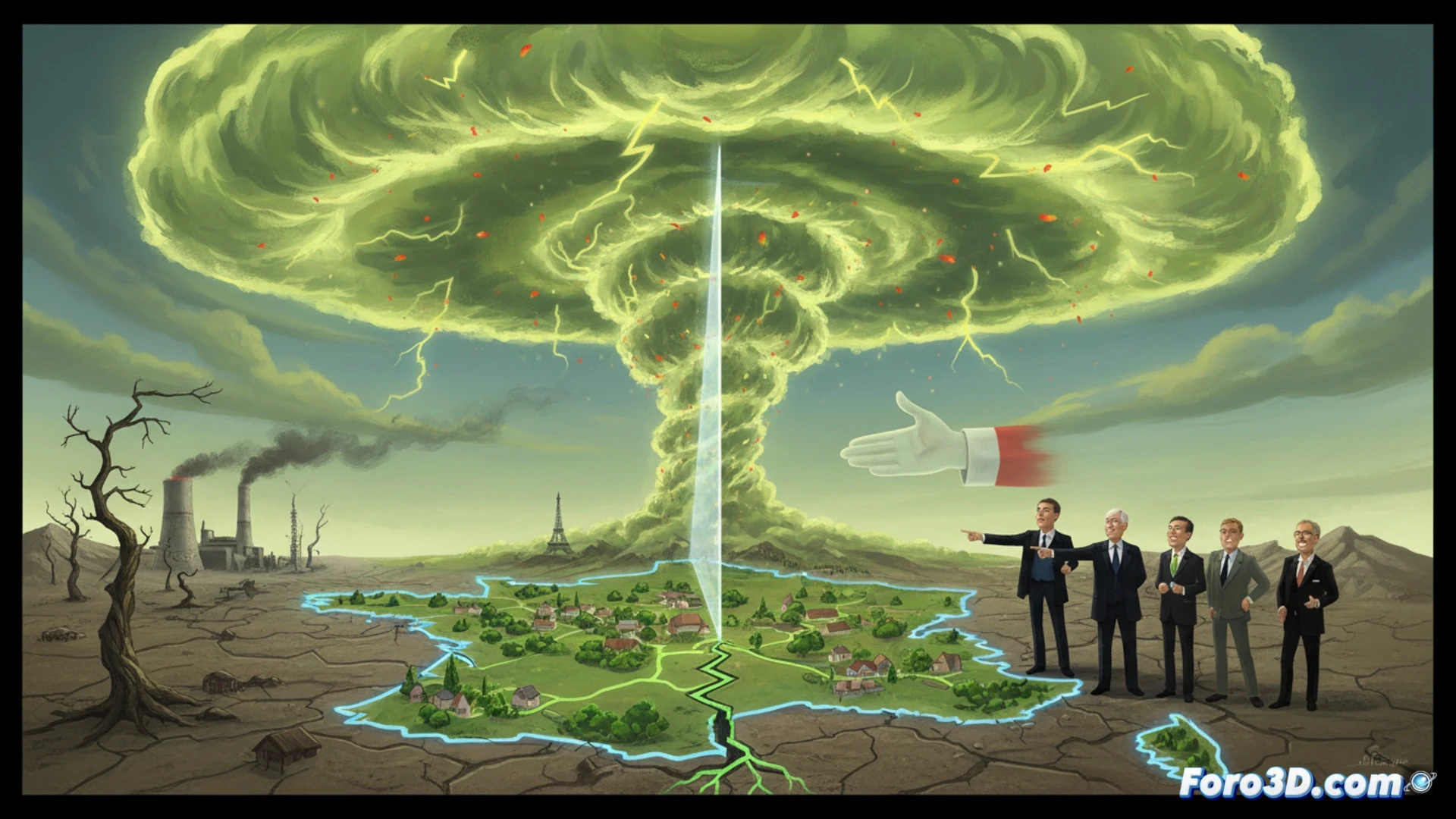
The story of the Chernobyl radioactive cloud that, according to French authorities in 1986, miraculously stopped at the border, has become a national myth. Decades later, soil studies and cesium-137 maps showed that contamination did enter France, albeit unevenly. This episode left a deep distrust of official risk management, a legacy that still looms over public debate.
How environmental monitoring revealed the invisible trail ☢️
Background radiation measurements taken in the 1990s, compared with data from 1986, made it possible to draw a detailed map of cesium-137 deposition. Hotspots were detected in eastern and southeastern France, especially in the Alps and Corsica, due to rain that carried particles. Gamma spectrometry technology, applied to samples of mushrooms and milk, confirmed that the cloud did not respect political borders, only weather patterns.
The cloud that did, but didn't, but did cross the border 🕵️
So, according to the official account of the time, the radioactive cloud was a polite tourist who presented their passport at the border and said: No, thank you, I'll pass by. But scientists, with their detectors and mushroom samples, discovered that said cloud had entered incognito, like a spy with an expired visa. In the end, it turned out the problem wasn't the radiation, but the credibility of those who said nothing was happening.