For decades, Catia has been the de facto standard in industrial and aerospace design. Now, with the emergence of artificial intelligence, Dassault Systèmes' software faces its biggest change since the shift from drawing boards to screens. The question circulating in forums is whether AI will optimize workflow or simply add another layer of complexity to a tool that already has a steep learning curve.
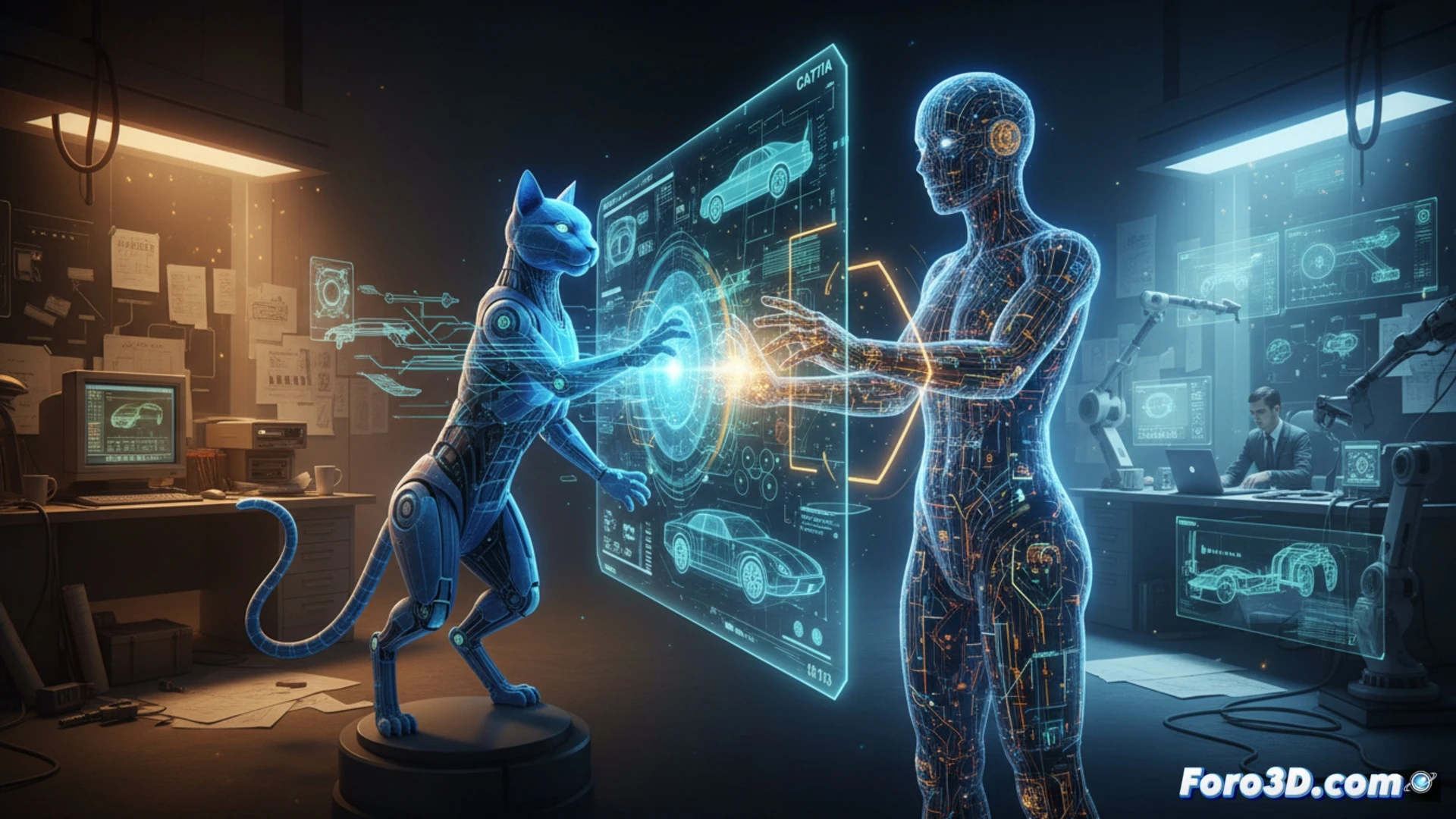
Generative automation and predictive simulation in Catia 🤖
The integration of AI in Catia focuses on two key areas: generative design and predictive simulation. The 3DEXPERIENCE platform already allows algorithms to propose design variants based on weight, strength, or material constraints, reducing manual iterations. Additionally, simulation modules are beginning to use machine learning to predict structural failure points without needing to run full calculations. This does not replace the engineer, but it does automate repetitive tasks that previously consumed hours of work.
The day Catia asks the intern to make the coffee ☕
Of course, it all sounds very nice until the AI proposes a spiral-shaped part that not even a first-year student would approve. For now, Catia's virtual assistant seems more like an intern with initiative than an expert: it suggests things, but you have to scrutinize them carefully. That said, at least it doesn't complain about overtime or ask about the salary. Meanwhile, we keep struggling with sketches and dreaming that AI will also write the reports for us.