A new development in the field of 3D printing promises to optimize electrolysis for obtaining green hydrogen. Researchers have created a catalyst with a porous structure that maximizes the reaction surface. According to novaciencia.es, this advance reduces the energy needed to split water, bringing hydrogen closer to being a viable alternative to fossil fuels.
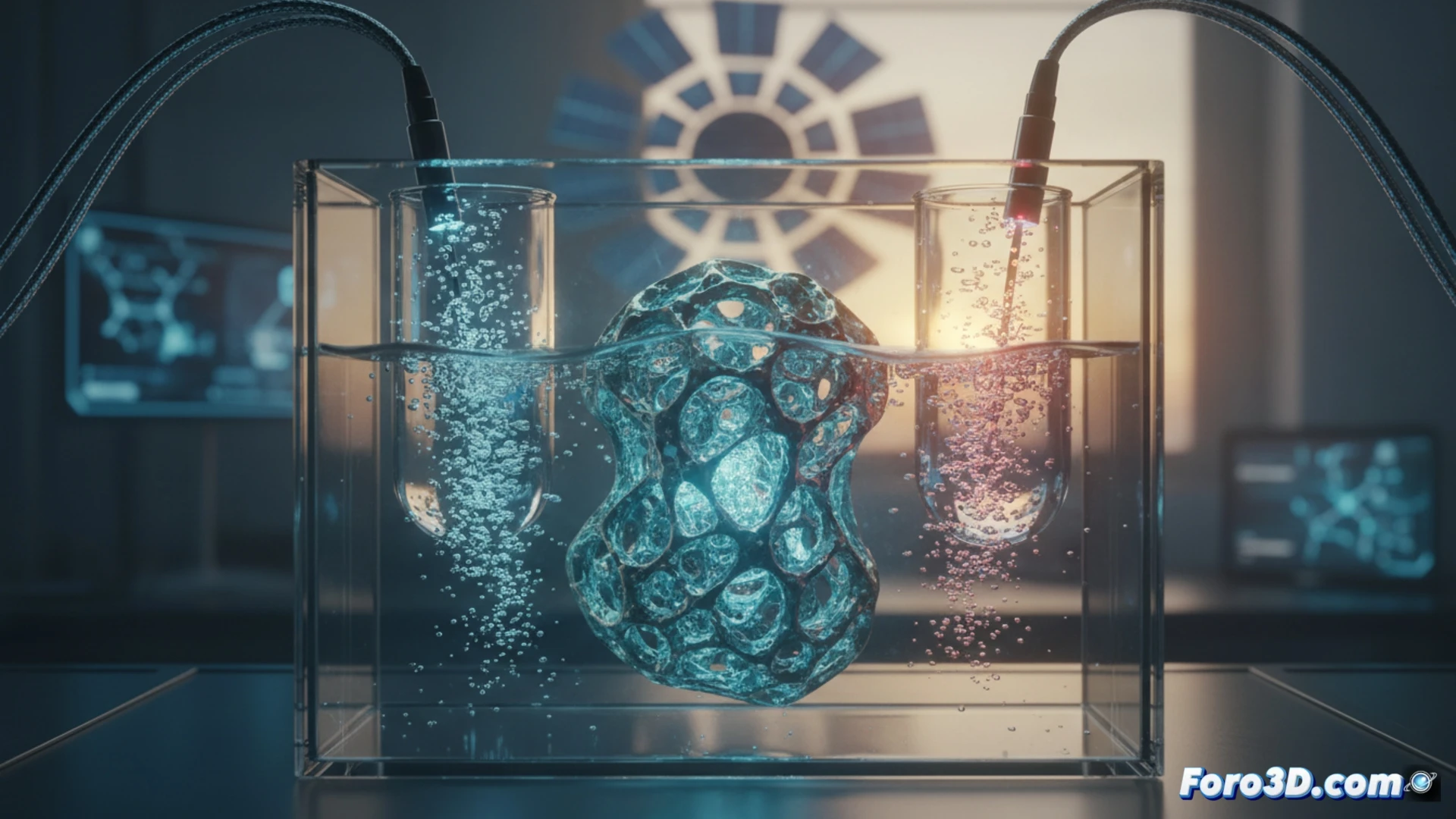
Porous structure that multiplies efficiency 💡
The technical key lies in the three-dimensional design of the catalyst. Manufactured using 3D printing, its porous structure increases the active area where the chemical reaction occurs. This allows electrolysis to function with less renewable electricity, a critical factor for reducing costs. The material used, of high conductivity, guarantees durability without losing performance. Tests show a significant improvement in hydrogen production rate compared to traditional flat catalysts.
Green hydrogen, now with fewer volts and more hope ⚡
Finally, news that doesn't imply green hydrogen is just a dream for engineers with virtual reality goggles. This 3D-printed catalyst seems to have found water's weak spot: the hardest part is no longer splitting it, but explaining to your electricity bill that we now need less power. If all goes well, soon we can say goodbye to gasoline and hello to refueling with water, even though it remains a mystery how to fill the tank without it evaporating.