An experiment with a carbon material under a magnetic field has revealed a state of matter that does not fit into the usual spatial classifications. Electrons move in an intermediate manner, combining features of two-dimensional and three-dimensional systems. The highly ordered carbon structure allows hybrid trajectories, challenging conventional physics and raising questions about how to define dimensionality in quantum materials.
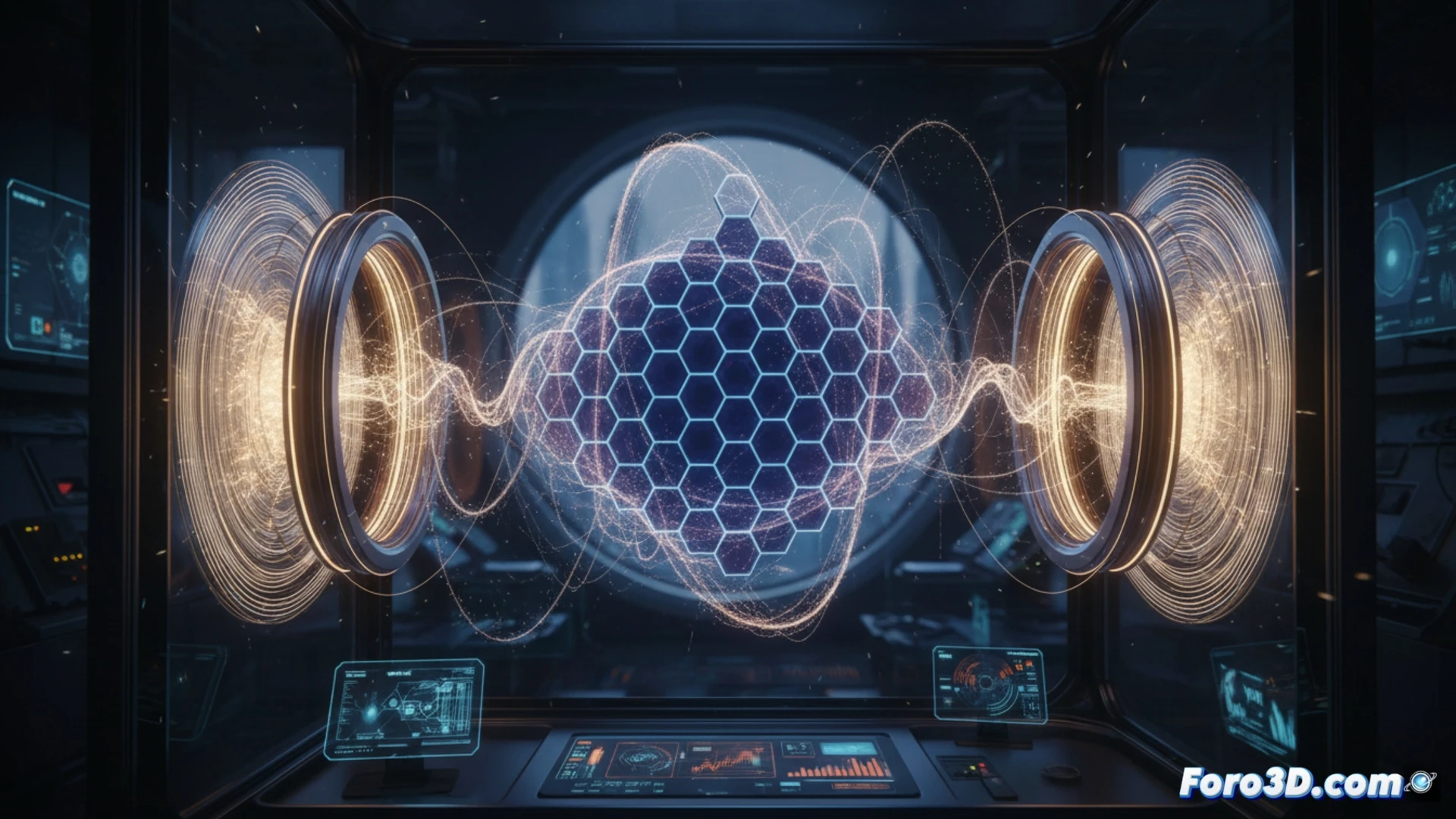
Transdimensional electrons: implications for new materials 🧲
Researchers observed that, when applying a magnetic field, electrons in this carbon network are not confined to a plane nor do they expand freely in three axes. Instead, they follow paths that alternate between both behaviors, as if a fractional dimensionality existed. This phenomenon suggests that certain materials could be designed to conduct electricity in a controlled manner in intermediate regimes. Although still experimental, the finding could influence the development of more versatile and efficient electronic components.
The carbon that doesn't know if it's flat or bulky 🤔
This carbon material seems to be in an existential crisis: it can't decide whether it wants to be a sheet or a block. The confused electrons do a bit of both, like someone who doesn't know whether to jump into the pool headfirst or feet first. Physicists, delighted, now have a new puzzle for their weekends. Meanwhile, the carbon remains there, as versatile as ever, laughing at our labels.