A new study reviews the constraints on primordial magnetic fields that permeate the intergalactic medium. The key is that these fields lose energy over time due to diffusion and turbulence processes. By incorporating these effects into cosmological models and comparing them with observations, scientists conclude that previous limits were too strict, since the fields weaken and leave a smaller signal than expected.
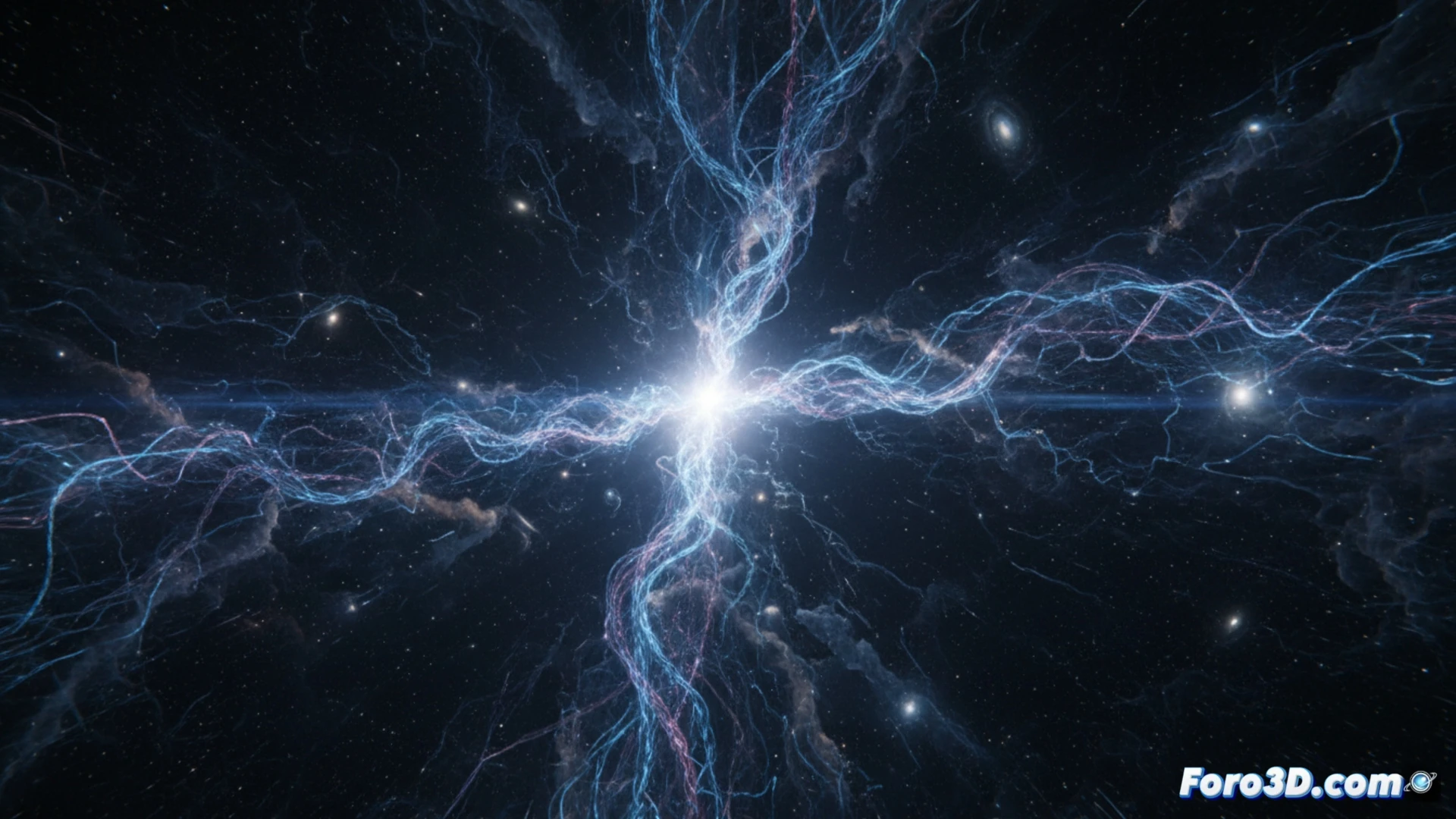
HERA and the 21 cm signal: a window to the past 🌌
The study shows that future experiments like HERA (Hydrogen Epoch of Reionization Array) could improve these measurements. By analyzing the 21 cm signal from neutral hydrogen, the influence of these fields in the early stages of the universe can be traced. For science, the benefit is obtaining more realistic estimates of the origin and evolution of these magnetic fields. The downside is the high dependence on complex models and data that are still under development, which requires patience.
The magnetic field that slipped through our fingers 🧲
It turns out that primordial magnetic fields were like that friend who promises to show up with energy at the party but ends up getting lost along the way. It turns out that diffusion and turbulence take away their will to shine. Now cosmologists have to adjust their calculations and wait for HERA, while the universe laughs at us, moving its cosmic magnets without us being able to measure them properly.