Installing security cameras at home is a common decision to increase peace of mind. However, their real usefulness depends on careful configuration that prioritizes technical security and respect for privacy. This article addresses the types of devices according to needs, essential configuration practices, and the applicable legal framework in Spain to avoid major problems.
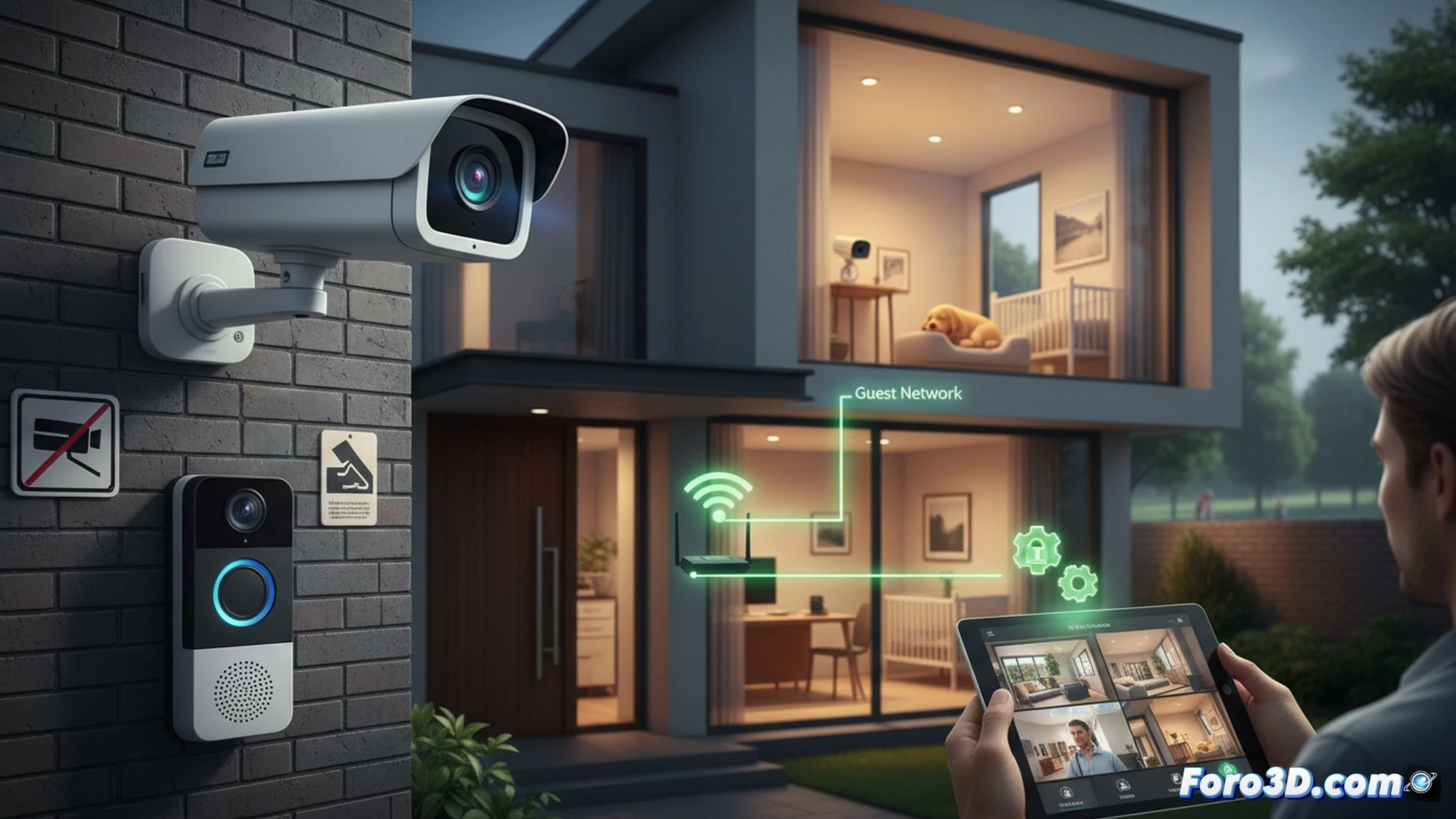
Technical Configuration and Network Isolation 🔐
The security of a camera begins with basic but critical actions. Changing the default password is the first step, followed by regular firmware updates to patch vulnerabilities. For greater privacy, local storage on an SD card is preferable to the cloud. An effective technical measure is to connect the devices to a guest WiFi network, thus isolating the traffic from the main network and limiting access in case of compromise.
Your Neighbor and the Right to Their Own Reality Show 🎬
Legality has its nuances. While recording your property is acceptable, pointing at the sidewalk turns your system into an unauthorized urban documentary project. Placing the video surveillance sign is mandatory, although it sometimes seems more like a formal invitation than a deterrent. Remember, the goal is to deter intruders, not to produce content for data protection lawyers to have more work.