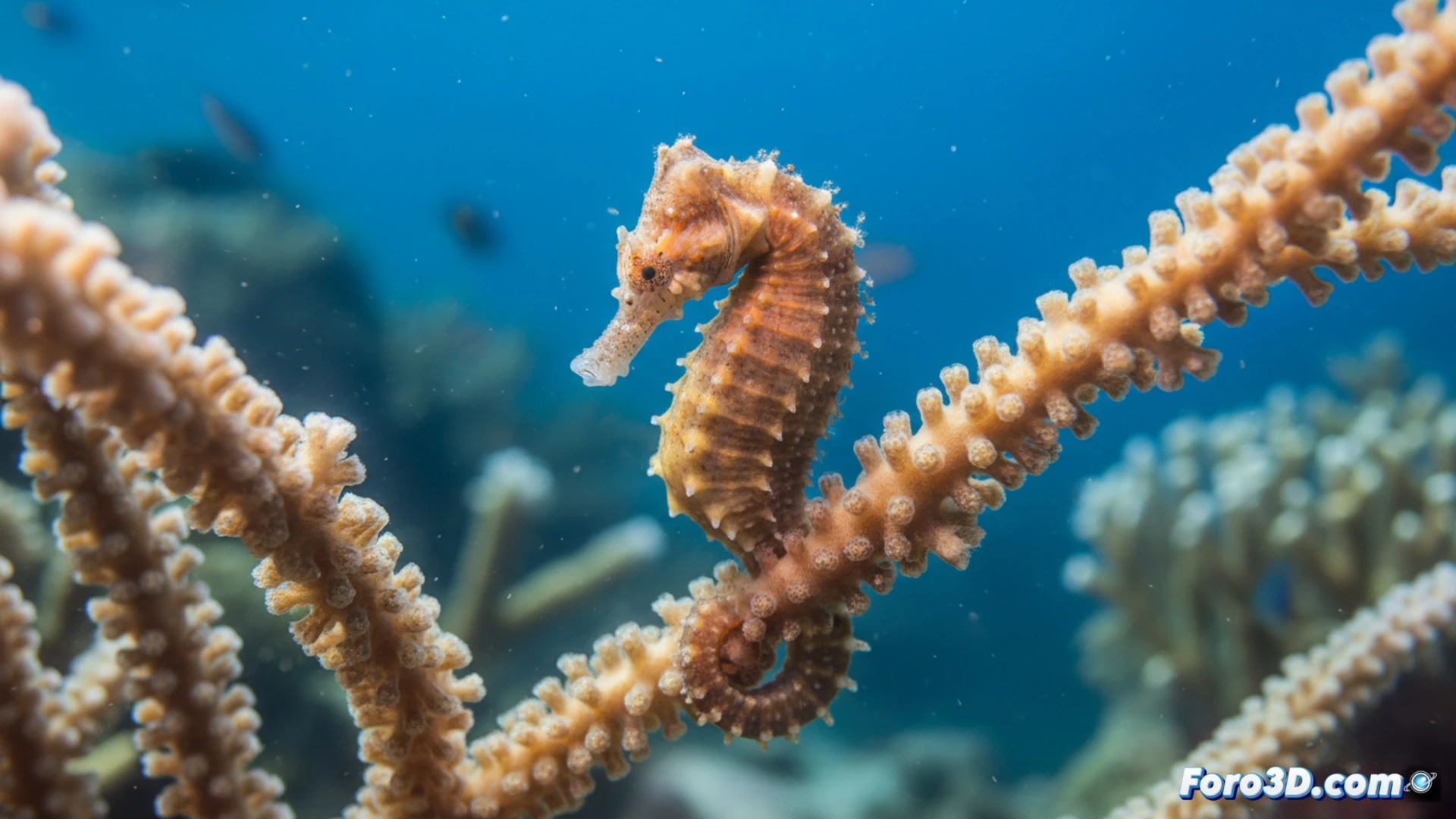
The scientific community has identified a new species of pygmy seahorse off the coast of South Africa. It is the first member of its genus recorded on the African continent. At just 4 centimeters in length, this tiny marine inhabitant possesses almost perfect camouflage that makes it nearly invisible among the algae and corals where it resides.
Camouflage as an evolutionary advantage and technical development 🐠
This species, named Hippocampus nalu, features a camouflage system based on the texture and coloration of its skin, which precisely imitates the gorgonians where it lives. Unlike other seahorses, its body lacks flashy appendages, reducing its visual profile. Scientists have used high-resolution photography and genetic analysis to confirm that it is not a local variation, but a distinct species. Its discovery raises questions about biodiversity in little-explored areas of the Indian Ocean.
The master of hide-and-seek nobody invited to the party 🐡
Imagine being so small you could hide behind a paperclip and so well camouflaged that your friends search for you for hours without success. That's this seahorse. Scientists took years to find it, not for lack of trying, but because it literally looks like a grumpy twig. If you ever get lost at sea, don't count on it for help: it will probably have been standing right in front of you for hours without you noticing.