Personalized stress measurement has evolved beyond subjective questionnaires. Wearable devices monitor heart rate variability, offering a stress score based on deviations from our physiological baseline. However, these tools do not distinguish between distress and eustress. This is where 3D biomedicine can revolutionize the field, transforming raw data into interactive visual models for a deep and personalized understanding of our physiological response.
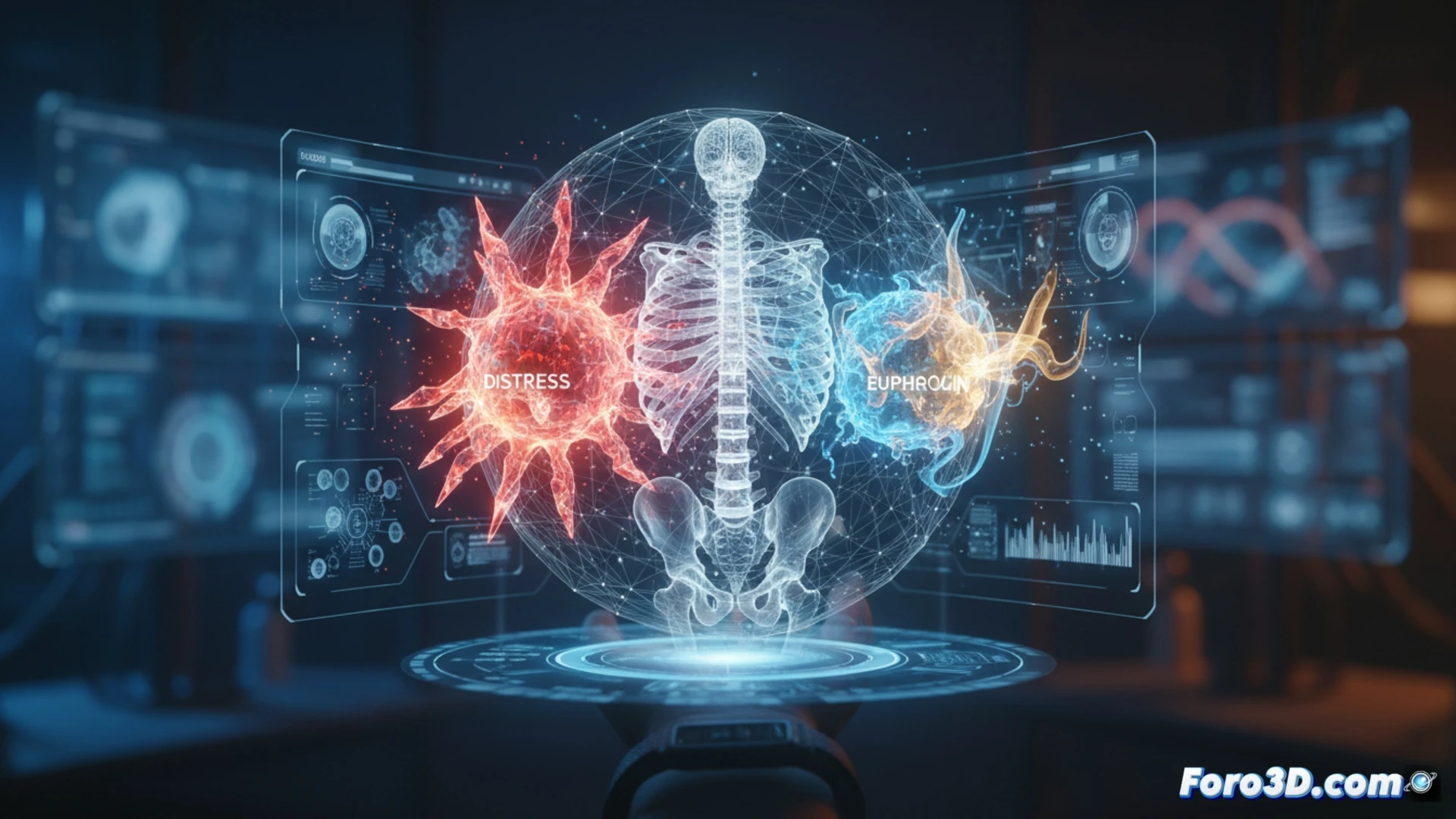
From Osteocalcin to the 3D Model: A New Monitoring Paradigm 🦴
Research seeks more precise and rapid biomarkers, such as osteocalcin, a molecule released by the skeleton during stress. 3D visualization is key to interpreting this data. Imagine an interactive model of the skeletal-endocrine system, where the synthesis and release of osteocalcin from bone into the bloodstream is visualized in real-time. 3D modeling and digital twin technologies could simulate these biochemical cascades, allowing researchers and doctors to observe the spatial dynamics of stress in a precise anatomical context, overcoming the limitations of 2D graphics.
The Future is a Digital Twin Under Stress 🧬
The convergence of advanced biosensors and 3D modeling points towards personalized physiological digital twins. These virtual avatars would integrate real-time data from multiple biomarkers, like osteocalcin, to simulate and predict individual stress responses. This approach would not only improve diagnosis but also serve as a powerful educational tool, allowing us to visualize and understand the complex internal choreography activated under pressure, all within an intuitive 3D spatial framework.
How can 3D models of dynamic biomarkers, derived from wearable data, transform the real-time visualization and personal management of stress?
(PS: If you 3D print a heart, make sure it beats... or at least doesn't have copyright issues.)