This year's Brooklyn Independent Comics Showcase reaffirmed its identity as the antithesis of mega commercial fairs. Its proposal was based on self-management and pure experimentation, creating an environment where artisanal production and direct contact were the norm. This approach defined a particular experience, with clear virtues and limitations, far removed from large booths and mass signings.
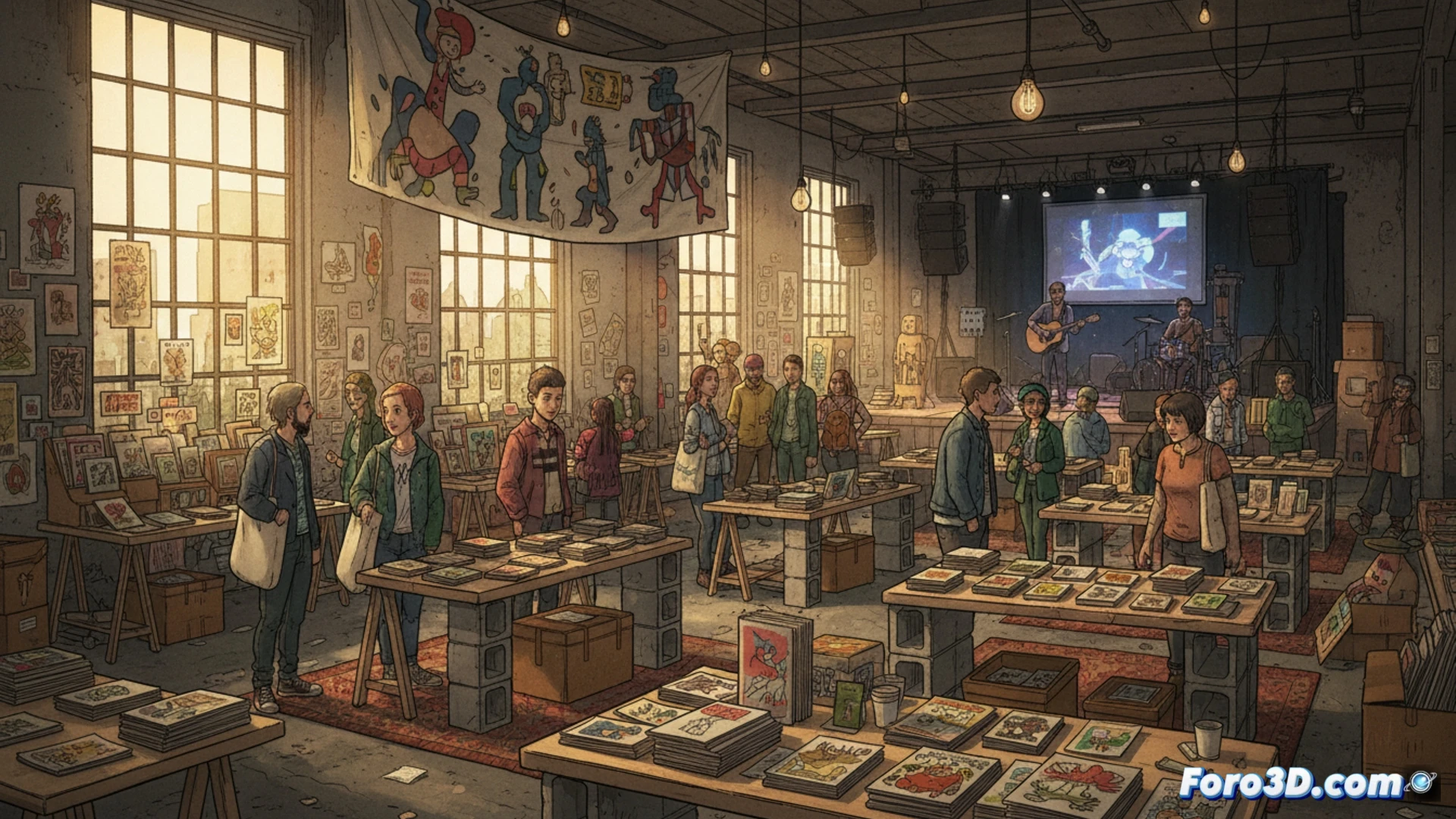
Manual Rendering and Low Refresh Rate 🖋️
The dominant technology at BICS was analog. The observed production pipeline was based on physical tools: pencils, markers, desktop printers, and light tables. The refresh rate of the products was low, with short print runs and hand binding. This workflow, although lacking industrial optimization, guaranteed the artist's total control over every stage, from the final art to distribution at their own booth.
The A3 Folded Paper Syndrome 😬
The event's logistics tested forgotten skills. Transporting a stack of comics on the subway without bending corners became a sport of precision. Setting up a booth with washi tape and hoping it would last a whole day was an exercise in faith. And social interaction oscillated between genuine exchange and the fear of staring blankly at the ceiling while your neighbor sold three fanzines in a row. A master's in self-sufficiency with extra points in patience.