In 2024, ichthyology celebrated a unique discovery in the acidic riverbeds of the Congo: the Stiassny Giraffe Catfish. This small catfish, named in honor of Dr. Melanie Stiassny, features a reticulated pattern of yellow and brown spots that directly evokes the silhouette of a giraffe. Its adaptation to waters with extremely low pH poses a fascinating challenge for scientific visualization and anatomical modeling.
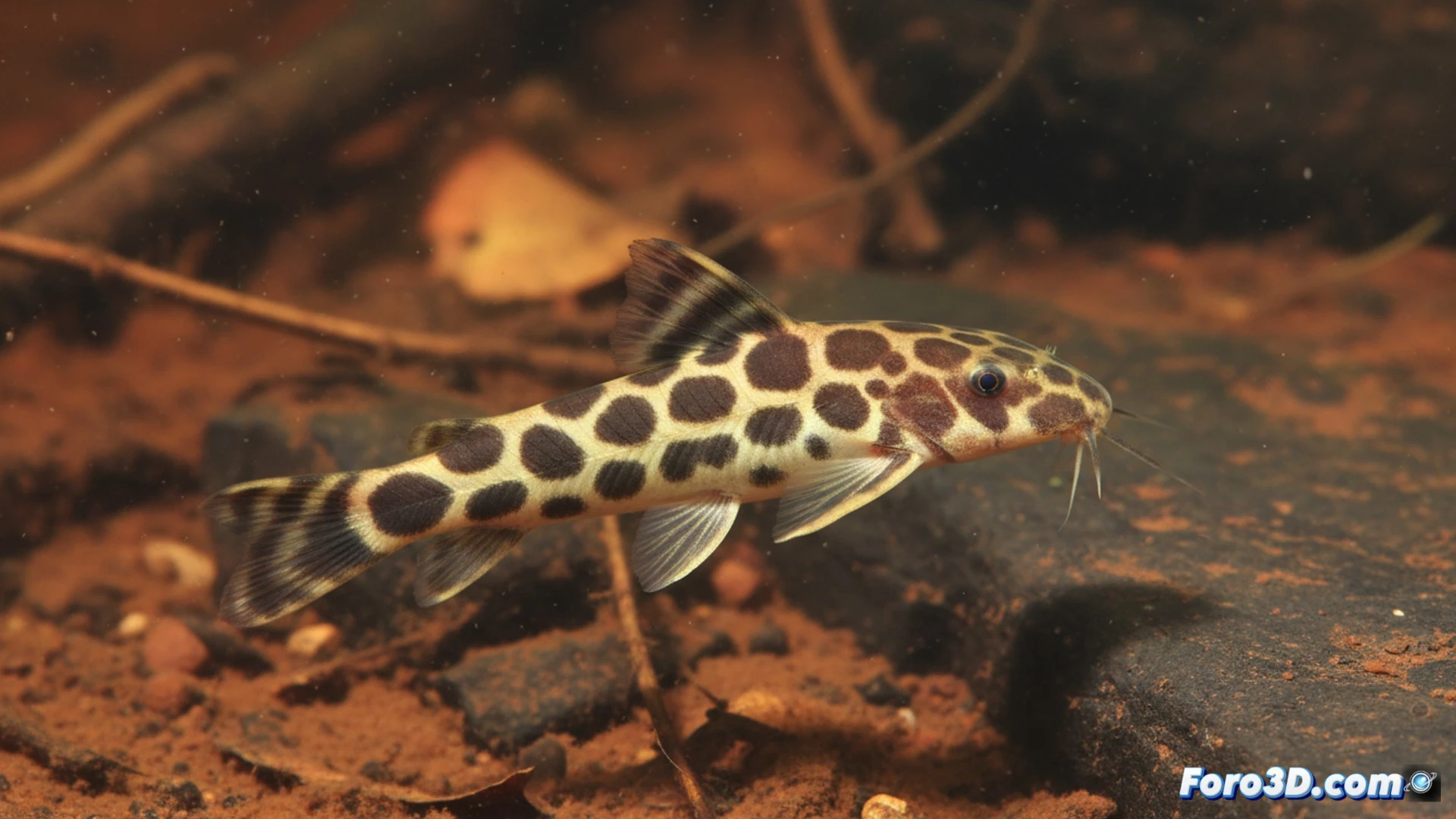
Digital reconstruction of habitat and morphology 🐟
For the Scientific Visualization team, the technical challenge lies in capturing two key variables: the transparency of the acidic water and the epidermal texture of the fish. The 3D model must reflect the chromatophores that generate the giraffe pattern, using displacement maps to simulate skin roughness. Furthermore, recreating the habitat requires simulating water chemistry through parameters of turbidity and reddish-brown coloration, as well as submerged riparian vegetation. Behavioral animations should show its undulating swimming and interaction with the sandy substrate, where it digs for invertebrates.
The evolutionary paradox on a digital canvas 🧬
This fish forces us to question how such a striking pattern can be advantageous in dark, corrosive waters. The answer may lie in the ultraviolet light that penetrates these rivers, revealing camouflage invisible to the human eye. Visualizing this species is not just an exercise in realism, but a tool to communicate the fragility of these unique ecosystems, where life defies the most extreme chemical limits.
As a 3D modeler, what are the main technical challenges when recreating the unique morphology of the Stiassny Giraffe Catfish for accurate scientific visualization, especially in an environment like the acidic riverbeds of the Congo?
(PS: at Foro3D we know that even manta rays have better social bonds than our polygons)