The Californian company Azure Printed Homes has taken a crucial step in its industrial scalability with the opening of a new 25,000-square-foot factory in Denver. This move, backed by a state loan of 3.9 million dollars, consolidates its model of manufacturing homes via 3D printing. With a project portfolio exceeding 60 million dollars and over 100 units delivered, the company exemplifies the transition from digital architecture to large-scale physical production. 🏭
From BIM to Manufacturing: The Steel-3D Printing Hybridization 🔗
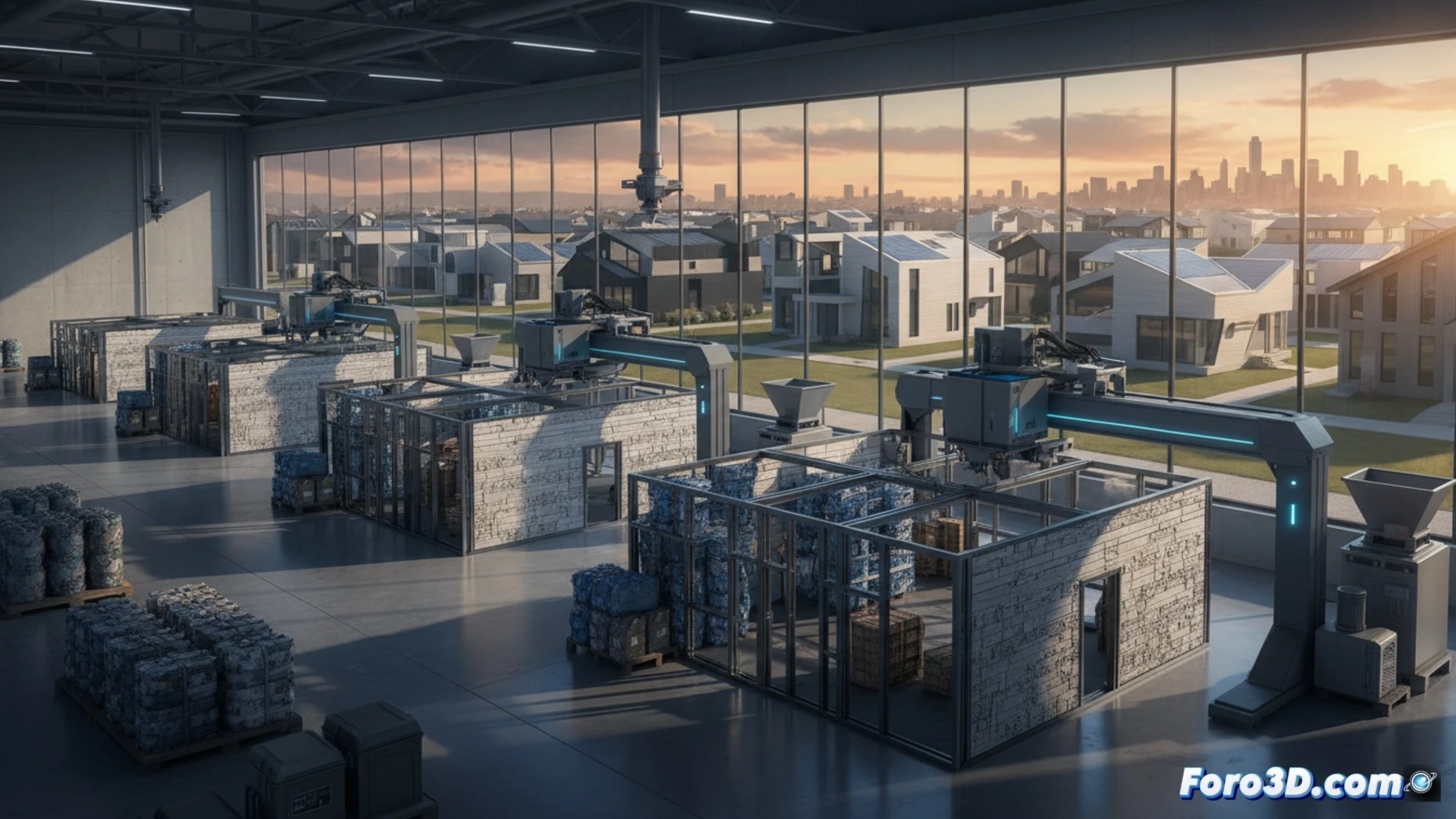
Azure's approach is not limited to 3D printing walls. Its true technical innovation lies in the systematic integration of that process with a prefabricated steel structure and the use of recycled materials in its printing compound. This represents the direct materialization of a BIM model into construction components, where the digital design dictates manufacturing with millimeter precision. This hybrid model addresses structural limitations of conventional 3D printing, enabling complete industrialization that reduces timelines and controls costs from factory to site, optimizing the workflow from start to finish.
Sustainable Prefabrication and the Future of the Sector ♻️
Azure's expansion points to a clear path for architecture: sustainability and efficiency come through technified industrialization. By prioritizing recycled materials and a controlled factory process, waste is minimized and repeatability is maximized. This case demonstrates that advanced prefabrication is no longer a niche, but a viable alternative competing in business volume. The challenge for BIM and architecture professionals will be to adapt their methodologies to these new design for manufacturing ecosystems.
How can 3D printing of homes with recycled materials, like Azure's proposal, be integrated into BIM workflows and data models to revolutionize design, budgeting, and sustainability processes in architecture?
(PS: BIM is like having a building in Excel, but with pretty windows.)