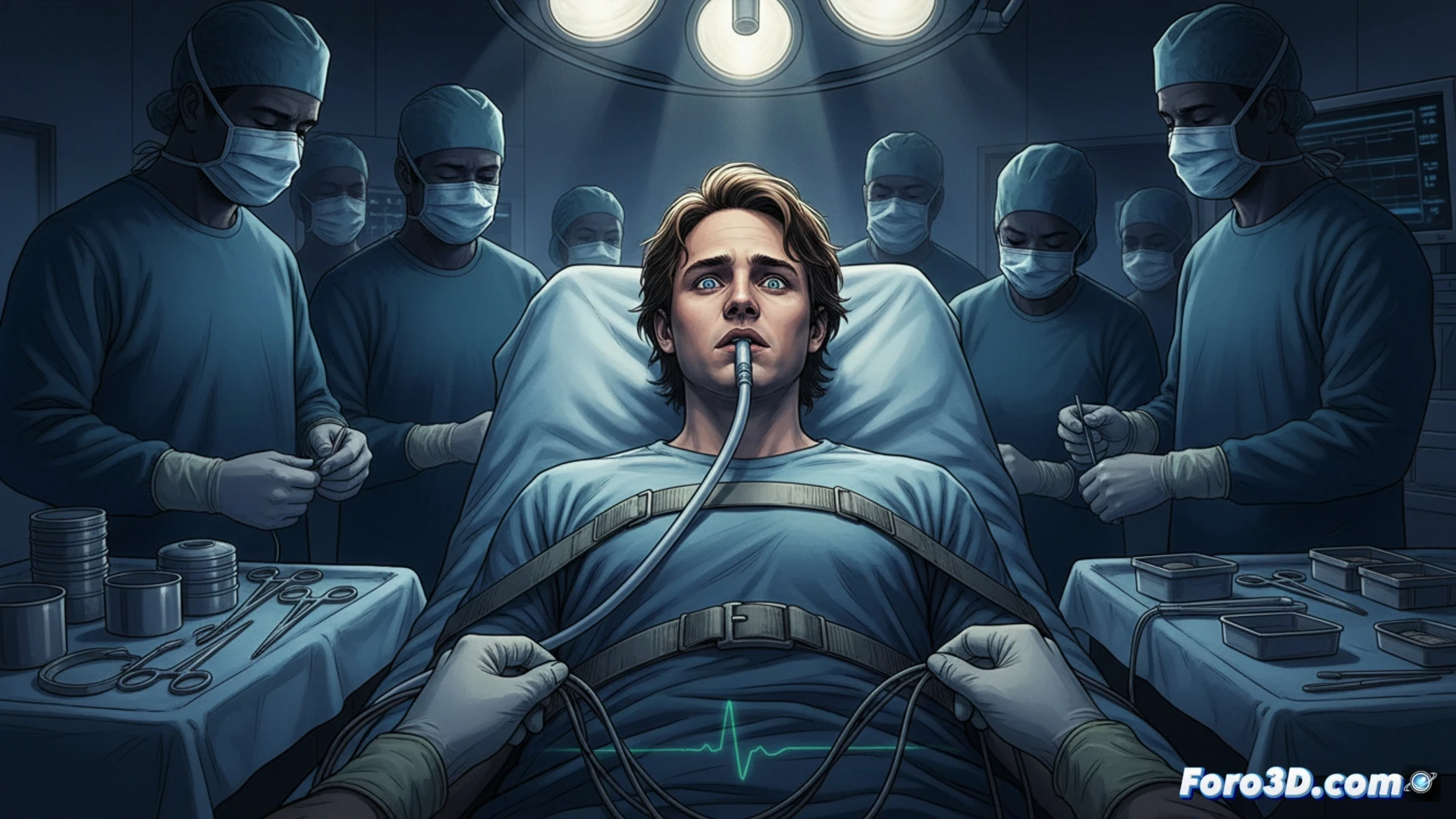
Beyond Anakin Skywalker, Hayden Christensen has a performance that often goes unnoticed. In the medical thriller 'Awake', he brings to life Clay Beresford, a patient who suffers from anesthetic awareness during surgery. Paralyzed but conscious, he must unravel a conspiracy to murder him without being able to move or alert anyone. The film leverages this real clinical premise to build oppressive suspense.
Rendering Paralysis: Technology in Service of Subjective Suspense 🎬
The effectiveness of 'Awake' lies in how it technically constructs its point of view. The camera becomes Clay's limited perception, with close-ups of his immobile eye, distorted sounds, and reduced fields of vision. The sound design is key: the surgeons' murmurs and heart monitoring are amplified, while visual effects simulate disorientation. This technical approach, removed from spectacular effects, generates tension through sensory restriction.
When Your Body's Airplane Mode Activates at the Worst Moment 😱
The film presents the ultimate technological nightmare scenario: your body has a system failure and rejects commands, like a computer with a blue screen in the middle of an important presentation. Imagine your wake-up function works, but the move or scream functions don't. It's the worst possible user experience, where technical support (the anesthesiologists) not only doesn't listen to you but might be part of the problem. A clear case where reading the terms and conditions of general anesthesia perhaps wasn't such a bad idea.