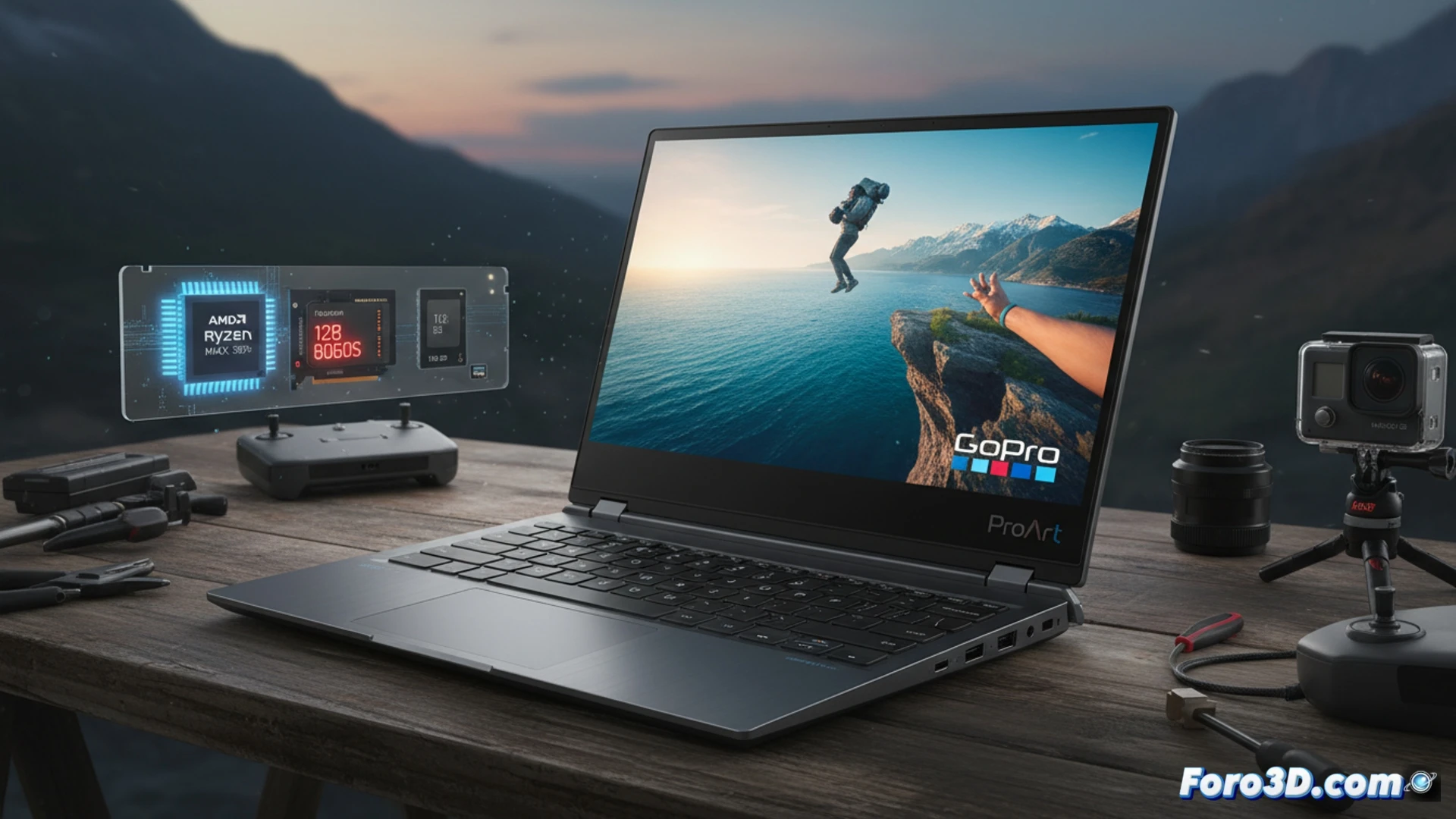
ASUS and GoPro present a laptop that aims to conquer the nomadic creator. The ProArt PX13 GoPro Edition combines an ultra-thin and light design, weighing only 1.39 kg, with a 360-degree hinge for multiple usage modes. But its true potential for 3D artists lies inside: an AMD Ryzen AI MAX+ processor, a Radeon 8060S GPU, and a massive 128 GB of RAM. It promises to be a no-compromise mobile workstation.
Technical Analysis for 3D Workflows 🔍
The specifications point directly to demanding productivity. The 128 GB of RAM is a luxury that allows working with dense polygon scenes, high-resolution textures, and complex simulations without fear of bottlenecks. The Radeon 8060S GPU should handle the viewport in applications like Blender, Maya, or ZBrush with ease, accelerating sculpting and real-time rendering. The Ryzen AI MAX+ provides multicore CPU power for final renders and simulations, although its specific performance should be verified against Intel or NVIDIA alternatives in GPU rendering. The 1 TB storage is adequate, but expandable via microSD.
Portability and Robustness: Key Advantages for the Artist ✈️
Beyond pure performance, this laptop offers two decisive values for many professionals: mobility and durability. Its weight and form make it ideal for working at a client's site, in a temporary studio, or from anywhere. Furthermore, its MIL-STD-810H military certification guarantees it will withstand the rigors of daily transport better than most ultraportables. It's a convincing proposition for the 3D artist who does not want, or cannot, be tied to a fixed desk.
Does the ASUS ProArt PX13 GoPro Edition achieve the perfect balance between extreme portability and sufficient graphical power for 3D modeling and rendering tasks on the move? 💻
(PS: Your CPU gets hotter than the Blender vs. Maya debate)