Netflix's new animated series, Asterix & Obelix: The Big Fight, faces the challenge of translating the iconic graphic style of the comics into CGI animation. Aurélien Prédal, the production designer, led a three-year process to preserve the original visual essence without reinventing the characters. The result is an aesthetic that integrates comic book elements within a traditional 3D pipeline, avoiding falling into a 2D style that is complex to maintain. 🎬
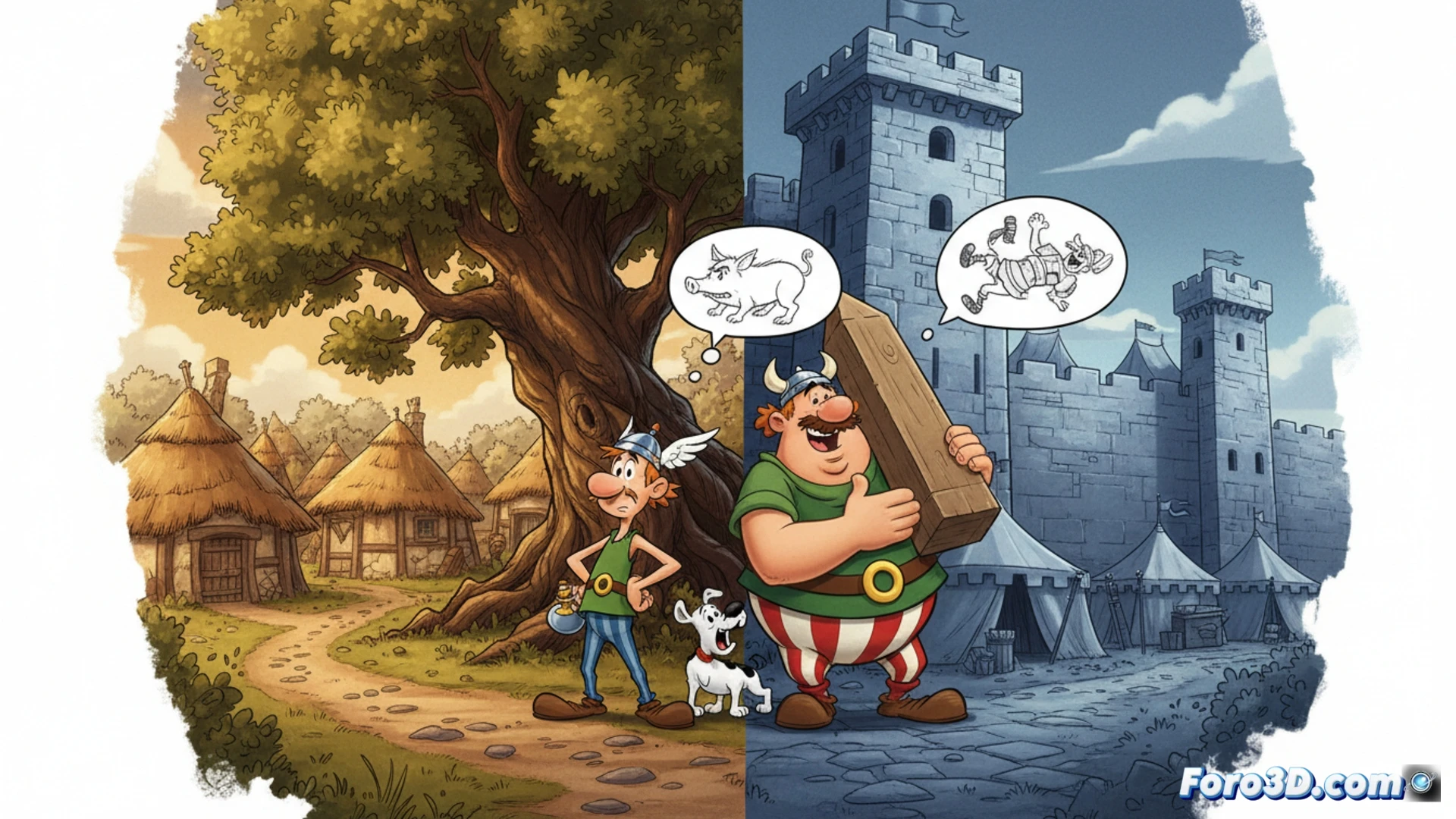
Integration of Comic Book Graphics into a 3D Pipeline 🖌️
The team at TAT Productions developed techniques to evoke the language of comics within their 3D workflow. This included incorporating recognizable graphic elements without forcing a completely flat look. The series employs visual style changes, with stylized sequences and hand-drawn inserts that give personality to each episode. The world design reinforces the narrative through contrasts: the Gaulish village is organic and warm, while the Roman camps are rigid and geometric.
The Romans Do Not Fear the Gods, But They Do Fear NURBS Curves ⚔️
It's understandable that the Roman Empire opts for rigorous geometry in its design. With a military logistics system that collapses if a column is not perfectly aligned, introducing organic shapes would be chaos. Imagine a centurion explaining in a report that the defeat was due to a topology problem in the camp's mesh. Meanwhile, in the village, the Gauls enjoy their organic curves and mossy textures, probably rendered with a magic potion in the graphics engine.