Anne Frank's diaries are much more than a text; they are a tangible historical artifact, a fragile witness to one of the darkest periods. In the niche of Digital Archaeology, we ask ourselves how to preserve and study this legacy beyond paper. 3D technologies offer a revolutionary answer, allowing us to capture and perpetuate these objects with unprecedented fidelity, ensuring their accessibility for future generations without risking the originals.
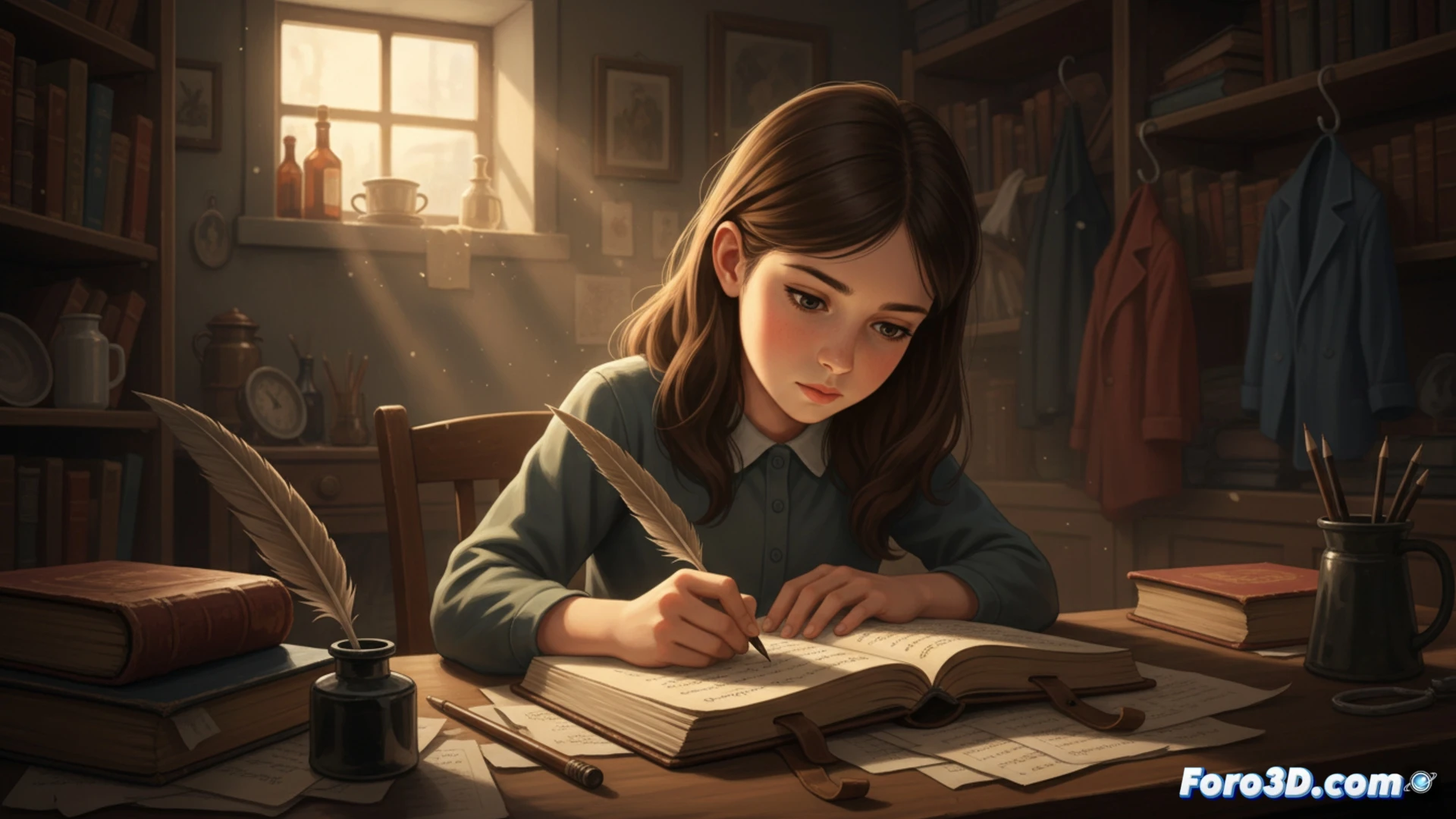
3D Technologies for Conservation and Historical Study 🔬
The practical application is vast. Through high-resolution photogrammetry or laser scanning, an exact 3D model of each diary page can be created, capturing the paper texture, the pressure of the writing, and even the imperfections of time. This would allow researchers worldwide to study the document remotely. On a larger scale, the virtual reconstruction of the secret annex in Amsterdam, based on blueprints and descriptions, would offer an immersive educational experience, transporting the user to that space and contextualizing Anne's writing in its real physical environment.
Beyond Preservation: An Interactive Memorial 🌍
This digital approach transcends mere conservation. An interactive 3D model of the annex or the diaries becomes a powerful memorial accessible globally. It facilitates a deeper emotional and cognitive connection with history, especially for new generations. Digital Archaeology, thus, does not seek to replace the museum visit, but to complement and amplify its reach, using technology to protect the material memory and make its universal message resonate more powerfully.
What mesh resolution do you consider sufficient to preserve these details?