The writer Karl Ove Knausgård places the German painter Anselm Kiefer as the most relevant figure in living art. His work, dense and monumental, generates a rare phenomenon: it satisfies academia and high-level collectors, while also attracting the general public. Kiefer achieves this without pop concessions or superficial gestures, maintaining an integrity that many artists lose when seeking mass audiences.
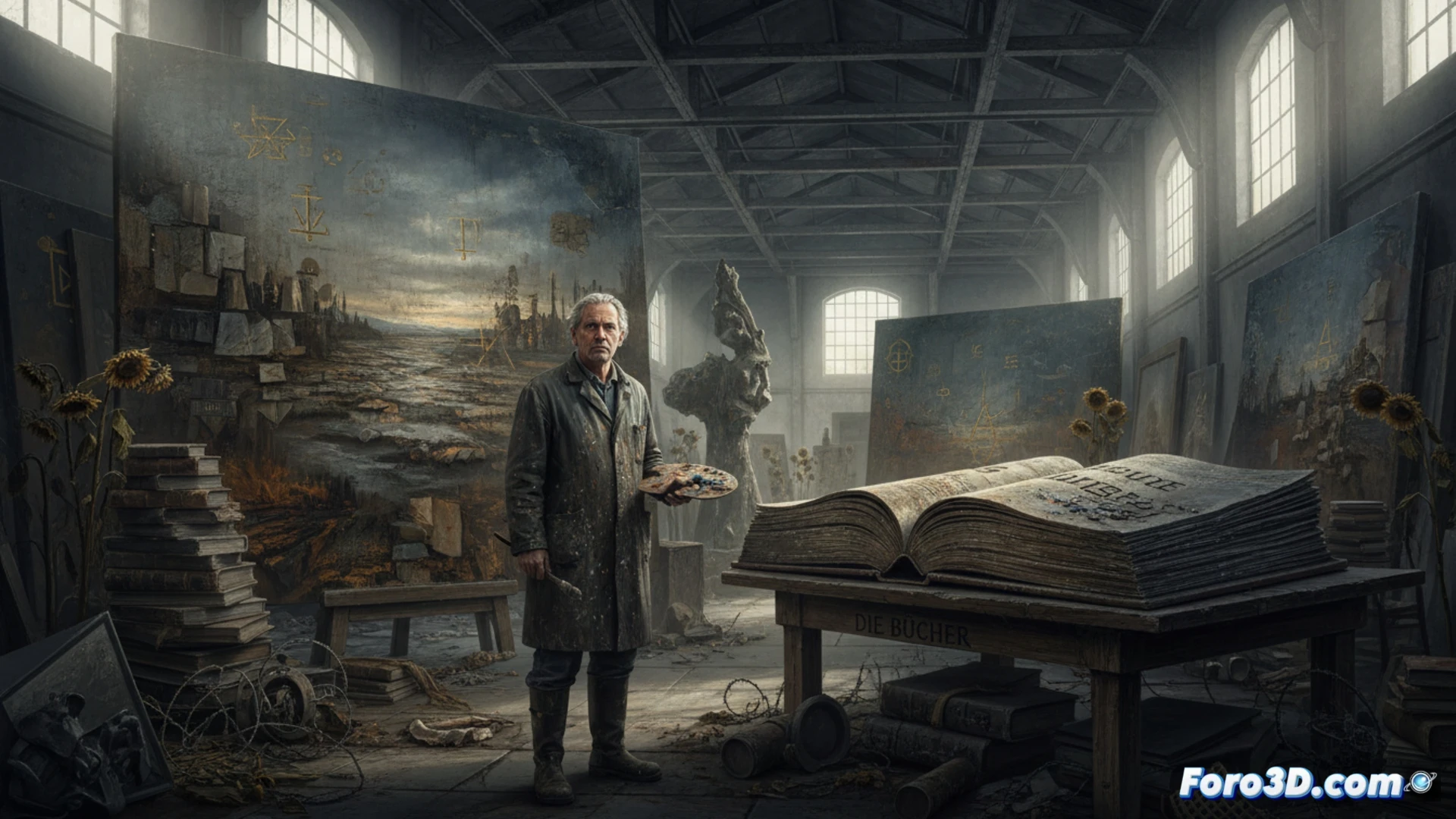
The Architecture of Ruin: Technique and Materiality in Kiefer's Work 🏚️
Kiefer uses unconventional materials such as lead, straw, ash, and concrete on large-format canvases. His process includes layers of acrylic emulsion, shellac, and varnish, onto which he applies found objects. The technique is a dialogue between painting and sculpture. The use of lead, in particular, is not accidental: it is a dense, toxic, and malleable material that alludes to German history and alchemy. Each work is a physical palimpsest, where accumulated matter narrates the passage of time.
Tips for Collectors: How to Hang 300 Kilos of Lead in Your Living Room 💪
If you are a novice collector wanting a piece by Kiefer, prepare your wallet and home insurance. The works do not fit in normal elevators and require ceiling reinforcements. It is not art to hang over the sofa; it is more about having a sofa around the artwork. A tip: if you are gifted one of his lithographs, do not complain. It is lighter, fits in an Ikea frame, and you will not need to ask permission from the building manager.