Investigating a structural failure in a space capsule after atmospheric reentry represents a high-level forensic challenge. The analyzed case involved determining whether the damage to the thermal tiles originated from a space debris impact or from chemical degradation during ascent. The key to solving it was a workflow that combined advanced 3D digitization, internal defect analysis, and computational simulation.
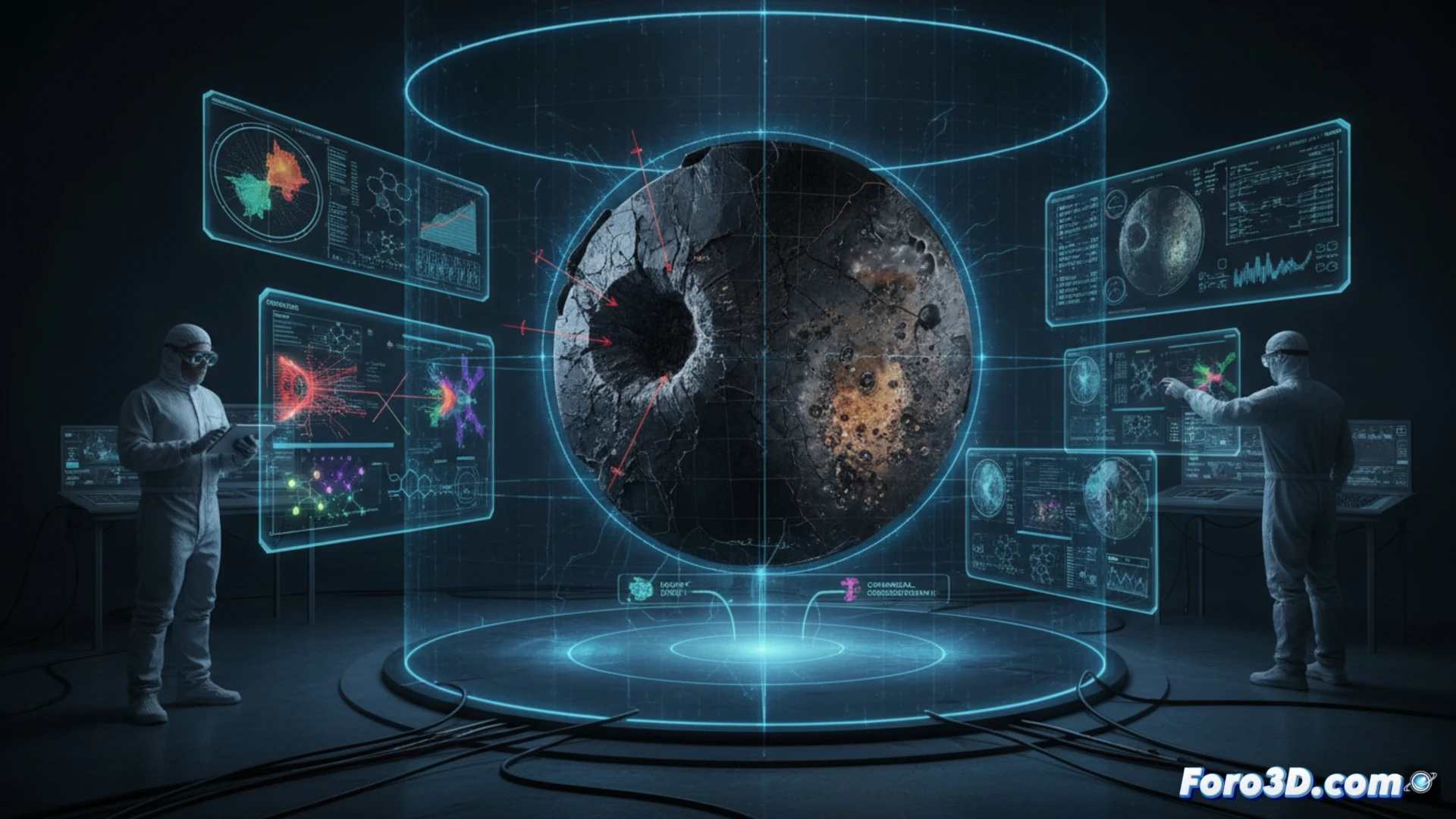
Technical Workflow: From the Damaged Part to Diagnosis 🔍
The process began with the precise digitization of the damaged component. Using an industrial GOM ATOS scanner, the deformed external geometry was obtained. Then, an analysis with Micro-CT, processed in Volume Graphics VGSTUDIO MAX, allowed for the quantification of internal porosity, microcracks, and the composite material structure without destroying it. This information was used to create a faithful digital model. Subsequently, in Ansys Discovery, the thermal and fluid flow environment of the reentry was simulated, applying it to the model with and without the identified defects. Comparing the simulation results with the actual damage pattern was decisive for the final diagnosis.
Simulation as a Decisive Tool in Forensic Engineering ⚖️
This case underscores how simulation goes beyond the design phase. In failure investigation, tools like Ansys allow for the recreation of extreme conditions in a controlled and safe manner, isolating critical variables. The ability to contrast an 'ideal' model with a 'defective' one obtained from the real world closes the engineering cycle, transforming an incident into validated knowledge to prevent future failures.
How can multiaxial and thermomechanical fatigue simulation be used to determine whether the catastrophic failure of a heat shield was due to a manufacturing defect, a design error in the fastening, or a load sequence outside specification during reentry?
(PS: Material fatigue is like yours after 10 hours of simulation.)