An incident during a protest, where a rubber projectile injured a person after impacting a shield, created the need for an objective investigation. The key lay in determining whether the shield's material had a defect or if the shot was fired from a distance shorter than the regulation. To resolve it, a forensic workflow based on 3D digitization and simulation was applied, prioritizing technical data over speculation.
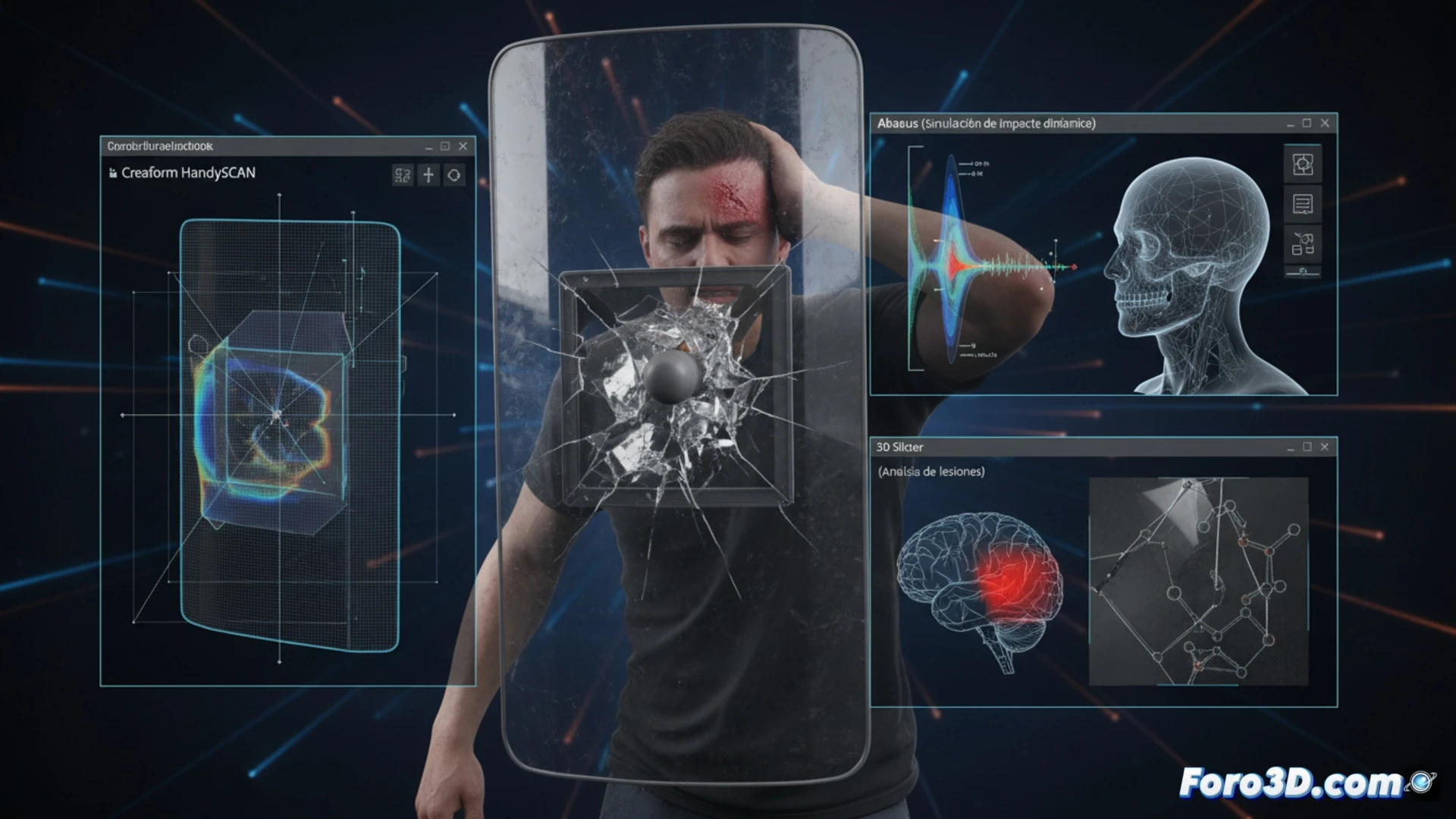
Technical Workflow: From Scanning to Simulation 🔬
The process began with the precise digitization of the affected shield using a Creaform HandySCAN 3D scanner, obtaining an exact geometric model of its post-impact state, including deformations. This model was used in Abaqus for a dynamic impact simulation, virtually recreating the projectile's collision with different distance and velocity parameters. In parallel, using software like 3D Slicer, the medical images of the injury were analyzed to understand the energy transfer to the body. Blender assisted in the integrated visualization and communication of all elements: shield, trajectory, and anatomy.
Technical Objectivity as a Key Tool ⚖️
This methodological approach shifts the investigation from the realm of the subjective to that of quantifiable data. The simulation can reveal, for example, that the energy required to cause the observed deformation is only achieved at very short distances, or that a material within specification would have absorbed the impact without failing. Thus, 3D technology stands as a crucial forensic means to establish technical responsibilities, whether regarding equipment quality or compliance with use-of-force protocols.
Would you combine scanning with photogrammetry?