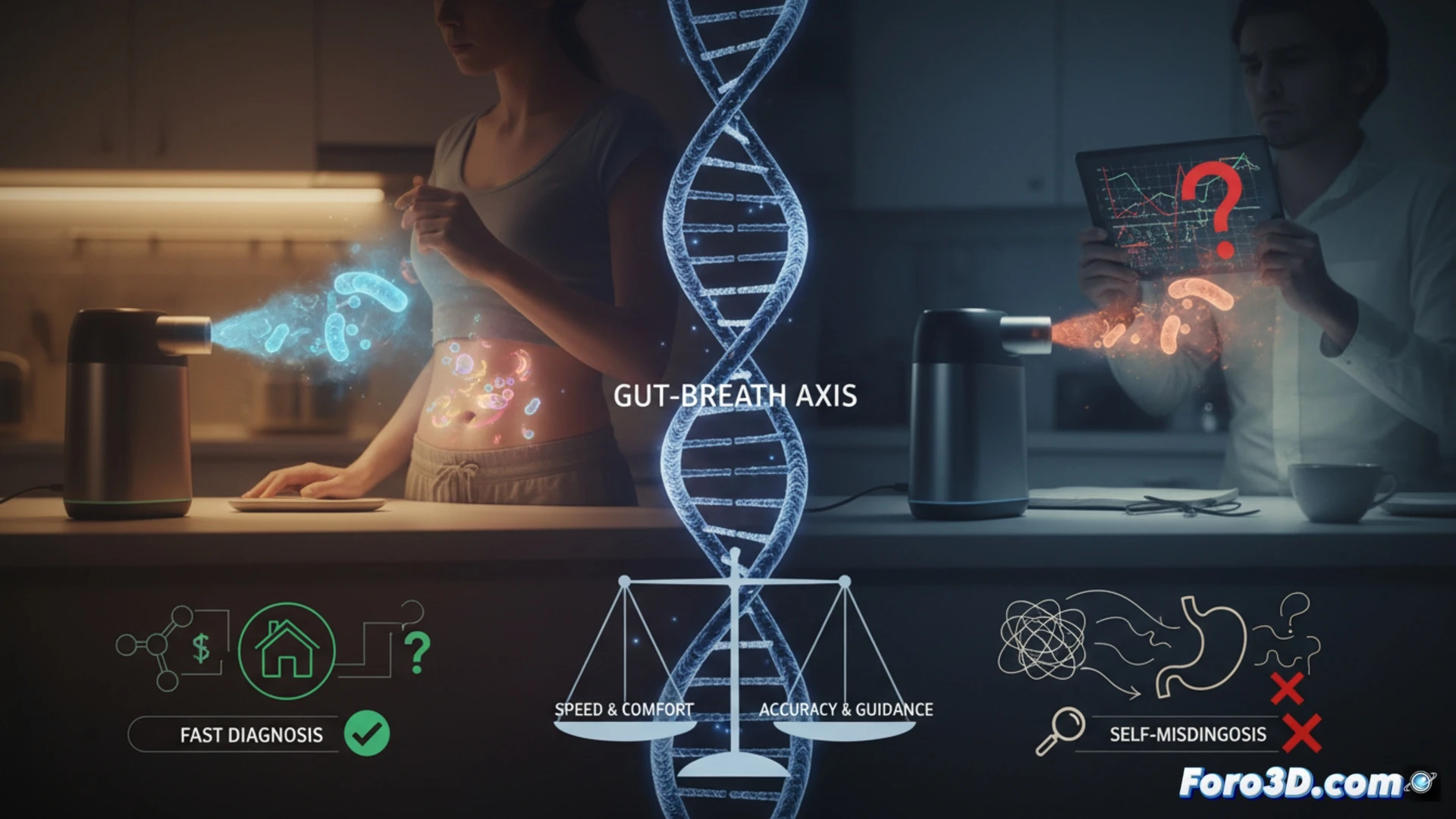
Medicine is exploring non-invasive methods for diagnosing digestive disorders. Breath analysis, a technique already established in clinics for detecting SIBO, is gaining ground. Its principle is based on measuring specific gases produced by gut bacteria. For the user, this promises faster and more comfortable diagnoses, with the potential to perform some tests from home.
Technology and Sensors in the Detection of Gaseous Biomarkers 🔬
Technical development focuses on the precise identification of biomarkers. Devices such as mass spectrometers or chemical sensors analyze concentrations of hydrogen, methane, and carbon dioxide in exhaled breath. These gases are byproducts of intestinal bacterial metabolism. An abnormal increase after ingesting a specific substrate, such as lactose or glucose, indicates possible bacterial overgrowth or malabsorption.
Your Breath as a Snitch on Your Guts 😮💨
The idea is tempting: blow into a little device and have it tell you what's going on inside. However, the home version of this technology can turn your kitchen into a laboratory of dubious reliability. Interpreting the results without medical criteria can lead you to blame the lettuce for all your ailments, starting an absurd diet based on data from a device that perhaps only detected that you had beans for dinner. Prudence is a good complement to technology.