FC Barcelona's victory at the Metropolitano was a lesson in efficiency in critical moments. After trailing and playing with a man advantage in the second half, the comeback culminated with a goal by Lewandowski in the 87th minute. This victory, crucial for the League, is a perfect case study for 3D analysis technologies, which allow breaking down decisive plays beyond the simple match report.
3D Reconstruction and Tactical Simulation of the Numerical Advantage 🧠
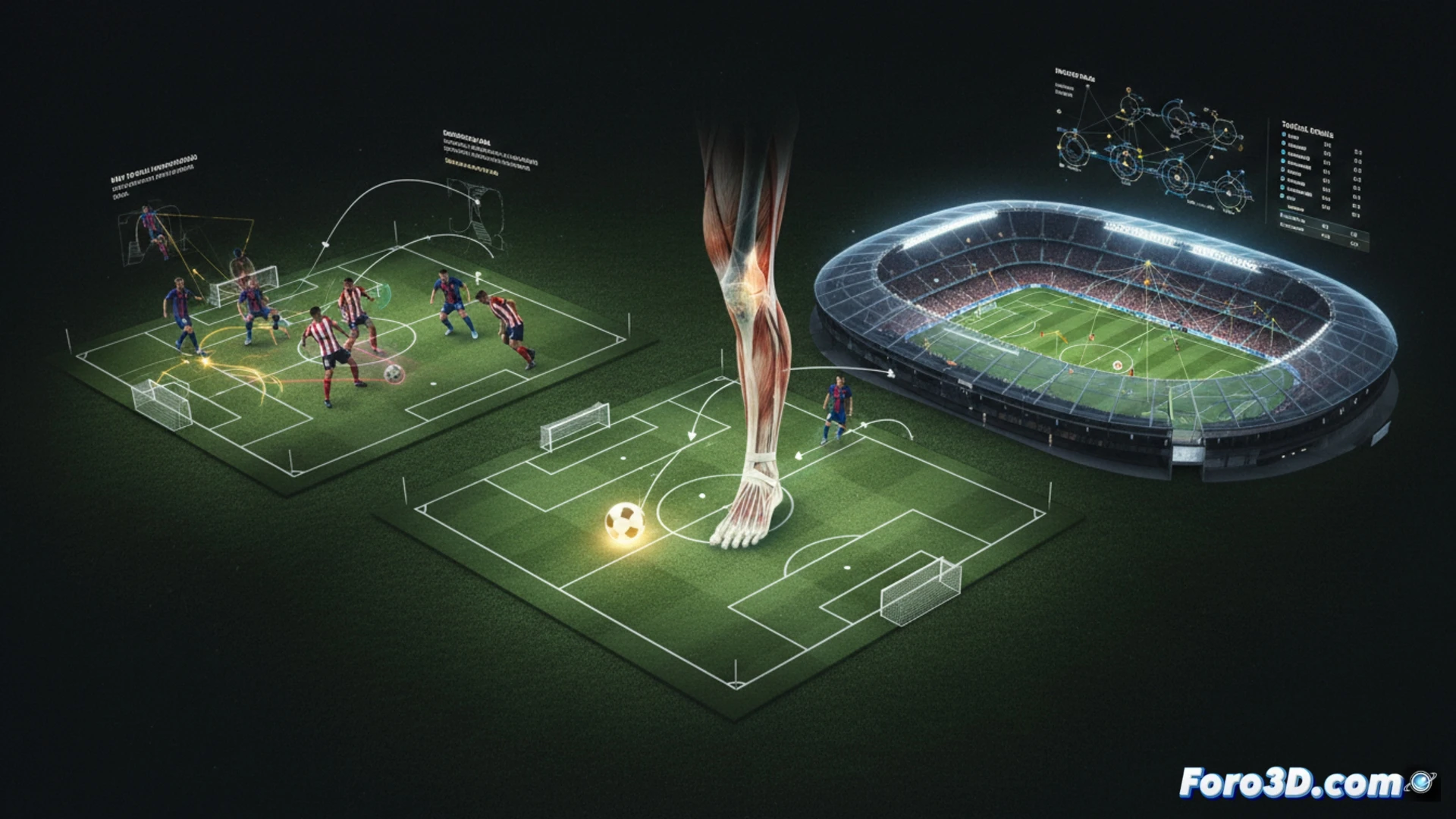
The sending-off of an Atlético player transformed the match. With 3D simulation tools, we can recreate the dynamic positioning of both teams, analyzing how Barça reconfigured its lines to exploit the spaces. Specialized software allows visualizing pressure vectors, the passing lanes generated, and the effective occupation of the pitch. This interactive reconstruction offers coaches and analysts a deep understanding of the tactical decisions that led to dominance and, ultimately, to the comeback.
The 3D Biomechanics of the Decisive Goal ⚽
Lewandowski's goal is another ideal candidate for analysis with 3D technology. A biomechanical model of the shot would allow studying shot angles, points of contact with the ball, and the goalkeeper's position. This visualization goes beyond the replay, quantifying the technique and the optimal moment that defined the outcome. Thus, the sports news story is transformed into a valuable technical resource for training and advanced tactical dissemination.
How can 3D analysis of positioning and trajectories reveal the tactical keys that allowed Barça, with a numerical disadvantage, to generate their comeback at the Metropolitano?
(PS: player tracking is like following your cat around the house: lots of information and little control)