When our 3D PC suffers from high temperatures or excessive noise, the first instinct is to check the thermal paste or the fans. However, the problem could be in the environment. Environmental factors such as altitude and humidity have a direct and significant impact on the efficiency of any cooling system, compromising the stable performance of the CPU and GPU during long renders or complex simulations.
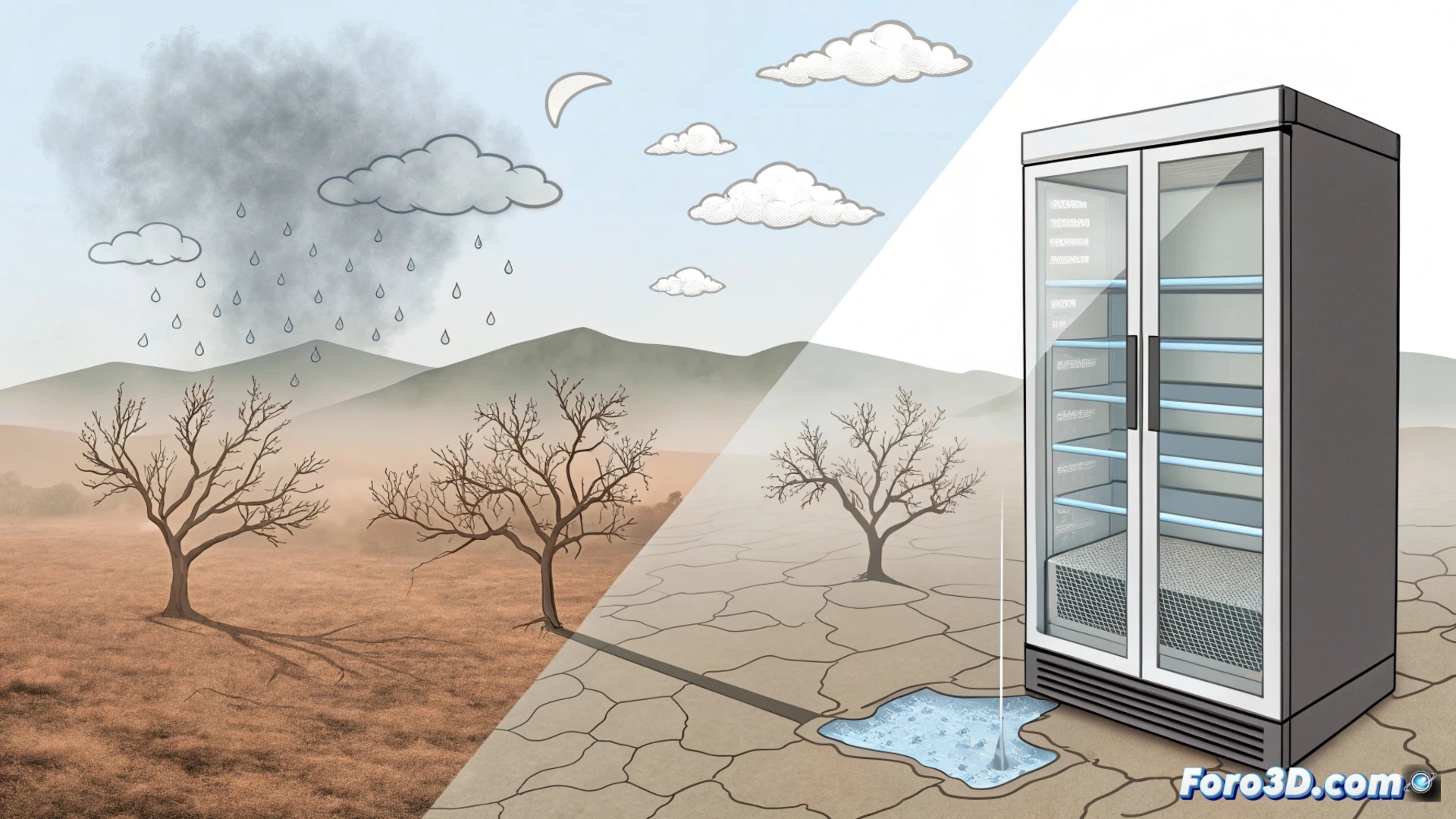
The physics of air and its impact on thermal dissipation 🌬️
At higher altitudes, the air is less dense, contains fewer molecules per volume, and therefore has a reduced capacity to absorb and transport heat. This means that, even if the fans spin at the same RPM, they move a smaller mass of air, making air coolers and radiators less efficient. Low relative humidity aggravates the problem, as dry air has a slightly lower specific heat capacity than humid air. The result is that components run at higher temperatures or the system must compensate with a more aggressive and noisier airflow to avoid thermal throttling.
Configuration strategies and hardware selection ⚙️
For users in these conditions, optimization is key. Adjusting more aggressive fan curves and applying controlled undervolting to the CPU and GPU reduces the base thermal load. When selecting components, prioritize large tower coolers with high-performance heatpipes and cases with excellent airflow. At extreme heights, All-in-One liquid cooling may be a better option than air cooling, as its efficiency is less dependent on ambient air density. Monitor your temperatures under real load to adjust and ensure system stability.
How do the altitude and relative humidity of the environment influence the efficiency and noise of liquid and air cooling systems in 3D workstations?
(PS: remember that a powerful GPU won't make you a better modeler, but at least you'll render your mistakes faster)