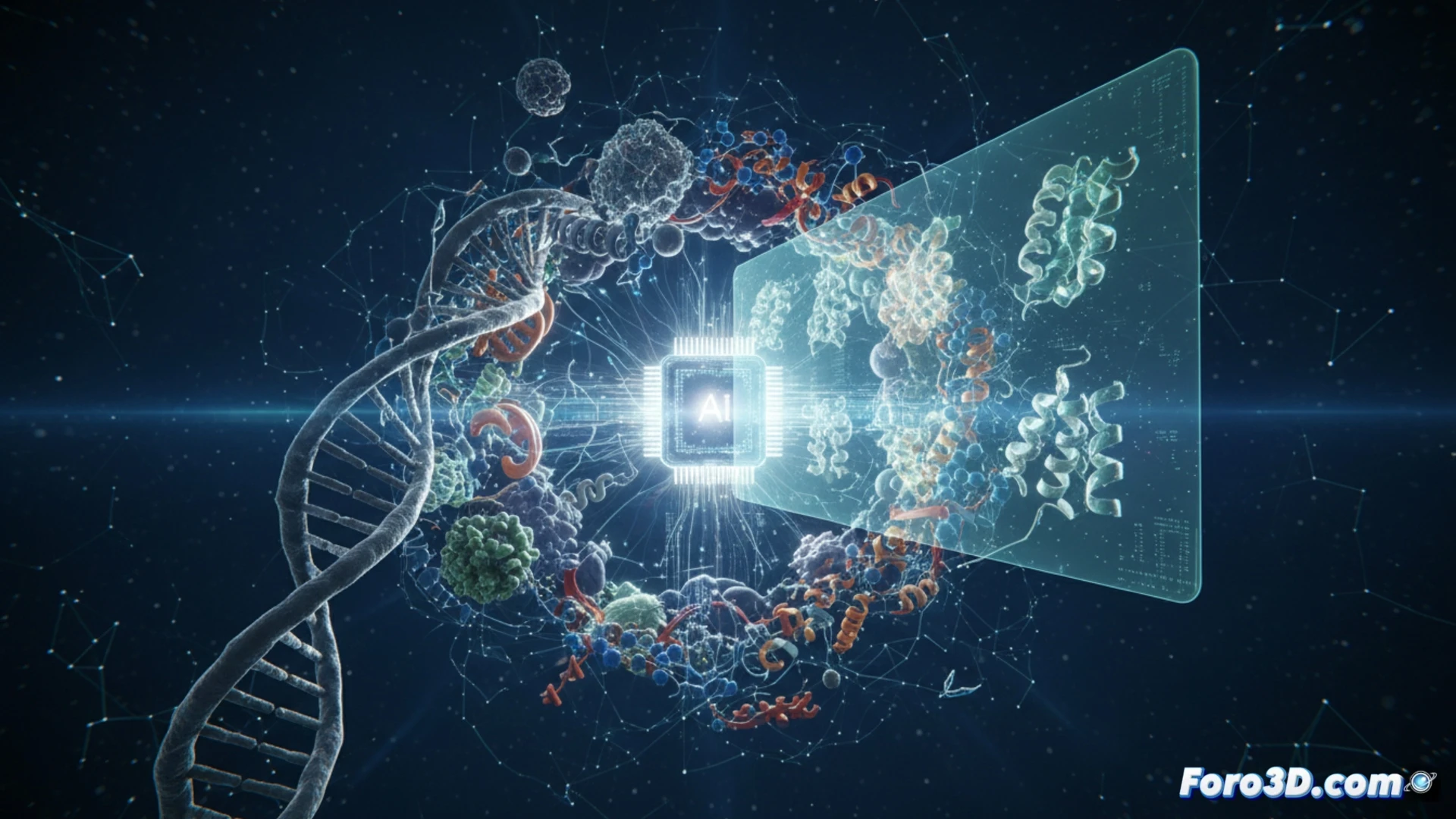
DeepMind and Isomorphic Labs have introduced AlphaFold 3, an artificial intelligence model that marks a turning point in computational biology. This tool not only predicts the 3D structure of individual proteins with unprecedented accuracy but also models their interactions with other molecules of life: DNA, RNA, ligands, and even chemical modifications. For biomedicine, this is equivalent to having a dynamic atomic atlas of cellular processes, radically accelerating basic research and therapy development.
Atomic Precision for Drug Design and Disease Study 🔬
The power of AlphaFold 3 lies in its ability to generate complete models of molecular complexes. In drug discovery, it allows for the accurate visualization and prediction of how a drug candidate binds to its target protein, optimizing design before chemical synthesis. In disease study, it enables modeling of pathological mutations and understanding how they alter interactions with other biomolecules. This precision integrates structural biology directly into the biomedical pipeline, facilitating everything from 3D printing of physical models for analysis to planning targeted therapies based on atomic structures.
A Future Modeled by Artificial Intelligence 🤖
AlphaFold 3 transcends the academic realm to become a fundamental practical utility. Its integration into translational research promises to shorten timelines and reduce costs in the development of new treatments, democratizing access to high-quality structural models. However, it also poses challenges in the experimental validation and biological interpretation of its predictions. Its adoption will mark the new era of a deeply computational and predictive biomedicine.
How will AlphaFold 3 transform drug design and personalized medicine by predicting with atomic precision the interactions between proteins, DNA, RNA, and ligands?
(P.S.: and if the printed organ doesn't beat, you can always add a little motor... just kidding!)