Formula 1 experts highlight that Fernando Alonso's legacy transcends his statistics. His greatness lies in two technical pillars: exceptional adaptability to extract the maximum from any car and a unique ability to manage adversities during a race. These qualities, perfectly quantifiable, open a fascinating door to analysis using simulation and 3D visualization tools, allowing his talent to be dissected like never before.
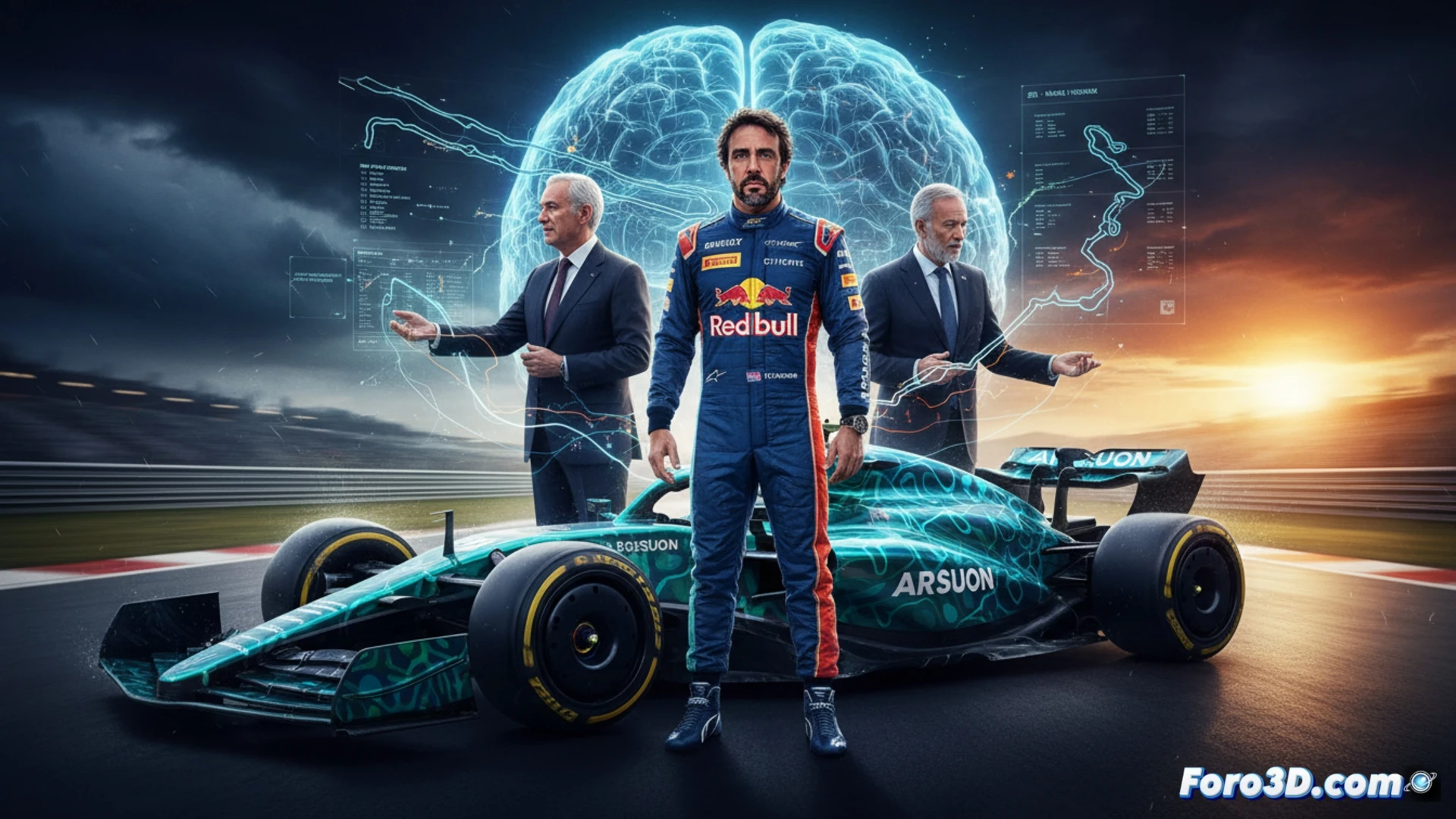
Modeling Adaptability: Telemetry and Dynamic Simulation 🏎️
Alonso's adaptability, considered the best of the century, can be modeled in 3D. By importing telemetry data from different cars and conditions, we can recreate his racing lines and corner entries. An interactive 3D model would allow real-time modification of variables such as aerodynamic balance, tire degradation, or fuel load, visualizing how Alonso adjusts his style to maintain pace. This transforms an abstract quality into a visual map of corrections and adjustments, measuring its effectiveness against a reference driver.
Visualizing Intuition: Beyond Raw Data 🧠
Race management, his second great talent, involves tactical decisions and resource conservation. An immersive 3D recreation of key moments, superimposing data on tires, fuel, and rivals' pace, would showcase his anticipation skills. 3D technology not only validates his genius but also turns it into an invaluable educational resource, allowing new generations of engineers and drivers to study, in a controlled environment, the decision-making of a master.
How does 3D analysis technology allow us to break down and understand Fernando Alonso's unique technical adaptability behind the wheel of different single-seaters? 🤔
(PS: at Foro3D we know that a penalty simulated in 3D always goes in... unlike in real life)