In Formula 1, feedback from an experienced driver is an invaluable asset. Fernando Alonso, with his extreme demands and analytical capacity, has been key in the development of the Honda power unit. His role goes beyond driving; he acts as a high-precision human sensor, whose constant demands for performance and reliability have guided the Japanese engineers in a continuous improvement process that has brought them closer to the front.
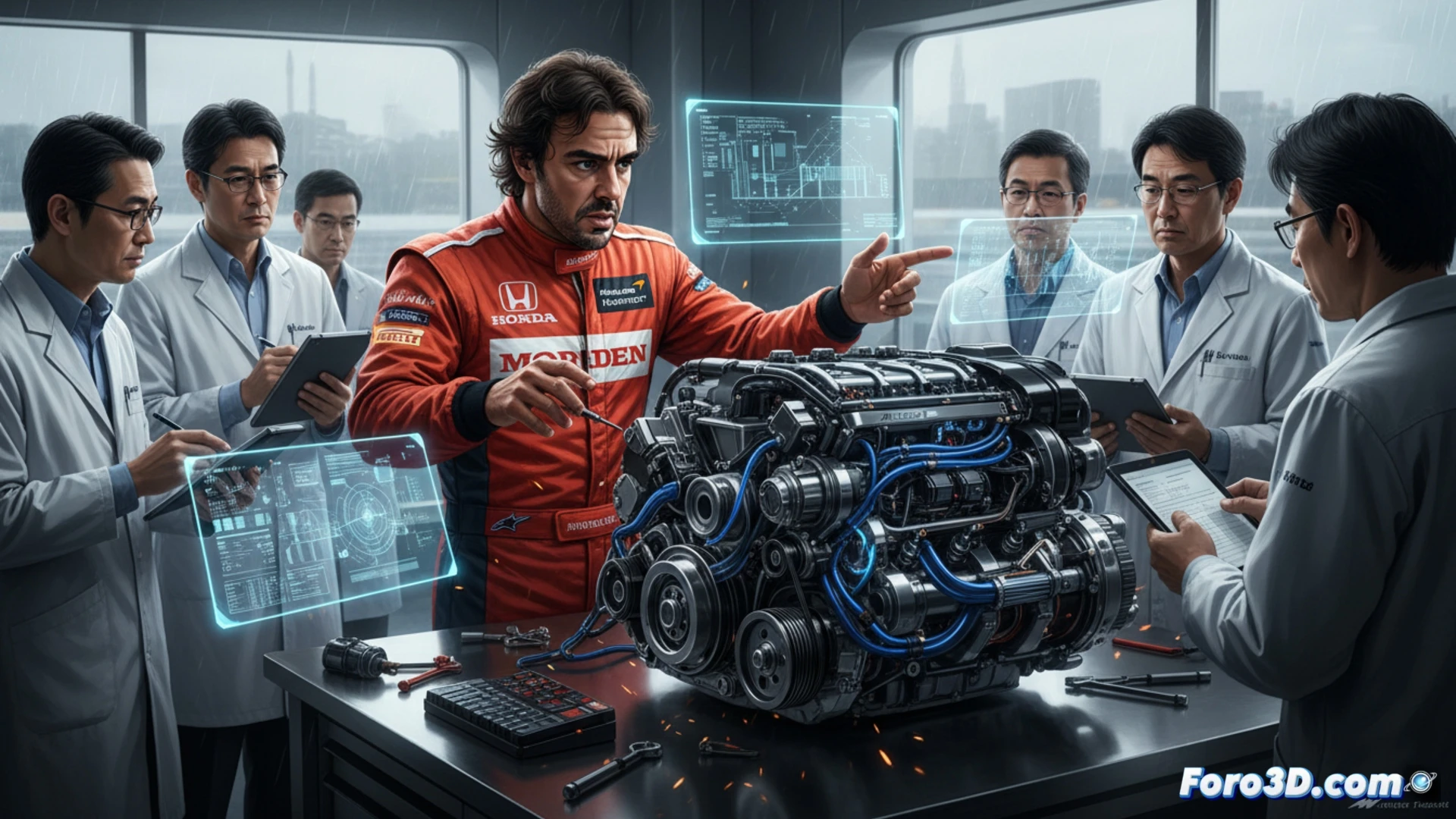
From Feedback to Virtual Reality: Simulating Evolution 🚀
How is a driver's subjective feeling translated into a concrete technical improvement? This is where 3D technology unleashes its potential. Alonso's feedback on power delivery or thermal management is integrated into computer simulation models. Engineers can recreate the internal behavior of the engine in a virtual environment, visualize air and combustion flows in 3D, and test modifications before manufacturing a single component. This digital simulation accelerates development cycles and validates the solutions demanded by the driver.
More Than an Engine: A 3D Ecosystem ⚙️
The Alonso-Honda collaboration exemplifies a perfect synergy between human and machine, mediated by the digital. The final 3D model of the engine is not just an engineering blueprint; it is the crystallization of thousands of data points, sensations, and driven experiences. This approach, applicable to other sports, demonstrates that high-level competition is already being fought on the terrain of simulation and three-dimensional data analysis, where expert judgment sets the direction of technical progress.
How has Fernando Alonso's technical demand influenced the development of 3D simulation models and the optimization of Honda's design processes in Formula 1?
(PS: 3D tactical simulation never fails, the players on the ground do)