Berlin has launched its diplomatic offensive to secure a non-permanent seat on the UN Security Council for the 2027-2028 term. Minister Johann Wadephul is promoting in New York a candidacy that goes beyond mere representation: it seeks to bolster German influence at a time when the security of its supply routes depends on strong multilateral alliances, especially in the face of growing fragmentation in global trade.
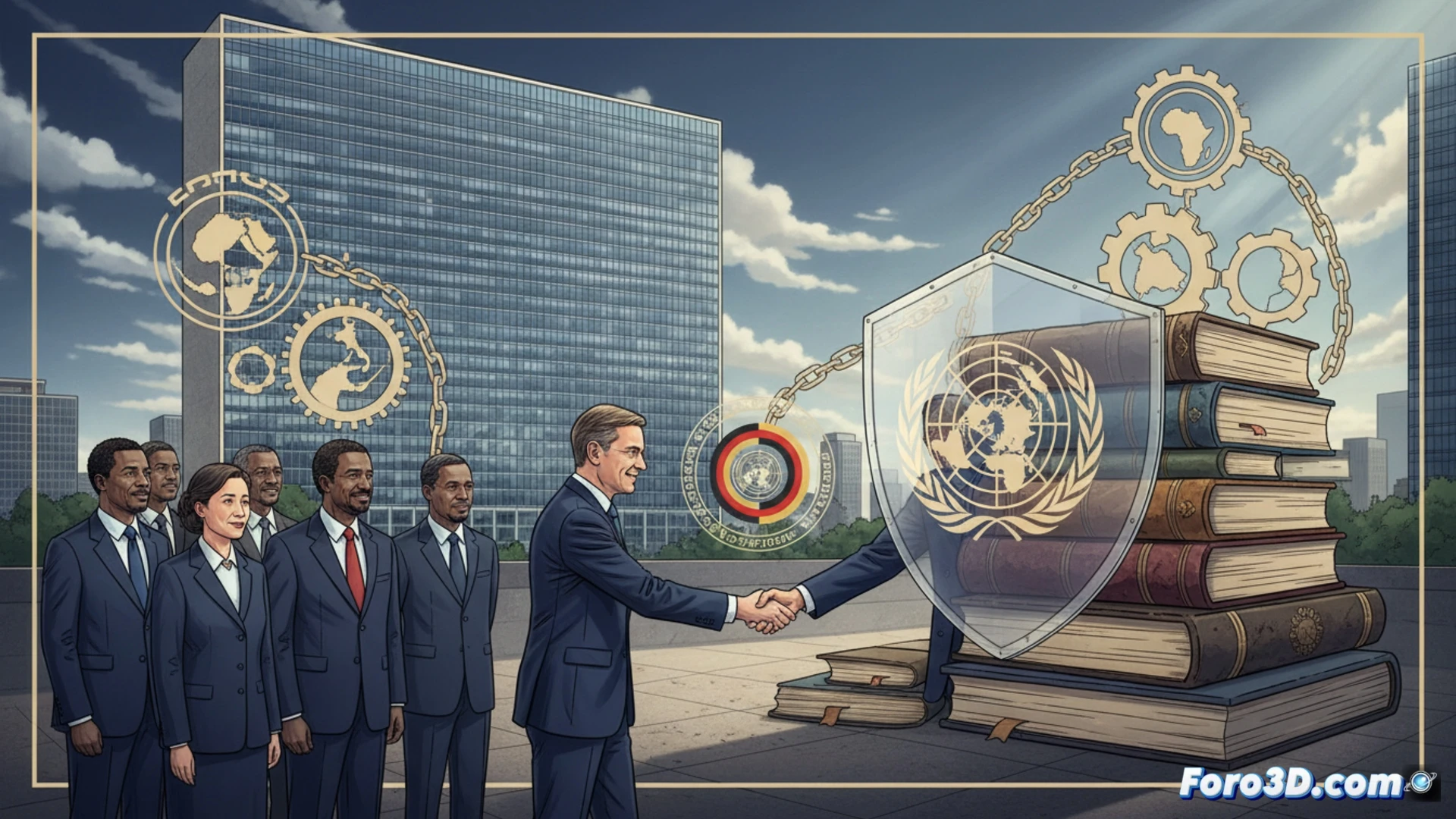
3D Risk Map: Critical Dependencies and Strategic Veto 🌍
The 3D visualization of Germany's geopolitical dependencies reveals a vulnerable network connecting Norwegian liquefied gas, Taiwanese semiconductors, and Chinese rare earths. A seat on the Security Council would grant Berlin veto power and agenda-setting ability over sanctions that directly affect these corridors. The analysis shows how a German vote could unlock routes blocked by regional conflicts or, conversely, tighten restrictions against actors threatening the supply of critical raw materials for its automotive and defense industries.
Diplomacy as a Logistics Insurance Against Global Fragmentation 🔗
Germany is not just seeking a symbolic seat; its strategy reveals the convergence between foreign policy and industrial survival. By strengthening cooperation with regional organizations, Berlin aims to create a diplomatic firewall that mitigates the impact of future sanctions or conflicts on its supply chains. The key question is whether this move will succeed in reshaping current dependencies or merely legitimize a new bloc order where the UN acts as a guarantor of critical routes.
Can a seat on the UN Security Council really protect Germany from future disruptions in its global supply chains, or is it just a tool of diplomatic pressure with no real effect on international logistics?
(PS: simulating technological dependency is easy, the hard part is not depending on coffee while doing it)