Professor Martina Rau raises a necessary debate about artificial intelligence in early childhood education classrooms. Against extreme positions, she proposes a nuanced approach. AI is already a reality in many educational settings, so the discussion must shift toward its proper use. The key lies in discerning which skills must be developed without help and where tools are allies.
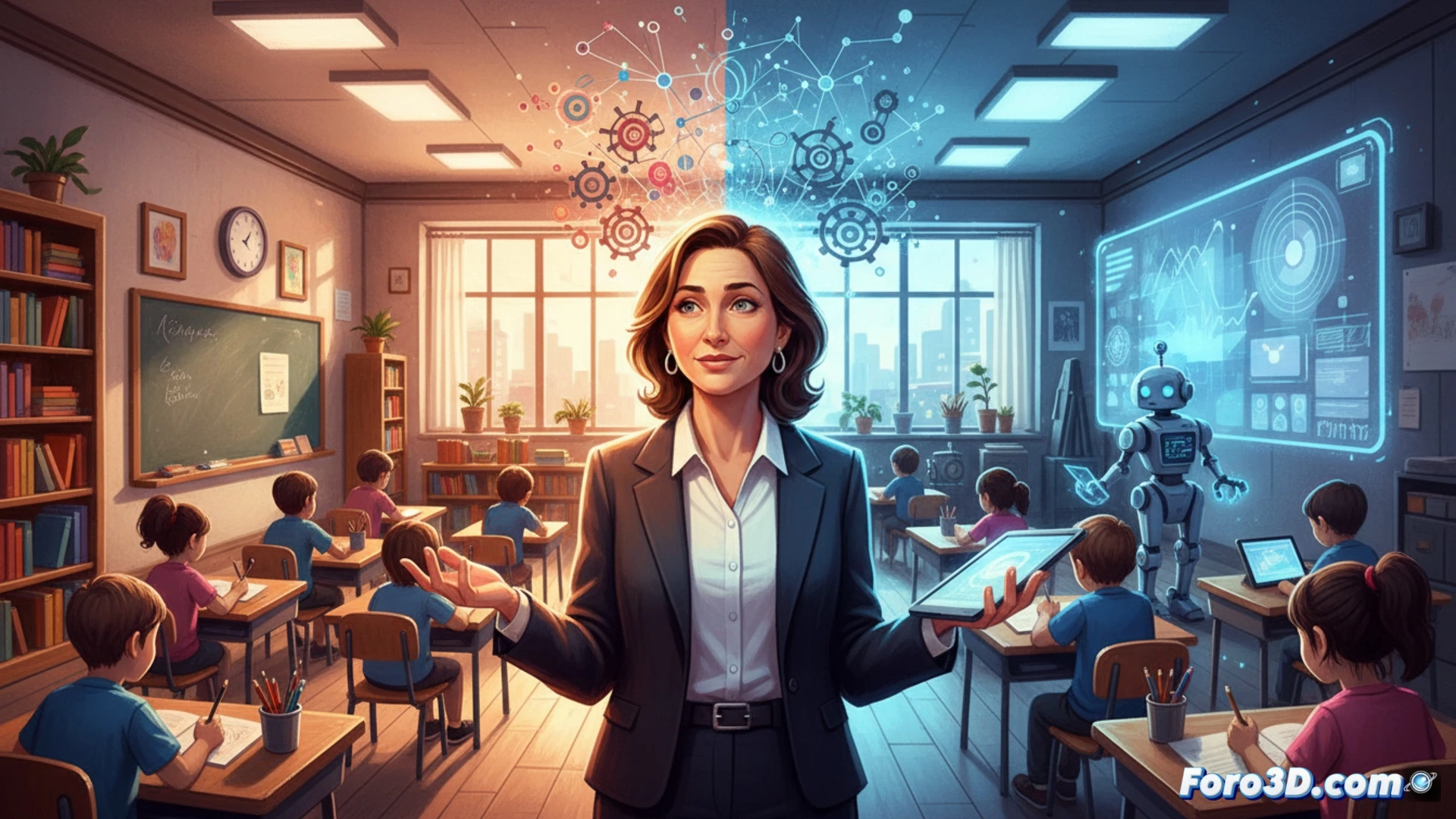
Distinction between basic skills and cognitive tools 🤔
The technical core of her proposal is a functional classification. On one hand, there are fundamental skills that children must internalize autonomously, such as the physical and mental act of writing to structure thought. On the other, tasks where the use of external cognitive tools is appropriate. These tools can be analog, like an abacus, or digital, like an AI assistant. The criterion is pedagogical, not technological.
From chalk to chatbot: the eternal debate of 'do it yourself' 😅
It's the same drama as always, but with a different cast. Before, purists were scandalized if a child used a calculator to add 2+2. Now the scandal is if they ask an AI to explain why the sky is blue. According to Rau, the issue is not to prohibit, but to ask what we use the tool for. Perhaps the real advancement is not the technology, but that adults learn not to fear everything new. Or else, we go back to clay tablets.