Paleogenetics takes a significant step. A team has managed to recover human nuclear DNA from cave sediments, without fossils. The technique is based on analyzing the genetic material that remains adhered to the soil. This opens a new window to study ancient populations and their movements, even at sites without bone remains.
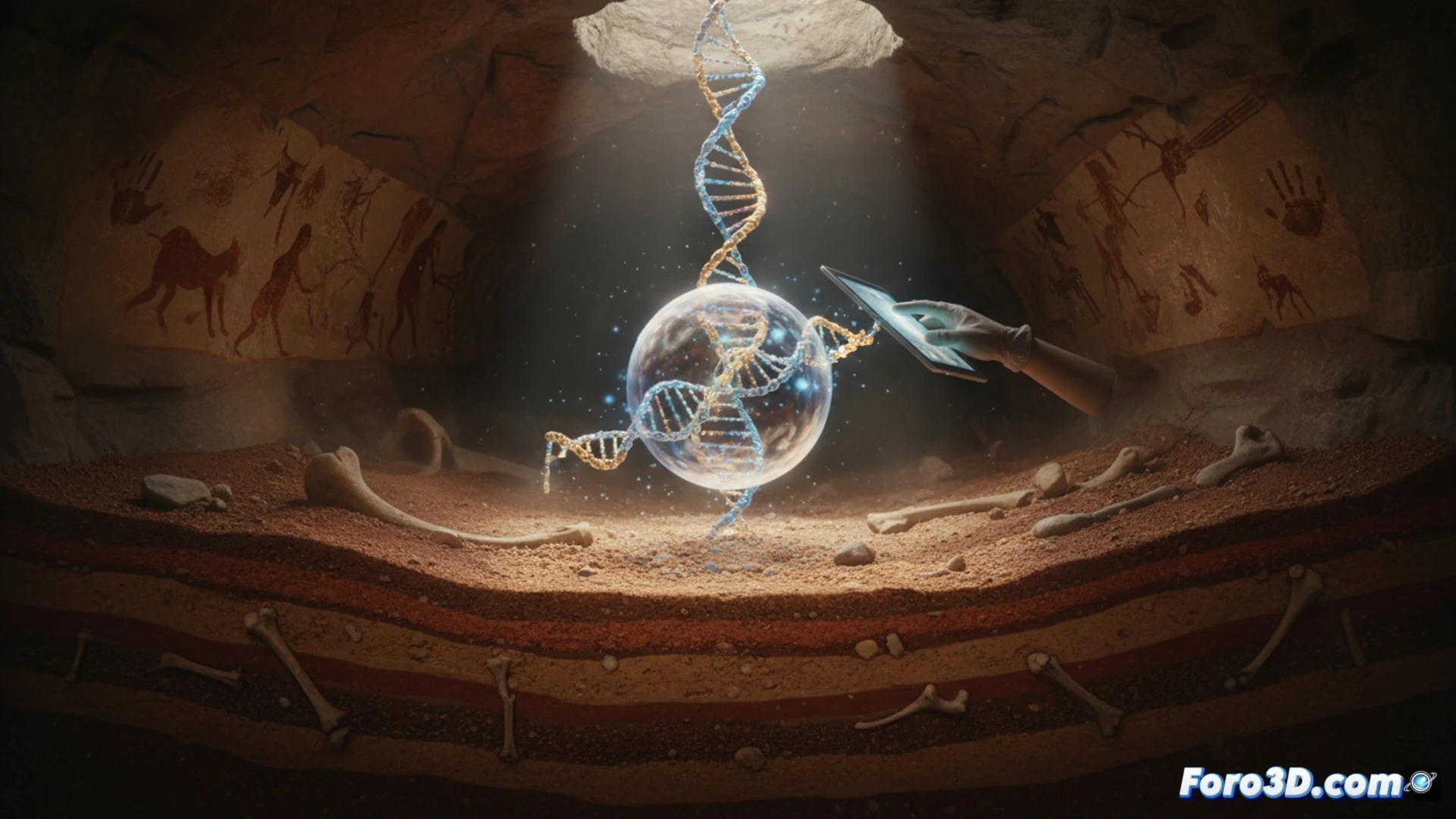
Methodology and capture of genetic fragments 🧬
The process involves taking sediment samples and applying extraction techniques designed for ancient DNA, which is highly degraded. Then, they use hybridization primers that specifically capture fragments of human mitochondrial and nuclear DNA. After sequencing, the data is bioinformatically filtered to separate hominid DNA from that of other animals or bacteria, allowing for its analysis.
The cave is no longer just for throwing bones 💀
Imagine the scene: a group of Neanderthals has a bad day and doesn't leave a single decent fossil. Before, archaeologists would leave empty-handed. Now, it's enough that someone sneezed or lost a hair 50,000 years ago. The earth holds all the secrets. Soon we'll order DNA from Amazon and reconstruct an entire clan from the couch. Dust has more stories than a book.