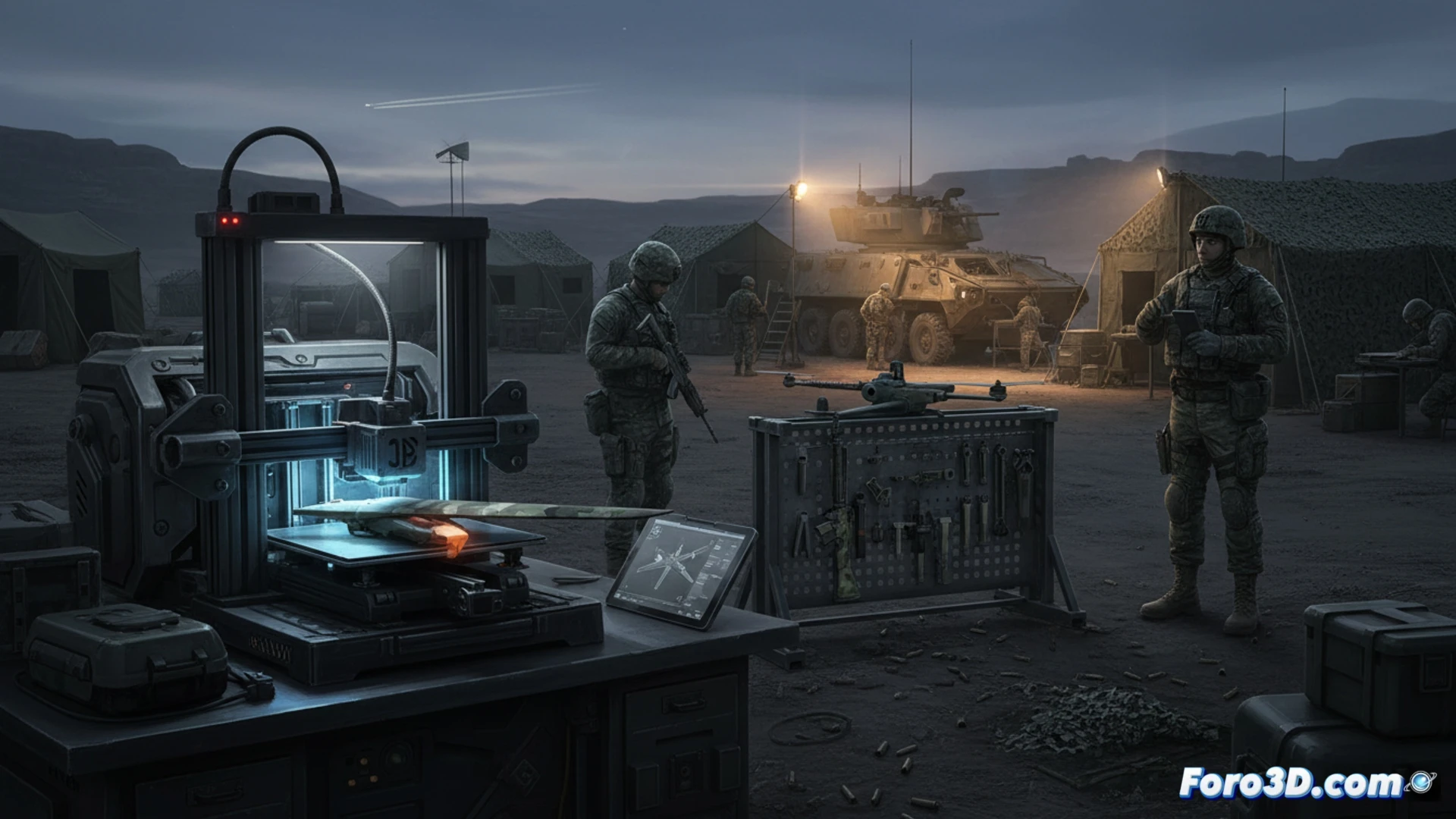
The landscape of modern warfare incorporates an unexpected tool: the 3D printer. This technology is altering traditional logistical principles by enabling decentralized manufacturing of materials. Deployed units can produce spare parts, specialized tools, or components for systems, reducing dependence on extensive and vulnerable supply chains. The ability to repair or replace on-site represents a remarkable shift in operational availability.
Materials and methods for hostile environments 🛡️
Military application goes beyond common plastic. Printers are used that process filaments reinforced with carbon fiber, metals like aluminum or titanium via laser sintering, and heat-resistant composites. Development focuses on portability, robustness for operating in adverse conditions, and adapted design software. Validation of produced parts is a critical area, ensuring they meet technical and safety requirements for use in complex systems.
From warehouse bureaucracy to 'print it yourself' 🛠️
Imagine the classic military requisition process, with forms in triplicate and delivery deadlines of months. Now replace it with a corporal searching for a model in a database and pressing print. Logistics becomes a problem of bandwidth and electricity. The motto is no longer get your own, but design and download your own. That said, the STL file for the critical part might have a note saying tested in combat, results vary. A new world for mechanics.