病毒致癌物在污水中:疫情后的阴影

发布于 2026年05月24日 | 从西班牙语翻译

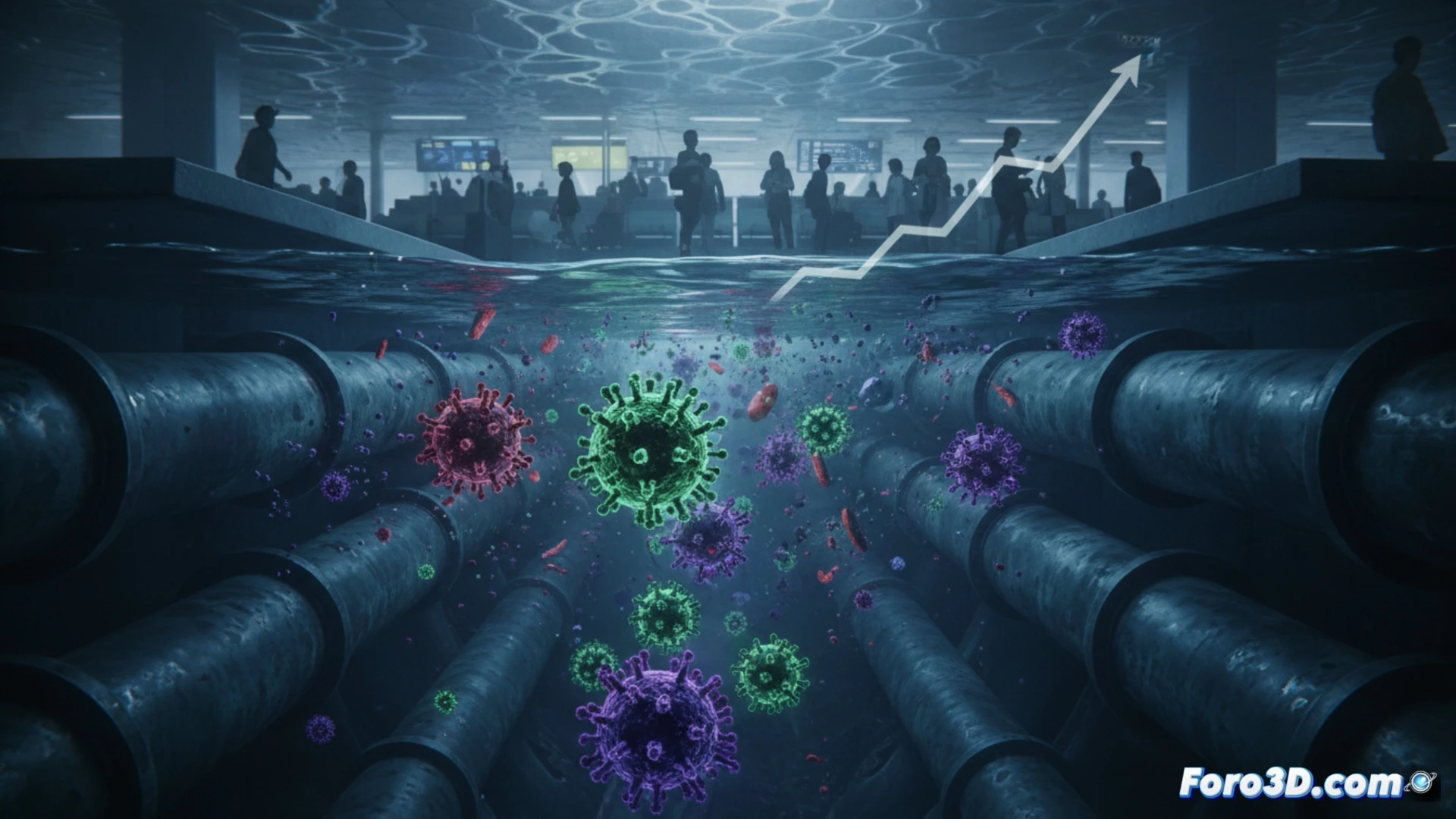
贝勒医学院与德克萨斯大学的一项联合研究发现,2024年后污水中致癌病毒有所增加。旅行恢复和社交距离的结束可能重新激活了HPV-16和HPV-18等病原体的传播,这些病毒导致了超过70%的宫颈癌病例。污水分析能够追踪多年无症状感染,为早期预防提供了窗口。
Detailed technical illustration of wastewater analysis process, laboratory technician in hazmat suit using pipette to extract sample from sewage water container, glowing microscopic virus particles floating above the liquid showing HPV-16 and HPV-18 structures, digital DNA sequencing screen displaying viral oncogene markers in background, modern research facility with stainless steel equipment, blue and purple neon lighting, cinematic photorealistic style, high detail on virus capsid geometry, water droplets on glass surface, reflection of molecular models in liquid, dramatic shadows emphasizing contamination detection, ultra-sharp focus on pipette tip transferring sample

流行病学监测:下水道技术对抗癌症 🧬

污水分析技术曾在疫情期间用于追踪SARS-CoV-2,但现在被应用于致癌病毒。研究人员可以在社区样本中检测到病毒遗传物质,在临床症状出现前识别出HPV-16和HPV-18等高危变种。这种方法无需侵入性检测即可监测人群健康,并有助于开展针对性疫苗接种活动等预防干预措施。德克萨斯科学家发表的研究强调了这一工具在降低感染相关癌症发病率方面的潜力。

HPV的回归:从下水道到诊室 🦠

看来,当我们摘下口罩时,致癌病毒正趁机进行疫情后旅行。现在,我们冲进马桶的东西可能比许多体检更能揭示我们的健康状况。如果HPV-16和HPV-18已经在管道中排队,至少科学家已经掌握了它们的路线图。谁能想到,下水道会成为对抗癌症的新预警系统。