Debates electorales: cada voto ve lo que quiere ver

发布于 2026年05月25日 | 从西班牙语翻译

选举辩论有一种可预测的动态:无论事件如何发展,每个政党都会宣布自己的候选人获胜。这是典型的确认偏误,支持者看到的是正确之处,而反对者只看到回避问题。这种现象类似于在德比战中争论一个点球,使得任何对抗都变成了一种信仰的练习,而非客观分析。
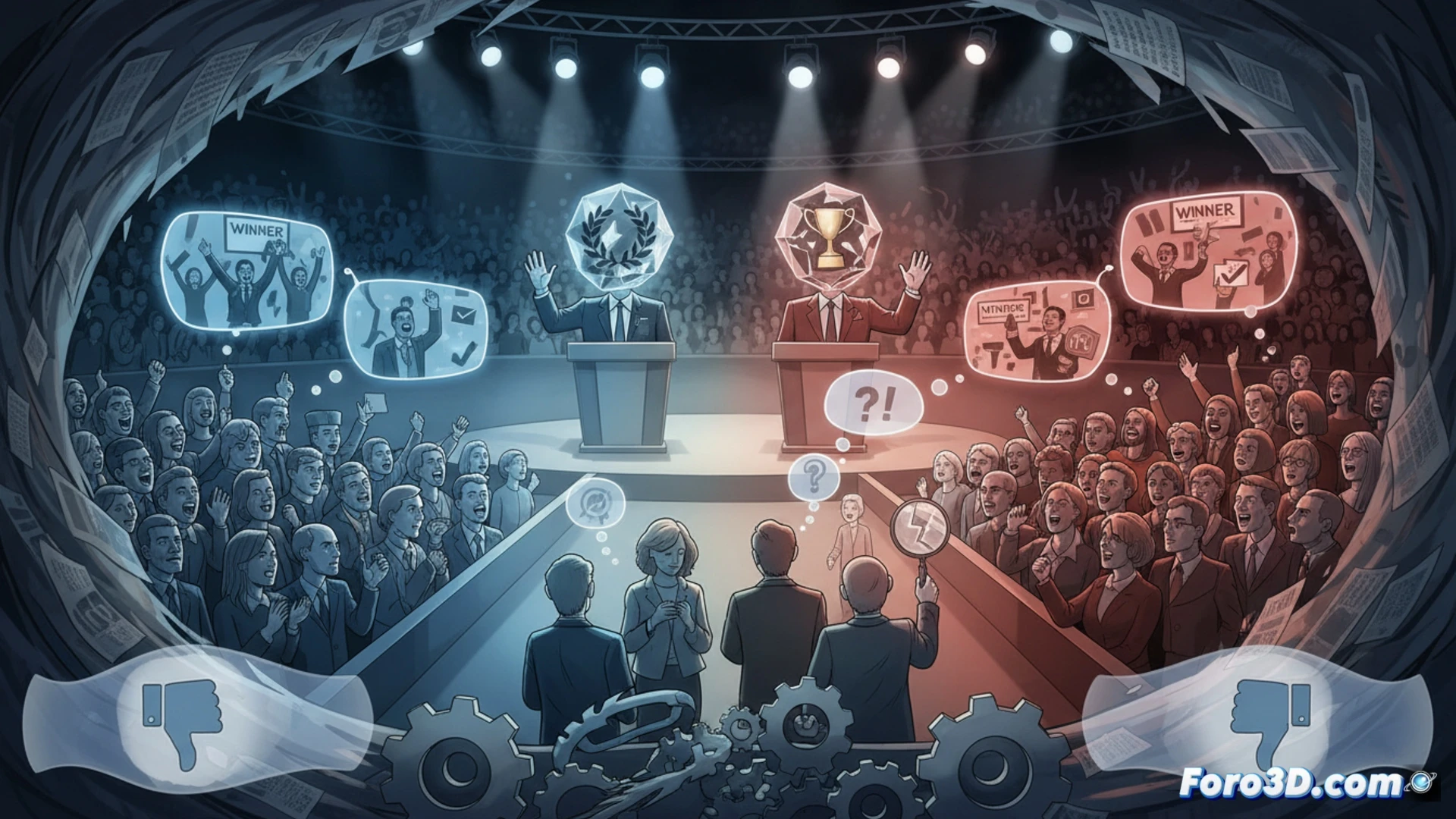
Cinematic photorealistic scene of a split-screen TV studio debate, two politicians standing at podiums with opposing campaign colors, each pointing at a different monitor showing the same debate footage but with contrasting highlighted moments, a technician adjusting a multi-camera rig in the foreground while a voting booth looms in the background, cables and broadcast equipment visible, dramatic studio lighting casting polarized shadows, the audience wearing polarized glasses with colored lenses, demonstrating cognitive bias through visual metaphor, ultra-detailed broadcast hardware, motion blur on spinning reels of tape, technical illustration style

确认偏误与数字架构 🧠

自平台发展以来,这种偏误通过推荐算法得到强化,这些算法加强了信息茧房。机器学习系统优先推送验证用户先前信念的内容,将受众分割成同质化的集群。在论坛和社交网络中,自动化审核和积分系统创造了回音室,异议受到惩罚。结果是每个阵营都接收到经过过滤的现实版本,加剧了技术和社会层面的两极分化。

观众席上的隐形裁判 🏀

有趣的是,辩论结束后,每个群体都会截取屏幕截图并进行编辑,以证明自己的论点,就像蒙着一只眼的边裁。候选人被椅子绊倒,对一些人来说是谦逊的时刻,对另一些人则是笨拙的表现。与此同时,主持人试图维持秩序,就像篮球比赛中的足球裁判:没人听他的,所有人都怪他。