Accesibilidad excepcional: la cultura como favor, no como derecho

发布于 2026年05月29日 | 从西班牙语翻译

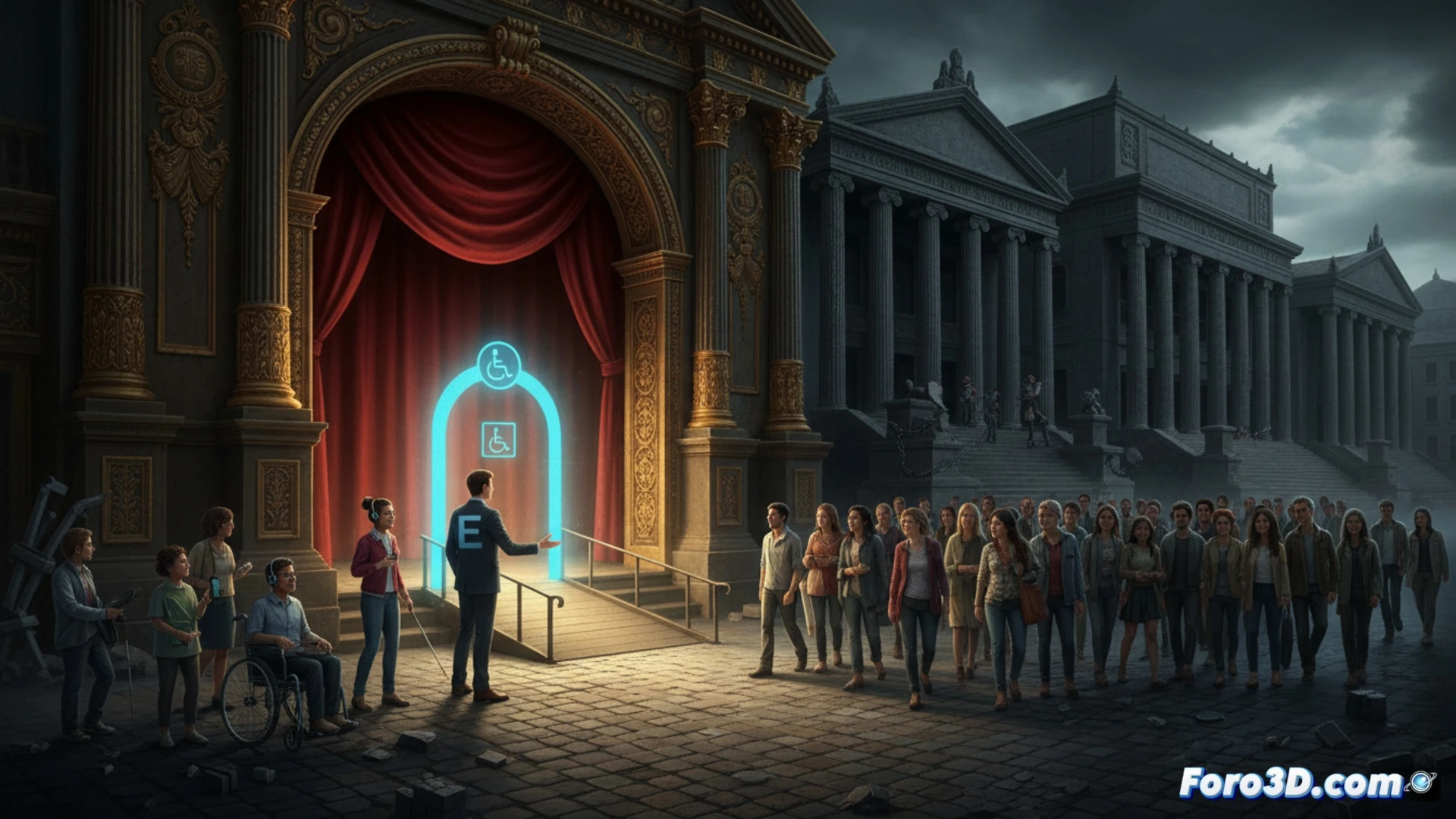
一个位于休闲场所的新试点项目成功整合了音频描述系统和磁感应环路。这一消息令人振奋,但背后却隐藏着一个令人不安的现实:这些改进仍然是例外。残障人士依赖少数企业的善意和协会的工作才能接触文化,而大多数场所依然是建筑和感官上的障碍。
Photorealistic technical scene inside a modern entertainment venue, a person using a wheelchair wearing over-ear headphones with a visible magnetic loop receiver, a small portable audiodescription transmitter on the table beside them, while a staff member adjusts a wall-mounted induction loop amplifier, concrete floor with tactile guiding strips, empty wheelchair-accessible seating area contrasting with inaccessible stairs in the background, warm spotlight illuminating the person’s focused expression, cold shadows on the unused technical equipment, cinematic lighting, ultra-detailed textures on metal rails and audio hardware, engineering visualization style

无障碍技术:不应成为可选项的标准 🎧

实现通用无障碍的技术已经存在且成熟。磁感应环路系统、基于人工智能的实时字幕、轮椅室内导航应用以及直接传输声音至助听器的设备,都是经过验证的解决方案。它们的实施不需要技术上的飞跃,而是需要企业的决策。问题不在于缺乏发展,而在于缺乏法律规范,要求将这些标准作为任何开业许可或公共活动的基本条件。

志愿服务拯救文化(也拯救企业的良知) 🎭

看到实习生们搬运折叠坡道,志愿者们用手机为手语翻译作品,真是令人欣慰。这很感人,就像看到水管工用口香糖修补漏水一样。下次,与其招募志愿者,我们或许可以要求企业将无障碍设施纳入预算。但当然,这就不如为购买磁感应环路而发起的众筹活动那么上镜了。